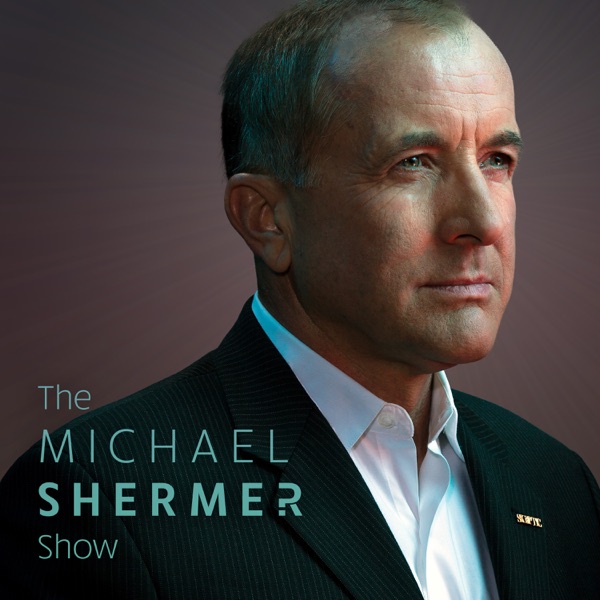
Episode Summary
Executive Summary: Michael Shermer moderates a deep debate between Daniel Dennett and Greg Caruso on free will, moral responsibility, and punishment. Dennett defends compatibilism: meaningful responsibility, desert, and humane punishment are compatible with determinism and essential to social order. Caruso argues free will is required for “basic desert” and rejects retributive blame, favoring forward-looking, public-safety-based sanctions and rehabilitation.
Main Topics: Why free will remains disputed (Priority: 5/5): The guests explain why 2,500 years of debate continues: the issue is conceptually complex, crosses metaphysics, ethics, law, and existential meaning, and philosophers disagree about what free will even means. Compatibilism vs. free will skepticism (Priority: 5/5): Dennett argues that determinism does not undermine everyday responsibility or the ability to do otherwise in a practical sense; Caruso says free will is absent whether reality is deterministic or indeterministic because neither grants the control needed for basic desert. Basic desert and moral responsibility (Priority: 5/5): Caruso defines free will as the control required for basic desert moral responsibility. Dennett rejects basic desert as a philosophical fiction and insists on ordinary desert: people can deserve praise, blame, or punishment in everyday, socially grounded ways. Punishment, law, and social order (Priority: 5/5): Dennett defends punishment as necessary to uphold laws, encourage self-control, and maintain a secure society. Caruso argues punishment should be justified only by future safety, deterrence, and rehabilitation, not by retribution. Quarantine/public health model vs retributive justice (Priority: 4/5): Caruso analogizes criminal justice to quarantine: coercion is justified to prevent harm, not because offenders morally deserve suffering. Dennett says this risks collapsing into humane punishment and cannot eliminate desert from legal practice. Thought experiments and real-world cases (Priority: 4/5): The discussion uses Trump, Bernie Madoff, hot-car deaths, brain implants, cheating spouses, and sports doping to test whether blame and sanctions track moral desert or merely practical consequences. Reactive attitudes and moral reform (Priority: 4/5): Caruso argues that resentment, indignation, and moral anger are often unjustified and should be replaced with disappointment or sorrow; Dennett says these emotions are sometimes appropriate and help sustain moral accountability.
Key Arguments: Dennett argues that determinism does not prevent meaningful choice, persuasion, self-control, or accountability; people can still have the ability to do otherwise in the everyday, legally relevant sense. Caruso argues that neither determinism nor indeterminism gives agents the kind of sourcehood or control needed for basic desert, so retributive blame and punishment are unjustified. Dennett says the real issue is control, not causation: some people can control themselves and others cannot, and law should distinguish between them without invoking metaphysical free will. Caruso maintains that punishment can be justified without retribution, using self-defense, public safety, deterrence, restitution, and rehabilitation. Dennett insists the concept of desert is socially necessary: people should feel guilt, shame, and responsibility because these reactions stabilize law and trust. Caruso counters that moral responsibility practices can be preserved in thinner, forward-looking forms such as moral protest, reconciliation, and moral formation without basic desert. Both agree that overly draconian punishment is harmful and that criminal justice should be more humane, but they disagree on whether desert is a real and useful justification. Dennett argues that removing the language of responsibility and punishment would weaken social order and encourage evasion of accountability; Caruso says a skeptical framework can retain accountability without retribution.
Data Points: Philosophy survey on free will: 59.1% compatibilism; 13.7% libertarianism; 12.2% no free will; almost 15% other - 2009 survey of 3,226 philosophy professors and grad students cited by Shermer to show continued division among experts Survey participants: 3,226 - Number of philosophy professors and grad students surveyed in the cited 2009 study Survey topics: 30 - Number of philosophical subjects included in the survey Annual discount mentioned: 20% - Great Courses Plus sponsorship offer for Shermer listeners Approximate annual savings: About 30 bucks off a year - Shermer’s description of the Great Courses Plus discount Prisoner case duration: 4 years - Dennett references the experience of Trump’s presidency in arguing against social denial of responsibility Free will debate duration: 2,000 to 2,500 years - Both speakers discuss the longstanding philosophical dispute over free will
Pivotal Quotes: "The issue is control, not causation." — Daniel C. Dennett: Dennett distinguishes his compatibilist view from libertarian and skeptical accounts during the discussion of randomness and responsibility "My free will skepticism I define as the thesis that who we are and what we do is sort of ultimately the result of factors beyond our control." — Greg G. Caruso: Caruso states his core skepticism and links it to the rejection of basic desert moral responsibility "What we want is for people to take responsibility." — Daniel C. Dennett: Dennett defends socially embedded responsibility, law, and punishment as necessary for a secure society
Implications: The debate clarifies a major fault line in contemporary philosophy and criminal justice: whether responsibility needs metaphysical free will or only practical self-control. It suggests future reform will hinge on whether society favors retribution or forward-looking, harm-reduction models.