Episode Summary
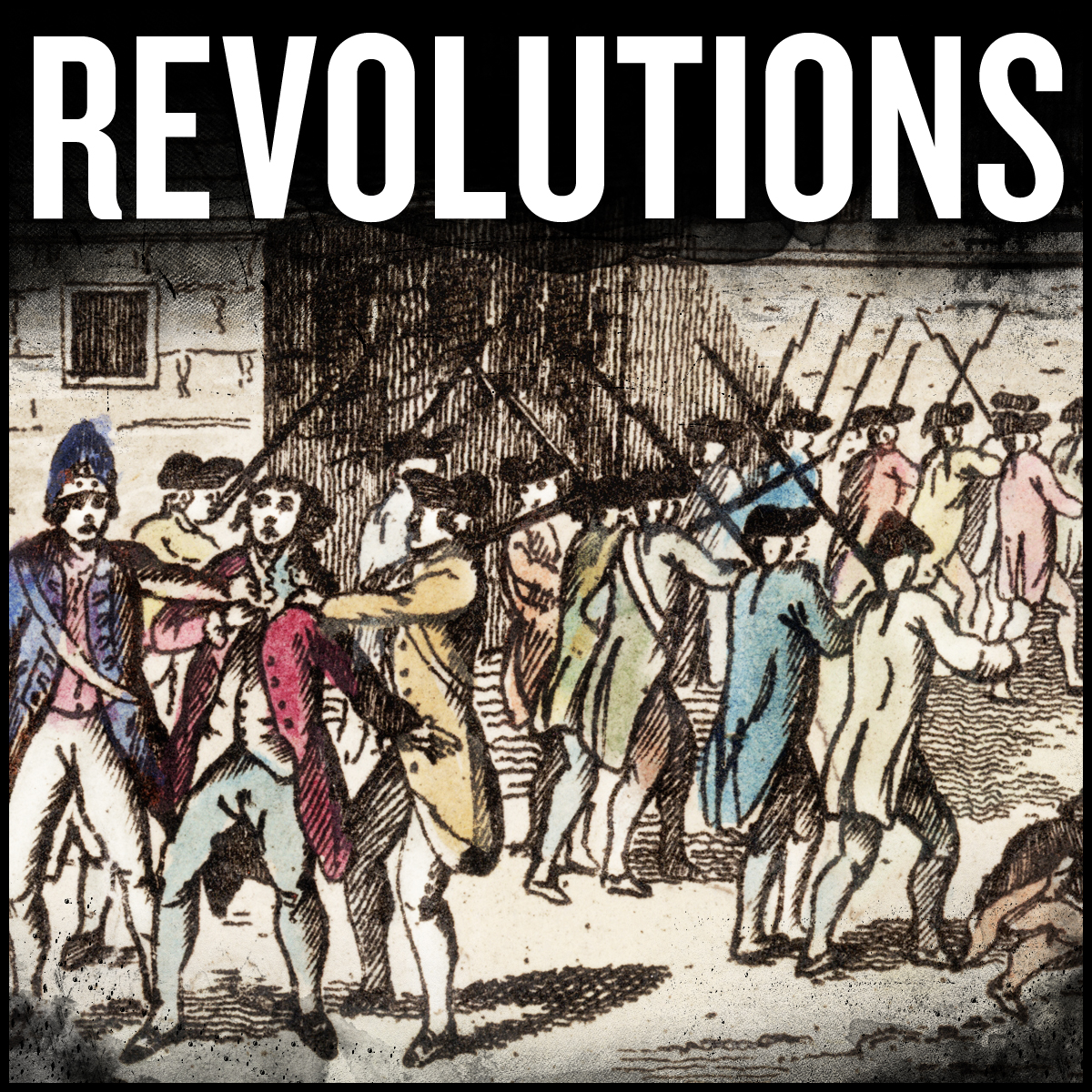
Executive Summary: The episode tracks the collapse of sans-culotte power in 1795 amid famine, repression, and political realignment. Failed Germinal and Prairial insurrections show a starving Parisian left with no leaders or organization, while the Thermidorian Convention consolidates authority, crushes unrest, and drafts a new constitutional order as foreign enemies exit the war.
Main Topics: Thermidorian consolidation and purging of radicals (Priority: 5/5): The Convention systematically removes left-wing terrorists and rehabilitates moderates and former opponents to deny Parisian insurrections any allies inside government. Economic collapse and bread scarcity in Paris (Priority: 5/5): A brutal winter, collapsing supply chains, and dwindling flour rations drive unrest in eastern Paris and make bread the central political demand. The Germinal insurrection of April 1795 (Priority: 5/5): About 10,000 Parisians storm the Convention chanting 'bread and the Constitution of 1793,' but the action fizzles without leadership, planning, or inside support. State crackdown and the White Terror (Priority: 5/5): Martial law, police powers, and local anti-Jacobin authorities unleash arrests, prison massacres, and vigilante revenge against former terror agents across France. Foreign-policy victories and the changing war (Priority: 4/5): Prussia, the Dutch, and Spain withdraw from the anti-French coalition, strengthening the Convention’s legitimacy and reducing vulnerability to domestic revolt. The Prairial insurrection and final defeat of the sans-culottes (Priority: 5/5): A more organized second uprising briefly occupies the Convention, but it is ultimately surrounded, suppressed, and followed by mass arrests and executions, ending sans-culotte political dominance. Toward the Constitution of Year III and the Directory (Priority: 4/5): The Constitution of 1793 is discredited, and the Convention moves to draft a new constitutional framework that will create the Directory.
Key Arguments: The left failed in 1795 not because popular anger was absent, but because repression had destroyed the organizational structures and leaders needed to convert anger into effective political action. The Thermidorian Convention learned from earlier revolutionary crises and made sure future street movements had no reliable allies inside the legislature. Bread scarcity was the immediate driver of unrest, but the slogan 'bread and the Constitution of 1793' also expressed a rejection of the Thermidorian political settlement. The Convention’s response combined legal repression, military force, and political redefinition of its opponents as criminals or terrorists rather than legitimate revolutionaries. The White Terror was less a simple royalist restoration than a revenge movement by victims of the Terror against those who had benefited from it. Foreign military success mattered politically because it made the Convention look competent and reduced the likelihood that domestic insurrection could succeed. The Prairial uprising showed greater organization than Germinal, but even that was no match for a state that now controlled force, legitimacy, and military resources. By summer 1795, the sans-culottes were effectively finished as a decisive revolutionary force, clearing the way for the Directory.
Data Points: Winter severity: Unimaginably brutal - Describes the winter of 1794-1795 and its impact on food and fuel supply Bread ration cut: Reduced repeatedly by March 1795 - The free bread ration in Paris shrank as flour supplies dwindled Germinal insurrection size: About 10,000 Parisians - Crowd that surged on the Convention on April 1, 1795 Police law date: April 10, 1795 - Legal framework for repression and disarmament of suspected terror supporters Arrested in Paris crackdown: Around 1,600 men and women - People identified and arrested during Pichgru’s enforcement actions White Terror detentions: About 100,000 locked up - Estimate for those imprisoned during summer 1795 White Terror deaths: About 2,000 killed - Estimate for those killed during the White Terror Prison massacre in Lyon: 100 to 200 killed - Attack on a prison on May 4, 1795 Prison massacre in Aix: About 60 killed - Similar killing roughly a week after Lyon Prison massacre in Tarascon: 24 killed - Massacre on May 24, 1795 Prison massacre in Marseille: 100+ killed - Massacre on June 5, 1795 Prairial insurrection size: About 20,000 insurgents - Armed crowd around the Convention on May 21, 1795 Counterforce size: Nearly 40,000 men - National Guard, army, and muscadins defending the Convention Combined standoff size: About 60,000 people - Largest mass confrontation in Paris during the Revolution Insurrectionary arrests after Prairial: Upwards of 3,000 - People arrested after the uprising was suppressed Death sentences after Prairial: 36 guilty; 6 sentenced to death on June 17 - Special tribunal verdicts against uprising leaders Treaty of Basel date: April 5, 1795 - Prussia officially withdraws from the war Treaty of the Hague date: May 16, 1795 - France and the Batavian Republic formalize alignment Spanish treaty date: Mid-July 1795 - Spain exits the war against France
Pivotal Quotes: "bread and the Constitution of 1793" — Narrator: The rallying cry uniting hungry Parisian protesters during both Germinal and Prairial "the persecuted became the persecutors" — Narrator: Summarizing the logic of the White Terror and its revenge politics "The insurrections of Germinal and Prairial marked the end of the line for the Sancuilat." — Narrator: Concluding assessment of the political defeat of the sans-culottes
Implications: The episode marks a turning point from radical popular revolution to conservative state-building. With sans-culotte power broken, the Convention can draft the Constitution of Year III and inaugurate the Directory.
About Revolutions
Mike Duncan is taking everything he's learned from 12 seasons of historical revolutions - the repeating arcs, characters, ideas, events, and patterns which all revolutions seem to follow - and created a fictional history of the Martian Revolution of 2247. The series is written from the point of view of a historian working hundreds of years after the Martian Revolution and will be presented in the style and format of previous seasons of Revolutions. It will look, sound, and feel like a Mike Duncan history podcast…but will instead be a fictional narrative of a gripping science-fiction epic. Revolutions is a podcast that covers the great political revolutions that have defined the modern world. Each season is a long-form narrative covering a different defining revolutionary epoch across three hundred years of history. It explores in great detail the people, ideas, and events that challenged and toppled outdated regimes and replaced them with new governments. After more than 350 episodes over ten seasons of narrative nonfiction, the 12th season is a fictional account of the Martian Revolution of 2247. *BREAKING NEWS* In the fall of 2025, the Revolutions podcast will return to its roots by diving into the great revolutions of the 20th century. The new run of episodes begins with the story of Irish Independence, a dramatic upheaval in the wake of WWI that saw Ireland free itself from centuries of English rule. Full of inspiring personalities, tragic events, and thrilling triumphs, Irish Independence is one of the most gripping events in revolutionary history. Future seasons will plunge ahead through the turbulent 20th century, and include the Spanish Civil War, the Cuban Revolution, and the Algerian War of Independence.