Episode Summary
Executive Summary: This episode traces how Brienne’s fiscal and institutional reforms triggered escalating resistance from provincial parlements, legal professionals, and provincial elites, culminating in the violent Day of the Tiles in Grenoble. The unrest exposed the monarchy’s weakening authority, elevated demands for the Estates General, and pushed Louis XVI to recall Necker after Brienne’s collapse, setting France on the road to revolutionary public debate.
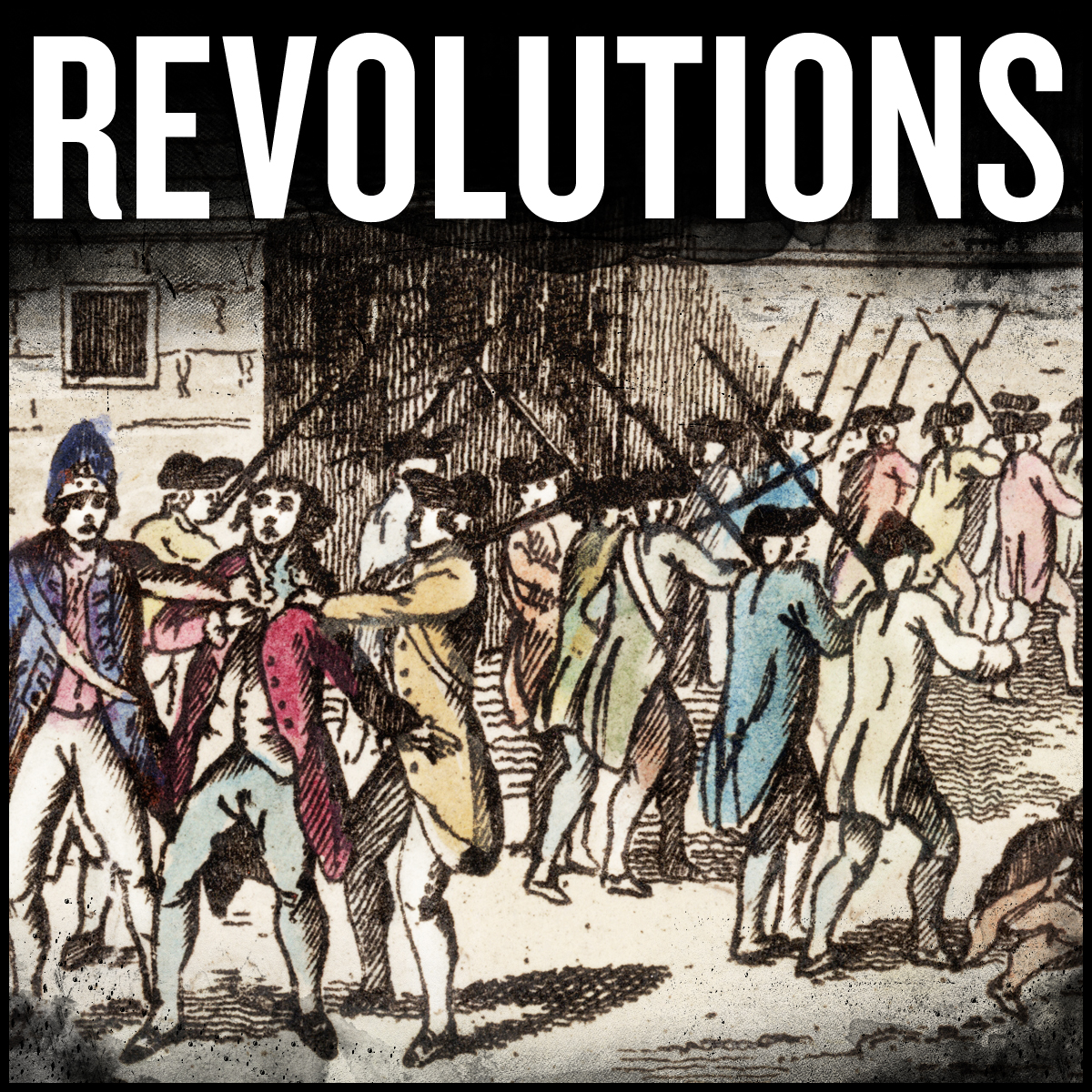
Main Topics: Provincial resistance to Brienne’s reforms (Priority: 5/5): The episode explains how provincial parlements reacted differently than Paris to reforms like provincial assemblies, seeing them as a loss of local power and an opaque royal power grab. Tax reform and elite privilege (Priority: 5/5): Brienne’s attempt to rationalize tax collection collided with nobles who depended on tax exemptions as both income protection and a marker of status. The May Edicts and the attack on the Parlement (Priority: 5/5): The ministry’s boldest move was to gut the Parlement by creating a plenary court that would register laws and taxes, reducing the old court to near irrelevance. The Day of the Tiles in Grenoble (Priority: 5/5): A market-day confrontation over exile orders for the Grenoble Parlement turned into a riot, with soldiers firing after being pelted by debris and roof tiles, marking mass political intervention. Jean-Joseph Mounier and constitutional politics (Priority: 4/5): Mounier used the crisis to advance a constitutional-monarchy agenda, helping popularize ‘double the third, vote by head’ and linking legitimacy to natural rights and liberty. Collapse of Brienne and recall of Necker (Priority: 5/5): Facing financial exhaustion and failed credit, Brienne resigned; Louis XVI then recalled Necker, sparking celebrations and opening the path to the Estates General and a public battle over its structure.
Key Arguments: Provincial parlements opposed the new assemblies not only because of procedure but because they feared real loss of autonomy and influence. The provincial nobles were often more dependent on land and tax privilege than the court elite, making them more resistant to fiscal reform. Brienne’s strategy of bypassing the Parlement was meant to isolate aristocratic obstruction, but it unintentionally broadened the conflict into a kingdom-wide legitimacy crisis. The Parlement had become, in public imagination, a symbol of resistance to royal absolutism, even though its members largely wanted to defend their own privileges. Popular unrest transformed a judicial-political dispute into a wider social and political movement, demonstrating that the monarchy could no longer control the streets. Mounier’s insistence on double representation for the Third Estate and voting by head reframed the crisis into a constitutional question that would dominate 1789. Louis XVI’s inconsistency weakened the monarchy: each temporary concession or crackdown encouraged further resistance rather than restoring authority. Brienne’s failure was ultimately financial as much as political; the regime could not survive without credit, and credit depended on trust in leadership. Recalling Necker offered immediate relief and public approval, but also intensified expectations that the upcoming Estates General would deliver sweeping change.
Data Points: Audible catalog size: over 150,000 titles - Sponsor mention at the start of the episode Free trial length: 30-day trial membership - Audible promotion offering a free book download Initial tax reform timing: June 1787 - Brienne begins reforming the Paris Parlement’s accepted package Paris Parlement exile: August 1787 - Paris Parlement is exiled during the struggle over reform Paris Parlement recall: September 1787 - Paris Parlement is recalled after exile Provincial assemblies begin convening: November 1787 - First assemblies are appointed by the royal ministry Day of the Tiles date: June 7, 1788 - Exile orders for the Grenoble Parlement are to be delivered on market day Formal Dauphiné assembly meeting: June 14, 1788 - Mounier organizes a meeting of prominent men after the Day of the Tiles Preliminary assembly at Visiel: July 21, 1788 - Assembly convened in Dauphiné to advance Estates Provincial demands Dauphiné assembly composition: 50 clergymen, 165 nobles, 276 representatives of the Third Estate - Counts listed for the preliminary assembly Treasury cash remaining: 400,000 livres - Brienne is told the royal treasury has only one day of cash left Estates General date announced: May 1, 1789 - Louis XVI announces the Estates General will meet at Versailles Interest on paper instruments: 5% - Brienne issues paper in lieu of repayment to creditors Brienne resignation date: August 25, 1788 - Brienne resigns after credit collapses Mounier’s age: 30 years old - Describes Jean-Joseph Mounier as a young judge and political organizer Mounier ennoblement age: 25 - He bought a place in the Grenoble Parlement and was ennobled young Court threshold retained by Parlement: 20,000 livres - After the May Edicts, the Parlement keeps only cases above this sum Duration of exile in Brittany: about two months - Authority in Brittany is said to be effectively lost after repression in Rennes
Pivotal Quotes: "Double the third, vote by head" — Narrator / Mounier’s movement: The episode identifies this as the rallying cry for reforming how the Estates would be composed and vote "The Day of the Tiles represents the first major incursion of the mob into our story" — Narrator: Used to frame the Grenoble riot as a turning point in popular political action "there was only 400,000 livres left in the royal treasury, barely enough to keep the lights on for a single day" — Narrator: Brienne learns the crown is effectively out of money, forcing the admission of defeat
Implications: The monarchy loses control over both institutions and public opinion. The crisis broadens from elite resistance to mass politics, making the Estates General unavoidable and setting up the revolutionary fight over representation, legitimacy, and sovereignty.
About Revolutions
Mike Duncan is taking everything he's learned from 12 seasons of historical revolutions - the repeating arcs, characters, ideas, events, and patterns which all revolutions seem to follow - and created a fictional history of the Martian Revolution of 2247. The series is written from the point of view of a historian working hundreds of years after the Martian Revolution and will be presented in the style and format of previous seasons of Revolutions. It will look, sound, and feel like a Mike Duncan history podcast…but will instead be a fictional narrative of a gripping science-fiction epic. Revolutions is a podcast that covers the great political revolutions that have defined the modern world. Each season is a long-form narrative covering a different defining revolutionary epoch across three hundred years of history. It explores in great detail the people, ideas, and events that challenged and toppled outdated regimes and replaced them with new governments. After more than 350 episodes over ten seasons of narrative nonfiction, the 12th season is a fictional account of the Martian Revolution of 2247. *BREAKING NEWS* In the fall of 2025, the Revolutions podcast will return to its roots by diving into the great revolutions of the 20th century. The new run of episodes begins with the story of Irish Independence, a dramatic upheaval in the wake of WWI that saw Ireland free itself from centuries of English rule. Full of inspiring personalities, tragic events, and thrilling triumphs, Irish Independence is one of the most gripping events in revolutionary history. Future seasons will plunge ahead through the turbulent 20th century, and include the Spanish Civil War, the Cuban Revolution, and the Algerian War of Independence.