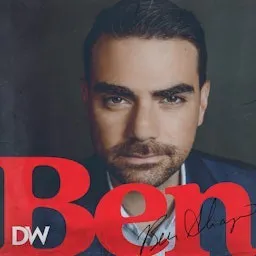
Episode Summary
Executive Summary: Ben Shapiro’s Cambridge talk argues that Western institutions have been captured by anti-Western, “decolonial” thinking that excuses Hamas and undermines liberal civilization. He then fields sharp student questions on Trump, Congress, populism, healthcare, free speech, abortion, gay marriage, guns, climate policy, austerity, and Israel-Palestine, defending conservative positions with an emphasis on incentives, federalism, and institutional sanity.
Main Topics: Western values, decolonization, and Hamas sympathies: Shapiro frames campus cancellations and pro-Palestinian activism as evidence that Western institutions now excuse barbarism by adopting anti-Western intellectual frameworks rooted in Fanon and Sartre. Trump, U.S. political dysfunction, and institutional decay: He argues Trump’s appeal stems from distrust, polarization, and elites’ failures, while Congress has become a platform for self-promotion rather than governance. Healthcare, UBI, and welfare design: He rejects healthcare as an enforceable right and is skeptical of universal basic income, arguing welfare should be assessed by incentives, sustainability, and unintended consequences. Abortion, sex education, and gay marriage: Shapiro defends pro-life politics on a life-saving basis, questions comprehensive sex education’s claims, and opposes gay marriage in public policy terms by emphasizing state incentives for child-rearing. Gun rights, public safety, and federalism: He supports the Second Amendment in the U.S. context, while acknowledging gun policy should differ by country and that functional systems should not be casually altered. Climate change, net zero, and adaptation: He accepts climate change as real but argues proposed solutions are impractical, poorly coordinated globally, and should prioritize adaptation, resilience, and nuclear power. Israel-Palestine and the limits of peace deals: He insists Israel has repeatedly offered compromise, while Palestinian leadership and Hamas remain unwilling to accept a durable two-state settlement.
Key Arguments: Campus culture and parts of the West have absorbed a decolonial ideology that treats Western civilization as inherently guilty and therefore justifies excusing terrorist violence. Fanon and Sartre are presented as intellectual sources for modern anti-Western activism because they recast violence against the West as morally purifying and politically necessary. Trump’s durability is driven less by policy than by a broad collapse in trust, elite alienation, and partisan polarization that turns every criticism into a tribal attack. Congressional dysfunction reflects bad incentives: politicians use office as a media platform, so changing personnel without changing structures won’t solve the problem. Healthcare is not a right in the sense of a claim on someone else’s labor; social services should be judged by sustainability, choice, and incentives rather than moral slogans. UBI may be less bad as a replacement for fragmented welfare programs, but it risks inflation, work disincentives, and misuse without solving structural poverty. Pro-life policy is justified by a desire to save unborn lives; Shapiro argues abortion bans may increase some maternal risk, but still reduce total life loss overall. Comprehensive sex education would need to prove it lowers abortion and pregnancy without crossing into moral indoctrination; he says current evidence is mixed and content often goes beyond biology. Marriage policy should reward child-rearing because the state has an interest in promoting stable family structures, not merely validating adult relationships. Gun rights are tied to self-defense and resistance to tyranny in the U.S., but he does not advocate identical gun policy for all societies and rejects comparing the U.S. directly to the U.K. Climate policy should focus on adaptation, infrastructure, and nuclear power because global net-zero coordination is unrealistic and major emitters like China and India are not aligned. Israel’s military actions are presented as responses to Hamas’s deliberate use of civilians as shields, and Shapiro argues blame for civilian deaths lies with Hamas’s tactics. He argues Israel has repeatedly made peace offers while Palestinian leadership has repeatedly rejected them; he says a deal requires a willing peace partner, which is absent now.
Data Points: Cambridge Opera Society cancellation: 1 opera canceled - Handel’s Saul was canceled due to perceived parallels with the Middle East conflict. Antisemitic hate crime increase in London: 1,350% - Shapiro cites a dramatic rise in hate crime amid pro-Hamas mobilization. London march in support of Hamas: 100,000 people - Used to illustrate mainstreaming of pro-Hamas sentiment. Speaker nomination polling lead for Trump: plus 48 - Referenced by the interviewer as evidence of Trump’s primary dominance. Republican vote to remove McCarthy: 8 Republicans plus all Democrats - Shapiro cites the coalition that ousted McCarthy from the Speakership. Migration pattern in the U.S.: net migration heavily toward red states - Used to support his claim that Americans are sorting politically by geography. Hamas civilian tactic context: 1,500 civilians killed - Shapiro references the October 7 attack while arguing Israel is confronting a terror group. Hamas finances: $500 million investment portfolio - Cited to argue Hamas enriched itself while Gaza remained impoverished. Hamas poverty statistic: 80% of citizens living in poverty - Used to emphasize misrule and corruption in Gaza. Water pipes repurposed: Pipes turned into rockets - Shapiro claims Hamas diverted civilian infrastructure to weapons production. UBI inflation risk: price-wage spiral - He argues cash transfers can fuel inflation and repeat the need for more transfers. Mass shootings in the U.S. in 2022: 647 - Referenced in the gun control discussion. Mass shootings in the U.K. since 1996: 7 - Used to contrast U.K. and U.S. gun violence. Gaza Jews after disengagement: 8,000 removed in 2005 - He says Israel withdrew settlers from Gaza and had no internal military presence there. Israeli Arab population: 20% Arab - Used to argue Israel is not ethnically exclusionary in the same way as neighboring systems. Palestinian Authority / Gaza Jews: 0 Jews - Used to contrast Israeli diversity with Palestinian governance. Western poverty reduction: Half the world’s global poor disappeared - He attributes the reduction to capitalism over the last 50 years.
Pivotal Quotes: "The barbarians and their supporters, unfortunately, are inside the gates." — Ben Shapiro: Opening argument about campus cancellations and Western institutions accommodating Hamas sympathies. "If you don't get in bed with the government if you don't expect to get screwed." — Ben Shapiro: His summary of fiscal policy and skepticism toward state-led welfare expansion. "Only Muslims can pray on the Temple Mount." — Ben Shapiro: Part of his rebuttal during the Israel-Palestine exchange about religious sovereignty and access.
Implications: The exchange reinforces a high-conflict conservative critique of academia, welfare-state expansion, and progressive identity politics. For listeners, the key takeaway is Shapiro’s insistence that institutions must reward incentives, defend civilization, and resist moral narratives that excuse violence.
About The Ben Shapiro Show
Tired of the lies? Tired of the spin? Are you ready to hear the hard-hitting truth in comprehensive, conservative, principled fashion? The Ben Shapiro Show brings you all the news you need to know in the most fast moving daily program in America. Ben brutally breaks down the culture and never gives an inch! Monday thru Friday.