Episode Summary
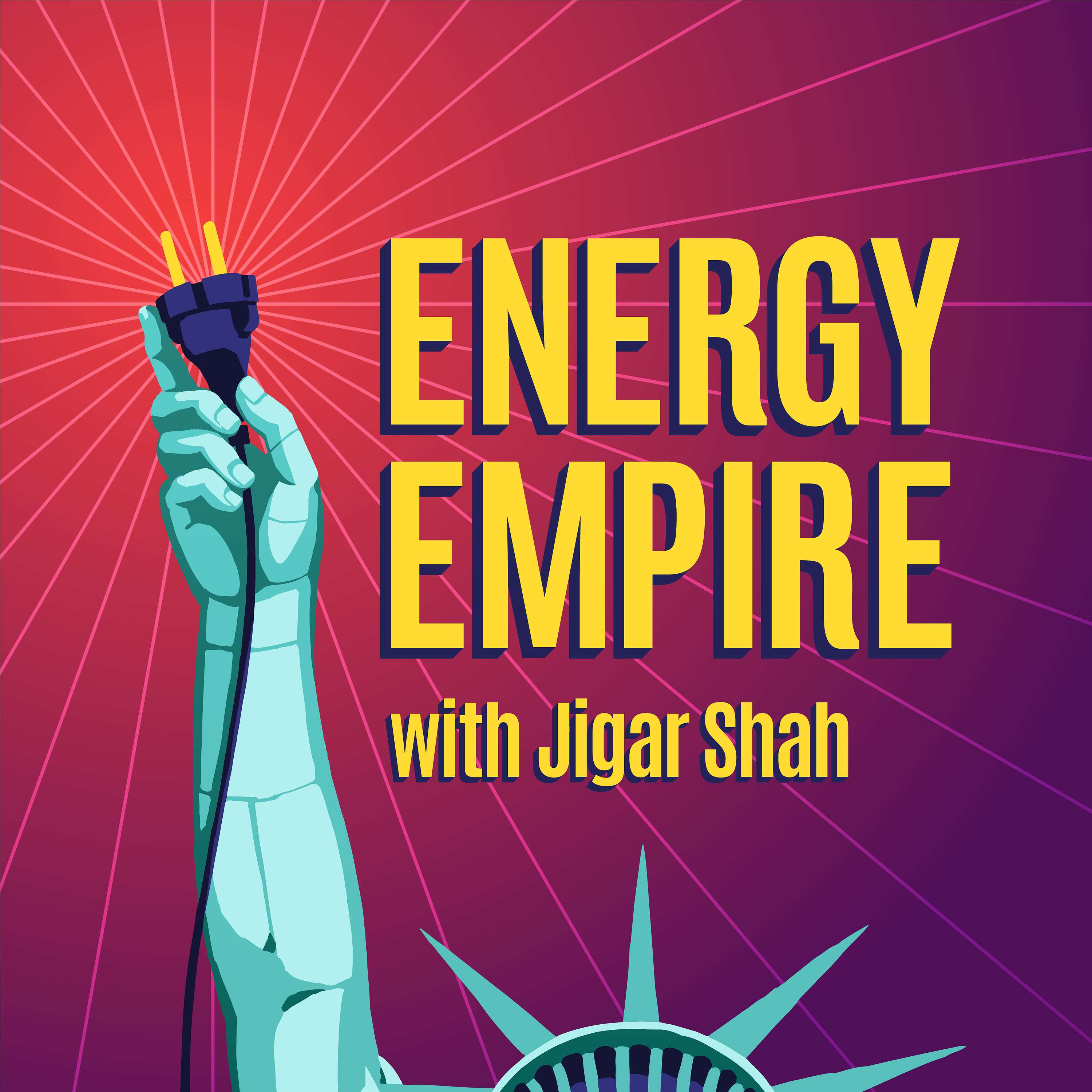
Executive Summary: Jamie Nolan interviews designer Rosie Jewell about the Energy Empire brand, tracing her path from climate resilience and communications into design, and how the Statue of Liberty logo was developed. They discuss the creative process, the meaning of the two-prong plug, lessons from DOE/LPO’s visual identity, and broader clean-energy branding failures and opportunities.
Main Topics: Rosie's career path into design and clean energy: Rosie explains her circuitous route from studying literature and working in urban design communications to teaching herself design, building a climate-focused portfolio, and joining DOE’s Loan Programs Office through a connection at LPO. The Energy Empire logo concept and symbolism: The conversation centers on why the brand uses the Statue of Liberty holding a power cable, why the plug has two prongs, and how the team balanced patriotism, symbolism, humor, and scalability without becoming too literal or clichéd. Design process and collaborative iteration: Rosie outlines her method: research, incubation, sketching, low-fidelity testing, then iterative refinement. She emphasizes letting ideas 'bake' and using multiple options strategically to guide client decisions. DOE/LPO as a creative environment: Rosie describes LPO as a rare place where designers were valued in a startup-like, emotionally safe culture, and where visual communication helped make technical clean-energy work legible and compelling. Deploy conference and the power of visual branding: They discuss Deploy as Rosie's most impactful project: an expanding conference brand with environmental graphics, promotional materials, and a visual identity that helped connect the clean-energy ecosystem and generate real deals. Clean energy communications and branding shortcomings: Both speakers argue the sector underinvests in communications, relies on generic imagery and doom-laden messaging, and often fails to tell a compelling, place-based, economically resonant story to broader audiences. Constructive and alignment through convening: Rosie connects her design work to her current role at Constructive, where she helps build shared understanding and collaboration across government, industry, and finance through design-forward convenings and dialogue.
Key Arguments: Brand details matter because small choices can provoke strong reactions and shape perception; the two-prong controversy shows audiences notice and care about visual identity. The Statue of Liberty works as a logo because it is iconic, broadly legible, patriotic without being partisan, and symbolically linked to energy, progress, and America’s ideals. Effective design is about distilling complexity into a clear story, not merely making things look attractive; strong headings, composition, and hierarchy can do analytical work for the audience. Clean-energy communications should move away from generic solar/wind landscapes and instead use place-specific imagery and narratives that reflect real communities and local identity. The sector should reduce reliance on doom-and-gloom climate framing and emphasize superior economics, security, and performance as the main story. Clean energy companies underinvest in comms and visual identity; the common pattern of one overworked communicator with no budget limits impact, reach, and trust. Strong branding and communications require executive-level commitment, time, and resources, just like media strategy and relationship-building do. Constructive’s work and the legacy of Deploy show that convening, storytelling, and design are infrastructure for collaboration, not decorative extras.
Data Points: LPO tenure: 2023 to early 2025 - Rosie says she worked at the DOE Loan Programs Office during this period. Energy Empire logo prongs: 2 prongs - The branding controversy discussed at the start concerns the plug on the logo. Lightning strikes on the Statue of Liberty: about 600 times a year - Rosie uses this fact to explain the statue as a lightning rod. Deploy24 attendee growth: 3x the number of attendees - Rosie says the second year of Deploy was much larger than the first. Deploy24 programming: 130 hours - Jamie and Rosie cite the amount of programming across the two-day conference. Deploy24 timing: 2 days - Used to describe the conference format and programming density. Podcast pitch timeline: 3 years - Jamie says she pitched Ezra Klein for three years before getting on the show through Rob Meyer. Scott Galloway outreach timeline: more than 1 year - Jamie describes the long effort required to secure that podcast appearance. LPO budget: $400 billion - Jamie references the scale of the office’s budget while describing media outreach expectations. Upcoming DERVOS dates: September 17th to 19th - Rosie announces the next DERVOS conference in New York City.
Pivotal Quotes: "we were building the plane as we fly it" — Rosie Jewell: She describes the startup-like atmosphere and rapid growth at LPO. "what if we did just spitballing like a flag with lightning bolts instead of stars?" — Rosie Jewell: She recalls early brainstorming about how to make the brand feel American, before settling on the Statue of Liberty. "I think net zero is not the most inspiring phrase" — Rosie Jewell: She argues clean energy messaging should shift toward a more ambitious and optimistic narrative.
Implications: The episode argues clean energy needs better storytelling: more place-based imagery, more executive-level comms investment, and more optimistic framing around economics and progress. Strong branding can broaden appeal, build trust, and help the sector deploy faster.
About Energy Empire
Clean energy transition — covers the people, capital, and billion-dollar deals shaping the future of energy, hosted by Jigar Shah.