Episode Summary
Executive Summary: The transcript argues that Aldous Huxley’s Brave New World is a sharper critique of modern liberal democracy than Orwell’s 1984 because it shows tyranny emerging through pleasure, conditioning, and social stability rather than overt repression. The speaker contends that contemporary culture already mirrors Huxley’s world through sexualized media, identity-based politics, and conditioning of children, at the cost of family, religion, and higher human aspirations.
Main Topics: Brave New World vs. 1984: The speaker contrasts Orwell’s model of overt state repression with Huxley’s model of soft tyranny through pleasure, arguing that Brave New World better explains modern liberal democracy’s failures. Pleasure as social control: The world state keeps people compliant by maximizing pleasure, minimizing pain, and using soma, sex, and entertainment to distract citizens from deeper human purposes. Conditioning and loss of autonomy: Human beings are biologically and socially conditioned to accept their caste, desires, and role, which the speaker frames as a hidden form of slavery disguised as freedom. Attack on family, religion, and history: Traditional institutions are portrayed as threats to stability because they foster loyalty, hierarchy, memory, and moral claims beyond the state. Modern cultural parallels: The transcript draws parallels between Brave New World and present-day culture, including pornography, gender identity ideology, and the reversal of sex, love, and marriage. Ford, Freud, and the ideology of the state: Ford symbolizes industrial organization and Freud symbolizes sexual liberation; together they represent the state’s fusion of production, conditioning, and libido management. Character lens and philosophical critique: Figures like Bernard Marx, Lenina Crown, and Mustafa Mond are used to illustrate how the system works, who benefits, and why intellectual life cannot coexist with absolute stability.
Key Arguments: Brave New World is more relevant than 1984 for understanding how liberal democracies can become tyrannical through pleasure rather than force. A society built on comfort, sex, entertainment, and pharmaceuticals can appear free while actually training people to obey their desires. The central tradeoff in Brave New World is stability and low crime versus human excellence, individuality, and higher aspirations. Conditioning children to reject higher goods and accept caste roles is a form of ideological coercion, even if it is presented as freedom. Family, religion, and history are deliberately weakened because they create loyalties and values that compete with the state. Modern media and social norms increasingly separate sex from love and commitment, making Brave New World feel less like fiction and more like a preview of present culture. The speaker argues that left-leaning views of freedom centered on sexual self-expression align closely with Huxley’s world state. The state’s promise of autonomy is deceptive: people are free to indulge impulses but not free in any meaningful moral or intellectual sense.
Data Points: Core state slogan: 3 words: community, identity, stability - Presented as the guiding principles of the Brave New World society. Soma dosage examples: 0.5 gram, 2 grams, 3 grams - Used as graduated doses for relaxation, leisure, and escape from thought. Conditioning repetitions: 200 repetitions - The speaker cites repeated lessons as sufficient to bind associations permanently in children’s minds. Caste system examples: Alphas, betas, gammas - Used to describe the rigid social hierarchy and preassigned roles in the world state. Timeframe prediction: 5 to 10 years - The speaker claims the audience will soon see where current social trends lead.
Pivotal Quotes: "Brave New World is much more descriptive of the failings of sort of liberal democracy than is 1984." — Speaker: The central comparison between Huxley and Orwell. "All conditioning aims at that, making people like their unescapable social destiny." — Director of the Central London Hatchery and Conditioning Center: Used to explain how the state manufactures consent and compliance. "The idea is you can condition people to believe that their autonomy is being respected, even when their autonomy is not being respected." — Speaker: A key summary of the speaker’s conservative interpretation of the novel.
Implications: The transcript frames Huxley’s novel as a warning that societies can lose freedom by embracing comfort, sexual permissiveness, and ideological conditioning. For listeners, the takeaway is that cultural drift, not just authoritarian force, can erode human dignity and civic life.
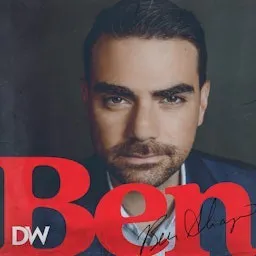
About The Ben Shapiro Show
Tired of the lies? Tired of the spin? Are you ready to hear the hard-hitting truth in comprehensive, conservative, principled fashion? The Ben Shapiro Show brings you all the news you need to know in the most fast moving daily program in America. Ben brutally breaks down the culture and never gives an inch! Monday thru Friday.