Episode Summary
Executive Summary: The episode examines Brazil’s likely election of Jair Bolsonaro as a symptom of deeper democratic and economic breakdowns tied to corruption, recession, and anti-establishment backlash. Glenn Greenwald argues Bolsonaro’s extremism is real, but his appeal comes mainly from public fury at elites, weakened institutions, and the collapse of trust in Brazil’s political system.
Main Topics: Bolsonaro’s extremist rhetoric and politics: Greenwald catalogs Bolsonaro’s praise of torture, misogynistic and homophobic remarks, and pro-dictatorship nostalgia, stressing that his offensive language reflects a serious ideological commitment rather than mere provocation. Corruption as a systemic feature of Brazilian politics: The discussion frames Brazilian corruption as far more pervasive than in the U.S., involving major parties, corporations, and entrenched elite networks rather than isolated misconduct. Economic crisis and commodity-cycle politics: Brazil’s recent recession, stagflation, unemployment, and the end of the commodity boom are presented as key drivers of political instability and populist sentiment. Operation Car Wash and institutional fallout: The anti-corruption investigation is portrayed as exposing broad elite corruption while also weakening public confidence in institutions and disproportionately affecting left-wing politicians. Bolsonaro vs. Haddad: competing economic visions: Bolsonaro’s alliance with Paulo Guedes signals a neoliberal privatization agenda, while Haddad represents a more center-left, redistributive tradition within the Workers’ Party. Global rise of populism and the disappearance of the center: Brazil is linked to Trump, Brexit, and European far-right surges as evidence that establishment failure has opened space for demagogues promising to destroy the system. Democracy, free speech, and personal risk: Greenwald reflects on the danger Bolsonaro poses to journalists, LGBTQ people, and political opponents, while saying he will remain in Brazil and resist rather than flee.
Key Arguments: Bolsonaro’s appeal is not explained only by racism, misogyny, or homophobia; it is mainly fueled by anti-establishment anger and the collapse of trust in traditional parties. Brazil’s corruption is systemic and embedded in state-business relations, not just occasional wrongdoing by individual politicians. The anti-corruption drive has improved transparency but also intensified institutional instability and public disillusionment. Brazil’s recession and commodity downturn helped create the political opening for Bolsonaro by making the status quo seem intolerable. Operation Car Wash has exposed corruption across the spectrum, but enforcement appears uneven, with left-wing politicians hit harder than many on the right. Bolsonaro’s economic program is largely delegated to Paulo Guedes, making it likely to be sharply neoliberal despite Bolsonaro’s own historically interventionist instincts. The broader lesson for democracies is that elites must confront the damage caused by globalization and exclusion, or populist backlash will keep growing.
Data Points: Military rule duration: 21 years - Brazil’s military dictatorship lasted from the 1960s until democratic restoration in 1985. Democracy restored: 1985 - Year Brazil returned to democratic rule after military government. Lula approval rating on exit: 86% - Lula left office after eight years with very high public approval. Brazilian legal campaign donations vs U.S.: 5x as much (adjusted for GDP) - Greenwald says legal donations in Brazil are about five times higher than in the U.S. when adjusted for GDP. Companies implicated in corruption probe: More than 16 - Major firms are involved in the corruption investigation described in the episode. Economic downturn period: 2014 to 2017 - Brazil experienced one of its worst recent downturns during these years. Recession characteristics: GDP falling, inflation high, unemployment high - Described as stagflation affecting Brazil during the downturn. Political tenure of Workers’ Party presidency: 14 years - Greenwald notes the Workers’ Party held the presidency for 14 years through Lula and Dilma. Bolsonaro’s election timing: This Sunday / nearly certain - The episode is set around the second round of Brazil’s presidential election, expected to elect Bolsonaro.
Pivotal Quotes: "We have nothing else to lose. It can't get any worse." — Glenn Greenwald: Explaining why voters turn to Bolsonaro despite his extremism. "I couldn't love a gay son. In fact, I'd rather learn that my son died in a car accident than learn that he was gay." — Glenn Greenwald quoting Bolsonaro: Illustrating Bolsonaro’s homophobic remarks and the severity of his rhetoric. "Once people conclude that their futures are grim and that they have no hope, they're willing to roll the dice on anything that is new and different." — Glenn Greenwald: Describing the social psychology behind populist support for Bolsonaro and similar figures.
Implications: The episode suggests that corruption, inequality, and elite failure can make democracies vulnerable to authoritarian populists. For Brazil, the risk is democratic backsliding; globally, the warning is that without reform and accountability, similar forces may keep accelerating.
About Capitalisnt
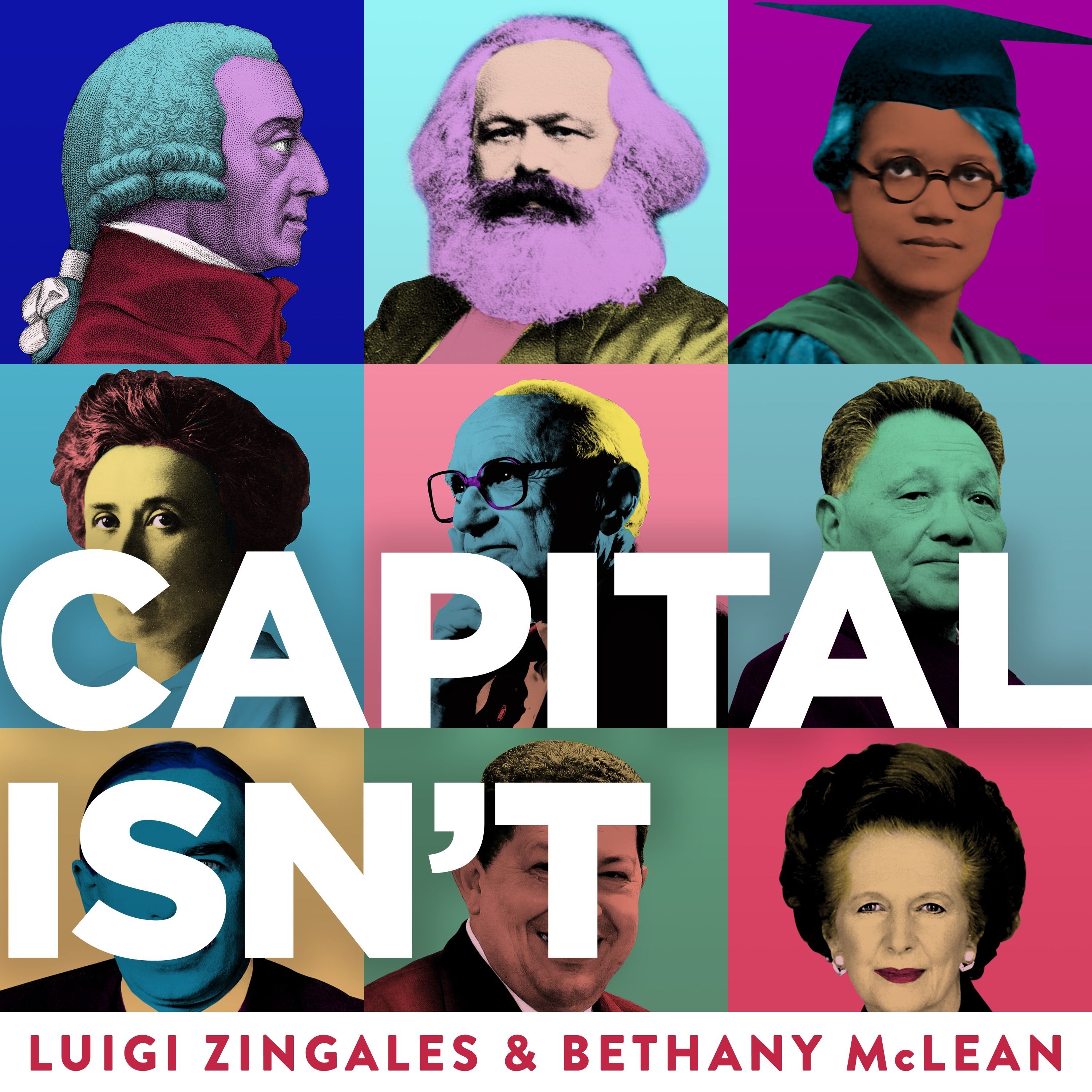
Is capitalism the engine of destruction or the engine of prosperity? On this podcast we talk about the ways capitalism is—or more often isn’t—working in our world today. Hosted by Vanity Fair contributing editor, Bethany McLean and world renowned economics professor Luigi Zingales, we explain how capitalism can go wrong, and what we can do to fix it. Cover photo attributions: https://www.chicagobooth.edu/research/stigler/about/capitalisnt. If you would like to send us feedback, suggestions fo...