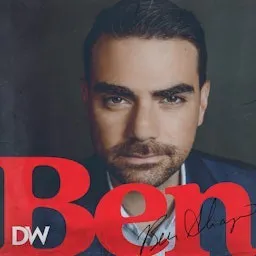
Episode Summary
Executive Summary: The episode spans three major themes: mocking legacy media’s relevance and journalistic credibility, dissecting the U.S. strategy toward Iran and its electoral fallout, and arguing for stricter immigration/free-speech boundaries against perceived anti-American or pro-terrorist activism. The hosts frame current politics as driven more by culture, energy prices, and candidate quality than by abstract ideology.
Main Topics: Legacy media and Scott Pelley/60 Minutes ridicule: The hosts mock Scott Pelley, 60 Minutes, and the idea that legacy broadcast journalism still matters, arguing that deceptive editing and pompous anchoring have destroyed trust. U.S. strategy toward Iran and the Strait of Hormuz: They debate whether the Trump administration has a coherent Iran strategy, weighing sanctions relief, strikes on oil facilities, and the geopolitical risk of prolonging conflict. Midterm politics, candidate quality, and GOP prospects: The conversation turns to 2026 Senate/House prospects, with emphasis on redistricting, swing states, candidate quality, and whether Iran or domestic issues will determine losses. Anti-Israel / pro-terror candidacies and special-interest spending: They criticize candidates they describe as extremist or terror-adjacent, discuss AIPAC’s spending strategy, and argue that special-interest money is not omnipotent. Immigration, free speech, and national self-selection: The hosts argue that countries should be selective about who they admit, especially people who hate their host country, and distinguish individual conduct from group-level judgments. Russia, anti-communism, and cultural contrarianism: They condemn pro-Russia commentary as an obvious propaganda operation and warn against fashionable contrarianism that ignores Russia’s authoritarian, anti-Christian reality. Demographic change, civic renewal, and family formation: The discussion closes with a call for more babies, church attendance, voting, and civic engagement as the real answer to cultural decline.
Key Arguments: Legacy media institutions like 60 Minutes are portrayed as irrelevant to younger audiences and structurally compromised by deceptive journalism. The Iran situation is framed as unresolved, with the worst-case outcome being sanctions relief without denuclearization and renewed Iranian military capability. If the U.S. seeks the best Iran outcome, there may need to be a temporary oil-price spike; avoiding all pain may be unrealistic. Midterm outcomes will likely depend more on candidate quality, redistricting, and domestic issues such as tariffs and corruption than on the Iran war alone. Republicans are seen as weak when they merely wait for Trump to define their position instead of articulating their own agenda. AIPAC and other interest groups are depicted as influential but not all-powerful; money can backfire if spent unwisely. Political extremism on the left is described as normalizing candidates who are openly hostile to Israel or adjacent to terrorism. Immigration should prioritize cultural compatibility and individual merit rather than demographic neutrality or race-based universalism. Free speech does not require countries to admit foreign speakers who advocate violence or hostility to the host nation. Pro-Russia or pro-Putin messaging is treated as propaganda, not principled conservatism, because Russia is portrayed as anti-Christian and authoritarian. The real solution to cultural decline is not mass immigration but family formation, civic participation, and religious involvement.
Data Points: 60 Minutes audience relevance: No one under the age of like 67 watches 60 Minutes - Used by Isabel Brown to argue the program is irrelevant to younger viewers. Kamala Harris interview editing: A few months ago - Referenced as a recent example of deceptive editing by 60 Minutes. Iran worst-case scenario: Sanctions relief without nuclear dust / without end to program - Described as a disastrous outcome if the U.S. fails to extract concessions. Iran oil price benchmark: $70 a barrel to $98 a barrel - Example of a moderate oil spike that could occur if Iranian oil facilities are struck. Iran oil price spike upper bound: $150 a barrel - Used as the extreme scenario the hosts say people fear but may not happen. Young voter cohort: Under the age of 40 or 35 - Described as the core conservative youth base worried about foreign wars. Immigration/foreign policy reference: 10 million illegal immigrants - Mentioned in criticism of a Republican House bill offering mass amnesty. Gen Z unemployment claim: 10 million unemployed Gen Zers - Used to argue amnesty is politically and economically irresponsible. Maine Senate polling: 46% - Kalshi market figure cited for Susan Collins’ chance of winning. Earlier Maine Senate polling: Around 70% - Democrats’ earlier advantage in the race, said to have fallen quickly. Michigan gubernatorial/primary concern: One of the seats Republicans can pick up / Democrats could send a terrorist supporter to Senate - Used to describe a highly competitive Michigan Senate race. Church attendance in Russia: Something like a 10% church attendance rate - Cited to challenge the idea that Russia is spiritually exemplary. UK speech bans: 20 years - Referenced as the potential prison penalty for British citizens tweeting about certain violence-related topics.
Pivotal Quotes: "Is there a bespoke GLP-1 that primarily deals with melting the fat in your brain?" — Ben Shapiro: Opening joke mocking Scott Pelley and legacy media arrogance. "If you want to actually get the outcome that is the best outcome here, you will need to see a temporary price spike in oil." — Ben Shapiro: Explaining the tradeoff he believes may be necessary for an Iran endgame. "We should be able to keep people out of this country who hate our country and mean it ill and want to support terrorism." — Ben Shapiro: Argument for stricter immigration screening and national self-selection.
Implications: The episode reflects a populist-conservative worldview: institutions are untrusted, foreign policy is judged through domestic costs, and culture is seen as the real battlefield. For listeners, it suggests elections will hinge on performance, identity, and credibility more than messaging alone.
About The Ben Shapiro Show
Tired of the lies? Tired of the spin? Are you ready to hear the hard-hitting truth in comprehensive, conservative, principled fashion? The Ben Shapiro Show brings you all the news you need to know in the most fast moving daily program in America. Ben brutally breaks down the culture and never gives an inch! Monday thru Friday.