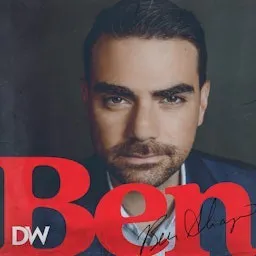
Episode Summary
Executive Summary: The episode argues that most Americans reject both police brutality and rioting, but media and political elites distort George Floyd’s death into a collective indictment of America. Shapiro criticizes double standards on COVID restrictions, defends police as essential against chaos, and says narrative-driven activism encourages looting, self-defense backlash, and false claims of systemic racism.
Main Topics: Police brutality vs. police legitimacy: Shapiro says George Floyd’s death was horrific and Derek Chauvin should go to jail, but argues that police are generally the line between order and chaos and should not be treated as broadly evil or systemically racist. Media and political narrative around collective guilt: A major theme is that elites are framing Floyd’s death as proof that all Americans are complicit in racism, which Shapiro says is false and destructive because it turns a specific crime into a national moral indictment. Rioting, looting, and violence against police: The transcript emphasizes attacks on police, the killing of retired officer David Dorn, and other injuries to law enforcement to show that the unrest is not harmless protest and that media minimize these harms. COVID-19 double standards: Shapiro argues that officials who condemned ordinary gatherings as dangerous during lockdown suddenly tolerated mass protests, revealing that pandemic policy was driven by politics and selective moral approval. Statistics on race, crime, and policing: He cites polling and crime data to argue that Americans support police, oppose brutality, and that disparities in police outcomes are better explained by crime patterns than by systemic anti-Black bias. Performative virtue signaling by corporations and public figures: He criticizes black squares, apologetic statements, and corporate statements as symbolic acts meant to avoid backlash rather than actual policy reforms like ending qualified immunity or police unions. Self-defense and collapse of public order: Examples from Philadelphia and elsewhere are used to argue that when authorities fail to protect property, citizens will defend themselves, reinforcing the need for order and credible law enforcement.
Key Arguments: Most Americans agree police brutality is wrong and that rioting/looting are wrong; the supposed national split is exaggerated by elites. George Floyd’s death was an individual act of murder by Derek Chauvin, not proof that all Americans are responsible. Police officers are often the last barrier between ordinary people and violent criminals, so abolishing or broadly demonizing police is reckless. The media’s framing of racism as a total explanation for inequality encourages looting by treating corporations and stores as symbols of oppression. Attacks on police and civilians during unrest are underreported or minimized because they do not fit the preferred narrative. Selective enforcement of COVID restrictions shows that political leaders did not consistently believe the shutdown rhetoric they used against churches, businesses, and gatherings. Public claims of systemic racism often rely on disparate outcomes rather than proof of discriminatory laws or intent. Performative anti-racism by corporations and celebrities substitutes symbolism for concrete policy changes and does not reduce violence or inequality. Crime statistics and victimization patterns matter when evaluating police use of force; disparities alone do not prove racism. Ending qualified immunity and reforming public-sector police unions are presented as concrete reforms that could address misconduct without embracing anti-police rhetoric.
Data Points: Americans saying anger over protests was fully justified: 57% - Morning Consult/Monmouth poll cited to show broad support for protest anger. Americans saying anger over protests was partially justified: 21% - Morning Consult/Monmouth poll cited alongside the fully justified figure. Americans saying anger was not at all justified: 18% - Poll used to argue most Americans support the underlying outrage. Americans very satisfied with local police: 41% - Poll result used to show broad approval of local police. Americans somewhat satisfied with local police: 30% - Part of the local police satisfaction statistics. Americans somewhat satisfied / neither dissatisfied nor satisfied: 13% - Used in quick mental math to argue about general approval of police. Support for sending in the military to stop rioting: 58% - Poll cited to show strong public support for forceful restoration of order. Strongly oppose military intervention: 19% - Same poll on rioting response. No opinion on military intervention: 11% - Same poll on rioting response. Americans saying Black people more likely than White people to be victims of excessive force: 57% - Shift from 34% in 2016 to 57% in 2020, attributed to partisan/presidential effects. Americans saying Black people more likely than White people to be victims of excessive force in 2016: 34% - Referenced as prior baseline during Barack Obama’s presidency. Police-civilian contacts annually: 375 million - Used to argue Floyd’s case is not representative of routine policing. People fatally shot by police in 2019: 1,004 - Heather McDonald statistics cited to contextualize police shootings. Black people fatally shot by police in 2019: 235 - Used to argue the numbers do not indicate extermination or broad racial targeting. Unarmed Black people fatally shot by police in 2019: 9 - Washington Post database cited in discussion of unarmed victims. Unarmed White people fatally shot by police in 2019: 19 - Washington Post database cited for comparison. Black homicide offenders share in 2018: 53% - Used to explain police encounters as related to crime patterns. Share of robberies committed by Black Americans in 2018: About 60% - Cited to support claim that crime rates affect police use-of-force outcomes. Black Americans share of U.S. population: 13% - Used as denominator in the crime/policing statistics discussion. Police officers injured in Chicago during riots: 132 - Part of a long list of attacks on law enforcement over 96 hours. Secret Service agents injured by Molotov cocktails in Washington: At least 50 - Used to emphasize breadth of unrest-related violence. New York police officers injured during riots: 33 - Included in the violence tally. Los Angeles County curfew: County of 10 million people under curfew for the fourth straight night - Used to illustrate scale of unrest and response. Black unarmed victims as share of all Black homicide victims in 2019: 0.1% - McDonald statistic used to argue police shootings are not the main driver of Black death.
Pivotal Quotes: "Police brutality is bad. Second, the police who you are indicting as systemically racist and evil are the people who are standing between you and a smashed window." — Ben Shapiro: Early framing of police as both imperfect and essential to public order. "The narrative is that black people in America are at an existential threat because of white people in America, even though that is not true." — Ben Shapiro: Core critique of elite framing around race and George Floyd. "Destroying property which can be replaced is not violence." — Nicole Hannah-Jones: Quoted to criticize media figures who minimize rioting and looting.
Implications: The episode pushes listeners toward rejecting collective guilt narratives and toward favoring order, specific reforms, and evidence-based policing debates over symbolic activism. It warns that selective politics around race and COVID may deepen polarization and unrest.
About The Ben Shapiro Show
Tired of the lies? Tired of the spin? Are you ready to hear the hard-hitting truth in comprehensive, conservative, principled fashion? The Ben Shapiro Show brings you all the news you need to know in the most fast moving daily program in America. Ben brutally breaks down the culture and never gives an inch! Monday thru Friday.