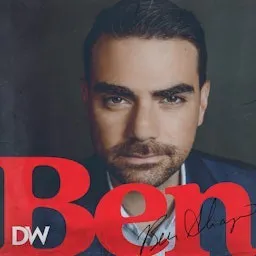
Episode Summary
Executive Summary: The episode is a forceful conservative commentary that attacks progressive views on gender, compelled service, and cultural politics, then pivots to the 2016 Republican primary. Much of the show argues Donald Trump’s rise is driven by manipulative, inconsistent politics and that Ted Cruz is the better conservative alternative. It also critiques media bias, defends craft in art, and condemns what Shapiro sees as moral relativism on the left.
Main Topics: Critique of left-wing morality and transgender politics: The host argues that left-leaning politics redefine bigotry inconsistently, especially around bathroom access, gender identity, and compelled participation in services, claiming the left uses government power to enforce its morality. Republican primary and Donald Trump’s delegate strategy: A major segment analyzes Trump’s New York win, delegate math, and the broader path to the nomination. Shapiro argues Trump benefits from a rigged-in-his-favor system and shifting standards about delegates and fairness. Ted Cruz’s challenge and the unity debate: The transcript contrasts Cruz’s call for unity with Trump’s insistence that the race is effectively over. Shapiro argues Cruz is trapped between two mutually exclusive messages: unity versus Trump being worse than Hillary. Media favoritism toward Trump: The host criticizes Fox News personalities and other commentators for treating Trump more favorably than Cruz and for soft-pedaling tough questions, especially on issues like the KKK and David Duke. Cultural criticism of Hamilton and craft in art: Shapiro argues the musical Hamilton is overrated, politically favored for identity reasons, and musically inferior due to weak craftsmanship, contrasting it with Sondheim’s Sweeney Todd as an example of real craft. Harriet Tubman, Andrew Jackson, and the $20 bill: He approves of removing Jackson from the $20 bill and is open to Tubman’s inclusion, but objects to Alexander Hamilton staying on the $10 because of modern political fashion and the popularity of the Hamilton musical. Moral decline and celebration of vice: The episode closes with attacks on abortion activism and campus feminism, portraying them as examples of the left celebrating sin rather than merely tolerating it.
Key Arguments: The left’s definition of bigotry is inconsistent: it condemns refusal to affirm transgender identity or religious exemptions, while treating coercion in the name of progressive causes as heroic. Government coercion, not logical consistency, is portrayed as the real foundation of left-wing power. Trump’s delegate narrative changes depending on whether the numbers help him; the same delegates are framed as illegitimate when they hurt him and legitimate when they help him. The Republican primary system is structurally uneven, but all candidates knew the rules going in; Cruz argues procedural legitimacy, while Trump argues the rules themselves are rigged. Shapiro contends Trump is politically closer to the left than to conservatism, citing his positions on trade, entitlements, foreign policy, immigration, and social issues. Calls to unify behind Trump are not persuasive to anti-Trump conservatives because they are asked to support a candidate they view as destructive to the movement. Mainstream and conservative media figures are accused of excusing Trump’s flaws while applying tougher scrutiny to Cruz. Hamilton is attacked as politically fashionable but artistically weak; its acclaim is said to come from identity politics and a lack of musical craftsmanship. True artistic quality requires training, structure, and musical complexity, which Shapiro says Hamilton lacks and Sweeney Todd exemplifies. The show frames modern political and cultural trends as celebrating disorder, grievance, and vice rather than excellence or discipline.
Data Points: New York Trump vote share: about 500,000 votes / 60% - Shapiro says Trump won New York with roughly half a million votes and about 60% of the vote. New York Trump delegates: 90 to 91 delegates - He cites Trump’s delegate haul from New York as roughly 90–91. Texas Cruz vote total: 1.2 million votes - Used to compare Cruz’s raw vote total with Trump’s New York result. Texas Cruz delegates: 101 delegates - Cruz won more than twice Trump’s New York vote total but received only slightly more delegates. Remaining delegates needed by Trump: 392 delegates - Shapiro discusses the path to 1,237 and how many delegates Trump would still need. Delegates needed after accounting for unpledged support: 338 remaining delegates - He argues Trump would effectively need about 338 of the remaining delegates if unpledged delegates move his way. Total available delegates referenced: 734 total / 612 pledged - Shapiro gives an overview of the delegate pool still in play. Five-state winning streak: 5 wins - Cruz had won Utah, North Dakota, Wisconsin, Colorado, and Wyoming. Votes in those five states: 1.3 million+ - Shapiro says more than 1.3 million people voted across the five states Cruz won. Hillary Clinton New York votes: over 1 million - He notes Clinton received over a million New York votes, more than double Trump’s total. Bernie Sanders New York votes: more votes than Donald Trump - Used to show Trump’s popular vote performance was weaker than Clinton’s and Sanders’s in New York. Transgender suicide rate cited: 40% - Shapiro references a statistic to argue suicide rates are tied to mental illness, not bathroom laws.
Pivotal Quotes: "The left's ultimate insistence on use of government force to compel that we all obey their kaleidoscopic morality." — Ben Shapiro: Summary of his critique of progressive coercion and inconsistent standards. "Donald Trump is a snake in my kitchen, for sure." — Ben Shapiro: He explains why Trump is more dangerous to conservatism than an opponent on the left. "He means to marry me Monday / What shall I do? / I'd rather die" — Ben Shapiro: From his example of craft in Sweeney Todd, contrasting it with what he sees as the weak craft of Hamilton.
Implications: The episode frames 2016 as a defining fight over conservatism’s identity, warning that Trump’s nomination could reshape the movement. It also signals a broader cultural divide over gender, media credibility, and what counts as serious art or moral seriousness.
About The Ben Shapiro Show
Tired of the lies? Tired of the spin? Are you ready to hear the hard-hitting truth in comprehensive, conservative, principled fashion? The Ben Shapiro Show brings you all the news you need to know in the most fast moving daily program in America. Ben brutally breaks down the culture and never gives an inch! Monday thru Friday.