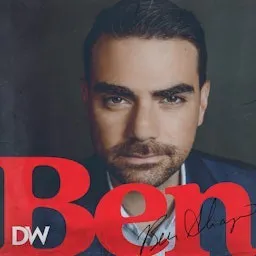
Episode Summary
Executive Summary: Ben Shapiro argues that Democrats are exploiting the first anniversary of January 6 to shift attention from inflation, Federal Reserve rate hikes, and broader policy problems. He frames the event as serious but not an attempted coup, contending that the left is using it to justify sweeping voting-law changes and expand federal power while ignoring comparable unrest during the 2020 BLM riots.
Main Topics: January 6 as political theater: Shapiro claims Democrats elevated January 6 into a historic democratic crisis mainly to score political points and push their agenda, not out of sincere concern for the event itself. Inflation and Federal Reserve tightening: He argues rising inflation and expected Fed rate hikes are the real headline, since they could hurt Democrats politically through higher unemployment and market declines. Limits of the January 6 analogy: Shapiro distinguishes the riot from a coup, saying it was a bad and criminal event but not an institutional overthrow of government because power transferred peacefully within hours. Voting-rights legislation and federal power: He contends Democrats are using January 6 to justify expanding federal control over elections, weaken the filibuster, and centralize voting rules. Double standards on political violence: He contrasts Democratic outrage over January 6 with their response to 2020 BLM riots, arguing the left ignored much larger violence and property destruction then. Media and institutional messaging: Shapiro says the media, corporations, and former presidents are coordinating a narrative that magnifies January 6 while downplaying left-wing extremism and institutional bias. Public health framing of extremism: He criticizes proposals for a 'public health approach' to extremism as a pretext for government involvement in speech, information, and beliefs.
Key Arguments: Democrats are using January 6 as a convenient diversion from inflation, Fed tightening, and Biden’s weaker political standing. January 6 was criminal and shameful, but not a coup or successful insurrection because the constitutional transfer of power proceeded. Biden and Harris invoke democracy rhetorically to justify policies like voting-rights expansion, filibuster reform, and federal election control. The left applies standards inconsistently: it condemns January 6 but excused or supported far more destructive 2020 unrest. Media and institutions amplify the January 6 narrative to paint Trump voters broadly as threats to democracy. Calls to fight disinformation or use a 'public health' model risk legitimizing government control over speech and political thought. Trump’s false election claims were wrong, but criticism of his rhetoric should not be conflated with legal incitement to violence.
Data Points: Federal Reserve portfolio: $8.76 trillion - Size of the Fed bond and asset portfolio that officials considered shrinking after rate hikes. Dow Jones change: -1.1% - Market reaction after Fed minutes suggested faster tightening. Nasdaq change: -3.3% - Tech-heavy index fell after the Fed signal. Probability of March rate hike: roughly two-thirds - Interest-rate futures implied a high chance of a March Fed increase. Police officers injured on January 6: about 100-120 - Shapiro cites this range while contrasting it with BLM riot injuries. Police officers injured during 2020 BLM riots: over 2,000 - Used to argue Democratic outrage over violence is selective. Foundation grants to racial equity causes, 2011-2019: $3.3 billion - Cited from Candid as baseline funding before 2020 surge. Racial equity funding in 2020: $12.7 billion - Jump in philanthropic/corporate funding after George Floyd's death. Racial equity funding in 2021: $11.6 billion - Continued elevated funding the following year. Total racial equity funding, 2020-2021: $24.3 billion - Combined amount Shapiro uses to illustrate institutional support for the left. Trump legal success rate: 1 case out of about 80 - Shapiro says Trump largely lost his election challenges in court. Contested election result in Georgia: ~50,000-vote loss - Used in reference to Stacey Abrams and Democratic rhetoric about elections. Capitol building clearance time: within about 3 hours - Shapiro argues the riot did not prevent the peaceful transfer of power.
Pivotal Quotes: "This is pure political theater because politics is always politics, and it is not possible to be too cynical about politics." — Ben Shapiro: Opening argument about Democrats emphasizing January 6. "A coup requires some sort of institutional support that would legitimate a failure of an effective transition of power." — Ben Shapiro: Explaining why he does not view January 6 as a coup. "Are we going to be a nation that accepts political violence as a norm? You already did." — Ben Shapiro: Response to Biden’s condemnation of January 6 after the 2020 riots.
Implications: The episode frames January 6 as a partisan instrument rather than a singular democratic crisis, warning listeners that election-law reform, speech policing, and anti-extremism policy may be used to expand federal power and reshape politics.
About The Ben Shapiro Show
Tired of the lies? Tired of the spin? Are you ready to hear the hard-hitting truth in comprehensive, conservative, principled fashion? The Ben Shapiro Show brings you all the news you need to know in the most fast moving daily program in America. Ben brutally breaks down the culture and never gives an inch! Monday thru Friday.