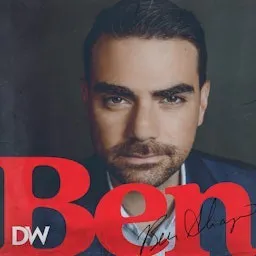
Episode Summary
Executive Summary: The episode argues that Democrats face major electoral headwinds from poor economic sentiment, inflation, and polarization, and that their response is to pivot to January 6 hearings and censorship of conservative media rather than address voters’ concerns. It also attacks cultural-left positions on gender, social media, and school/drag events as evidence of overreach and mismanagement.
Main Topics: Democratic electoral weakness and public pessimism: The transcript centers on polling showing Americans unhappy with the economy, their finances, and the direction of the country, framed as a political liability for Democrats heading into 2022. January 6 hearings as political theater: The host argues Democrats are using primetime January 6 hearings to distract from unpopular policies and recast the midterm narrative, despite the events being widely known and already heavily covered. Censorship and media suppression of conservative voices: The segment criticizes MSNBC, Dan Pfeiffer, and other commentators for calling conservative outlets like the Daily Wire a threat to democracy and advocating deplatforming or suppression. Cultural leftism and gender politics: A long stretch targets AOC, Latinx language, transgender acceptance, and related identity politics as examples of ideological excess disconnected from ordinary Americans. Drag shows and child exposure concerns: The transcript uses a Dallas family-friendly drag event as evidence of inappropriate sexualization of children and broader cultural decline. Legacy media dysfunction and newsroom infighting: The Washington Post controversy over Dave Weigel’s retweet is presented as proof that mainstream media are partisan, hypersensitive, and internally chaotic.
Key Arguments: Polling data shows voters are deeply dissatisfied with the economy, personal finances, and the country’s direction, which should hurt Democrats in the midterms. Inflation, gas prices, and declining real wages are portrayed as the decisive political issue, not January 6 or Trump. Democrats’ plan to hold primetime January 6 hearings is framed as a deliberate effort to distract from their policy failures and shift the midterm message. The host argues that the January 6 attack was serious but limited in scope and already fully known to the public, making the hearings redundant and politically motivated. Left-leaning media figures calling the Daily Wire and similar outlets a threat to democracy are described as attempts to censor alternative viewpoints rather than defend democracy. Cultural-left positions on gender-neutral language, transgender issues, and school race content are presented as out of touch with normal voters. The Washington Post newsroom dispute is used as an example of how mainstream media institutions are internally performative, punitive, and unserious. The episode contends that the real threat to democracy is the attempt to control speech, institutions, and election rules when one side fears losing power.
Data Points: Americans rating the economy as poor or not so good: 83% - Wall Street Journal/NORC poll cited early in the episode Respondents dissatisfied with financial situation: 35% - Highest level since NORC began asking in 1972 Respondents optimistic they can improve standard of living: 27% - Wall Street Journal/NORC poll Respondents who think they do not have a good chance to improve standard of living: 46% - Same poll; a 20-point drop from the prior year Respondents whose financial situation got worse in past few years: 38% - Only other time above 30% was 2007-2009 Annualized inflation rate mentioned: 8.3% - Used to argue inflation is driving pessimism Respondents saying different political views can come together to solve problems: 13% - Used to illustrate polarization Respondents saying transgender people should be accepted by society: nearly 90% of Democrats vs. 38% of Republicans - Used to show partisan division on cultural issues Respondents saying social media platforms are harmful: 64% - Because they emphasize differences between people Generic congressional ballot lead for Republicans: 2 points - CNN analyst Harry Enten cited as best Republican midterm position in 80 years Projected House makeup if election were held then: Republicans 236-241; Democrats 194-199 - Harry Enten projection quoted in transcript Republicans currently holding House seats: 208 - Used to explain potential pickup size Number of January 6 hearings planned: 6 - Democrats’ planned primetime rollout Length of Dave Weigel suspension: 1 month without pay - Washington Post discipline over a retweeted joke What Is a Woman audience score on Rotten Tomatoes: 98% - Used to argue audience enthusiasm despite low critic coverage What Is a Woman critic reviews on Rotten Tomatoes: 1 review - Claim that mainstream critics largely refused to review it
Pivotal Quotes: "83%, 83% said poor or not so good." — Ben Shapiro: Describing the Wall Street Journal/NORC polling on views of the economy "January 6th hearings give Democrats a chance to recast midterm message." — New York Times article quoted by Ben Shapiro: Used to argue the hearings are election strategy rather than neutral oversight "I think these social media companies are in many ways the tobacco companies of this era." — Dan Pfeiffer: Cited as an example of claims that conservative media and platforms should be restricted
Implications: The episode predicts Democrats will struggle in 2022 if they keep relying on January 6 and censorship fights instead of economic relief. It also suggests conservative media and culture-war content will keep gaining traction as alternatives to legacy outlets.
About The Ben Shapiro Show
Tired of the lies? Tired of the spin? Are you ready to hear the hard-hitting truth in comprehensive, conservative, principled fashion? The Ben Shapiro Show brings you all the news you need to know in the most fast moving daily program in America. Ben brutally breaks down the culture and never gives an inch! Monday thru Friday.