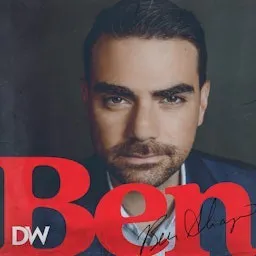
Episode Summary
Executive Summary: The episode argues that American media and institutions now treat racism as acceptable when aimed at whites, while condemning anti-Black racism, and connects that thesis to examples in media, politics, transgender activism, Disney’s “woke” pivot, and Biden-era policy. Shapiro frames these trends as symptoms of elite hypocrisy, grievance politics, and institutional decline.
Main Topics: Selective standards on racism and media hypocrisy: The core segment claims the media and left-wing institutions punish anti-Black racism but normalize anti-white and anti-Asian rhetoric, citing Elon Musk, Scott Adams, and multiple TV/commentary examples. Intersectionality as a hierarchy of moral permission: Shapiro argues that modern intersectional thinking creates a ranked victim hierarchy in which some groups are treated as above criticism and others as legitimate targets. Transgender affirmation and parental conflict: The show discusses Dwayne Wade’s son’s legal transition, criticizing the media for celebrating the process despite the mother’s objections and framing it as ideological capture. Biden administration policy and ‘equity’: The episode criticizes Biden for emphasizing childcare requirements in CHIPS Act funding and broader equity mandates, portraying them as ideological burdens detached from industrial needs. Disney, DeSantis, and corporate wokeness: Shapiro praises DeSantis for stripping Disney’s special district privileges after Disney embraced political activism, arguing the company sacrificed its apolitical brand. Trump, GOP primary dynamics, and media blame-shifting: The transcript contrasts Trump’s strengths and weaknesses, rejects blaming him for the Ohio train derailment, and frames the Republican primary as a likely two-person race. Gun control and emotive politics: The closing section criticizes celebrity and activist responses to mass shootings and argues that the left substitutes emotional display for workable policy.
Key Arguments: The left condemns racism selectively: anti-Black racism is treated as intolerable, while anti-white rhetoric is treated as socially acceptable or even virtuous. Intersectionality has been transformed from a legal theory into a moral hierarchy that determines who may criticize whom. Mainstream media normalize anti-white generalizations by framing them as historical truth, comedy, or “punching up.” The media’s celebration of youth gender transition reflects ideological commitment over parental authority and child welfare. Biden-era industrial policy is burdened by social-justice requirements that distract from strategic goals like semiconductor production. Disney’s turn to overt political messaging justified the loss of its special tax district protections. Trump remains competitive, but his attacks on Fox News may be politically self-defeating. Gun-control debates often rely on emotional outrage rather than concrete, workable solutions.
Data Points: Black Americans saying “it’s OK to be white”: 53% - Referenced from a poll Scott Adams discussed. Black Americans disagreeing with “it’s OK to be white”: 26% - Used by Adams as the basis for his racist generalization. White adults who think race relations are good (2001-2013): About 70% - Gallup trend cited to show pre-2014 racial attitudes. Black adults who think race relations are good (2001-2013): Well over 60% - Gallup trend cited to show pre-2014 racial attitudes. White adults who think race relations are good in 2015: 45% - Gallup data showing sharp decline after 2014. Black adults who think race relations are good in 2015: 51% - Gallup data showing sharp decline after 2014. White adults who think race relations are good in 2021: 43% - Later Gallup reading showing no recovery. Black adults who think race relations are good in 2021: 33% - Later Gallup reading showing no recovery. Women in U.S. construction workforce: 10.9% - Cited to criticize CHIPS Act childcare requirements for construction workers. CHIPS Act subsidy threshold triggering childcare plan requirement: Over $150 million - Companies seeking more than this must outline childcare plans. CHIPS Act funding: $52 billion - Referenced as the subsidy pool tied to the childcare requirement. San Francisco reparations proposal: $5 million per black resident - Mentioned as an example of extreme racial redistribution. Disney commercial example: Legacy properties like Pinocchio, Peter Pan, and Aladdin - Used to argue Disney’s strongest brand assets remain old properties, not new woke content. Toy Story films: Toy Story 5 announced - Used as evidence Disney is milking legacy franchises. Construction jobs shortfall: 413,000 workers - Politico figure cited as a labor bottleneck for Biden’s climate agenda. Manufacturing jobs open: 764,000 - Politico figure cited as another labor bottleneck. Black History Month event quote: "I may be a White boy, but I'm not stupid." - Biden remark highlighted as racially loaded and self-consciously coded. Katy Perry’s net worth: $330 million - Used rhetorically while discussing gun-control commentary.
Pivotal Quotes: "Now they're racist against whites and Asians." — Elon Musk: Musk’s statement on media bias and racial double standards after the Scott Adams controversy. "If white men were going to do something about racism, you had 400 years. You could have done it." — Unnamed woman on TV (quoted by Shapiro): Cited as an example of socially accepted anti-white generalization in mainstream media. "I may be a White boy, but I'm not stupid. I know where the power is." — Joe Biden: Biden’s Black History Month remark, used to illustrate racially coded language in elite politics.
Implications: Shapiro argues that elite institutions now reward ideological conformity over fairness, creating deeper racial, cultural, and political polarization. He warns this will keep distorting media narratives, corporate behavior, and public policy choices.
About The Ben Shapiro Show
Tired of the lies? Tired of the spin? Are you ready to hear the hard-hitting truth in comprehensive, conservative, principled fashion? The Ben Shapiro Show brings you all the news you need to know in the most fast moving daily program in America. Ben brutally breaks down the culture and never gives an inch! Monday thru Friday.