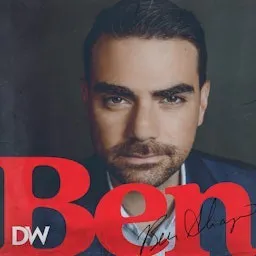
Episode Summary
Executive Summary: The episode centers on Trump’s Georgia RICO indictment, arguing it is a politically fraught and legally expansive case that may fail on intent and enterprise grounds, while also warning that selective prosecution has now opened the door to reciprocal lawfare against Democrats. The show also covers Trump’s election-fraud counteroffensive, Biden-era economic strain, Hunter Biden’s legal troubles, the administration’s workaround on affirmative action, and several culture-war examples the host frames as evidence of asymmetric enforcement and institutional decline.
Main Topics: Georgia RICO indictment against Donald Trump: The host analyzes the Fulton County racketeering case, emphasizing its breadth, the difficulty of proving criminal intent, the possibility of removal to federal court, and the risk of bail complications and a mugshot spectacle. Selective prosecution and political lawfare: A major theme is that prosecutors and institutions are applying legal standards unevenly, which the host argues has turned criminal law into a partisan weapon and will trigger reciprocal prosecutions against Democrats. Trump’s Georgia fraud counter-narrative: Trump’s promise to release a detailed report on Georgia election fraud is interpreted as a strategic move to reinforce lack of criminal intent, even if it does not ultimately change the legal case. Biden administration, affirmative action, and Supreme Court evasion: The host criticizes Education and Justice Department guidance as an attempt to preserve racial preferences despite the Supreme Court’s rejection of race-based admissions. Economic pressure: credit card debt and inflation: The episode argues that worsening consumer finances, rising delinquencies, and persistent inflation are being ignored by politicians while dominating voter concerns. Hunter Biden legal negotiations and DOJ credibility: The discussion highlights Hunter Biden’s plea-deal collapse and his lawyer stepping down as a witness, using it to underscore alleged favoritism and DOJ dishonesty. Culture-war and governance examples: Examples including Massachusetts foster care discrimination, Afghanistan’s girls’ rights after U.S. withdrawal, Nordstrom looting, and the recall of prosecutors are used to argue that ideology is weakening institutions and public safety.
Key Arguments: The Georgia case is the biggest legal threat to Trump because it is state-level, so a conviction cannot be pardoned by a future president or the Georgia governor acting alone. Fulton County’s RICO theory is unusually broad and may be a stretch because it tries to treat a political election-fraud effort as a criminal enterprise without clear proof of intent. RICO is being used to sidestep the need to prove Trump personally intended a specific crime; prosecutors may argue knowledge by co-conspirators is enough. The host argues the real problem is not prosecution itself, but selective prosecution—laws applied only to political opponents rather than universally. Once one side uses aggressive criminalization against political enemies, the other side will eventually do the same, creating mutually assured destruction in politics. Trump’s claim that he is preparing an 'irrefutable' Georgia fraud report is framed as a legal-defense tactic to demonstrate he believed the election was stolen and therefore lacked criminal intent. Biden administration guidance after the affirmative-action ruling is portrayed as a semantic workaround designed to preserve race-conscious admissions. Economic distress, especially credit-card reliance and inflation, is said to matter more to ordinary voters than legal drama, creating an opening for third-party candidates like RFK Jr. Hunter Biden’s legal situation is presented as evidence of a sweetheart-deal culture in DOJ negotiations and a continuing cover-up impulse. Massachusetts foster-care policy is described as ideological discrimination against religious foster parents, showing how identity politics can override child welfare.
Data Points: Georgia indictment length: 98 pages - The indictment against Trump is described as a long narrative-style filing. Number of alleged co-conspirators: 18 - Trump is said to be joined by 18 alleged co-conspirators in the Georgia case. Time window sought for trial: Within 6 months - Fani Willis reportedly wants a trial date within six months, which the host says is unlikely. National GOP primary lead: 38.7 percentage points - Trump’s lead over Ron DeSantis in 538’s national primary average. Trump net favorability after June indictment: Fell from 57.1% positive to 55.3% positive among Republicans - Used to argue legal troubles may weaken him in the general election even if not in the primary. Trump net favorability among adults: Fell from 11.9 points negative to almost 15 points negative - Cited as evidence of broader public backlash after indictment. New credit-card delinquency rate: 7.2% - Second-quarter rate reported by the New York Fed, above pre-COVID levels. Auto-loan delinquency rate: 7.3% - Second-quarter rate, also above pre-pandemic levels. Americans denied secondary education in Afghanistan: Over 2.5 million girls and young women - Used to criticize the aftermath of the U.S. withdrawal and Taliban rule. Possible future denial in Afghanistan: 3 million - Projected number of girls and young women denied education in a few months. Nordstrom theft estimate: Up to $100,000 - Value of merchandise stolen in the Los Angeles smash-and-grab. Participants in Nordstrom smash-and-grab: 30 to 50 people - LAPD estimate of the size of the mob. PureTalk savings: 50% off first month - Advertising mention tied to a promotional code. Balance of Nature discount: 35% off first order - Advertising mention tied to promo code Shapiro. Tommy John discount: 20% off first purchase - Advertising mention tied to tommyjohn.com/ben.
Pivotal Quotes: "The 98 page indictment is basically just an entire narrative story about Donald Trump's attempts to intervene in the 2020 election." — Ben Shapiro: Commentary on the scope and framing of the Georgia case "If you're going to use RICO to go after Donald Trump, you better damn well use it to go after Hillary Clinton and the Hillary Clinton Foundation." — Ben Shapiro: Argument that the justice system is being applied unevenly "The only way to go back to something resembling normal is to absolutely go up against, for example, Hunter and Joe Biden..." — Ben Shapiro: Call for reciprocal enforcement if lawfare continues
Implications: The episode argues the Georgia case could reshape presidential criminal exposure, accelerate partisan lawfare, and deepen public distrust in institutions. It also suggests economic pain and culture-war issues may matter more electorally than the indictments themselves.
About The Ben Shapiro Show
Tired of the lies? Tired of the spin? Are you ready to hear the hard-hitting truth in comprehensive, conservative, principled fashion? The Ben Shapiro Show brings you all the news you need to know in the most fast moving daily program in America. Ben brutally breaks down the culture and never gives an inch! Monday thru Friday.