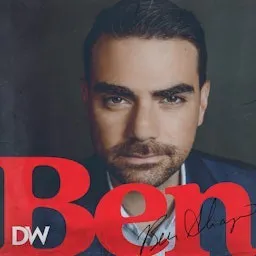
Episode Summary
Executive Summary: The episode centers on Ben Shapiro’s post-debate critique of Donald Trump, arguing that Trump and his supporters excuse failures by blaming outside forces rather than acknowledging campaign mistakes. The show then shifts to a wide-ranging interview with Thomas Sowell on trade, inequality, race, and Supreme Court stakes, followed by media/political commentary, cultural criticism, and a Torah reading on covenant and inherited obligation.
Main Topics: Trump Debate Performance and Blame-Shifting: Shapiro argues Trump’s poor debate showing was largely self-inflicted and that blaming the microphone, the moderator, or conspiracies distracts from his failures. He says successful candidates adjust strategy rather than complain about conditions. Thomas Sowell on Economics and Trade: Sowell explains why free trade, NAFTA, and market competition are generally beneficial, why trade deficits are not inherently harmful, and why protectionism and currency-manipulation rhetoric are misleading. Inequality, Race, and Urban Unrest: Sowell rejects simplistic narratives about systemic racism and income inequality, arguing that historical trends in crime and poverty do not support the left’s preferred explanations for unrest in black communities. Hillary Clinton, Alicia Machado, and Sexism Claims: The show critiques Democrats’ use of Alicia Machado as proof of Trump’s sexism, arguing the case is politically convenient, hypocritical, and weak compared with other Trump controversies. Media Spin, Polls, and Campaign Narratives: The episode highlights how media figures and campaigns overreact to debate optics, misuse online polls, and construct narratives that may not reflect reality. Cultural Criticism and Social Media/TV Politics: Shapiro criticizes public proposals, celebrity political performances, and a Modern Family storyline involving a transgender child as examples of performative, ideologically driven culture. Biblical Covenant and Constitutional Permanence: In the Bible talk segment, Shapiro connects Deuteronomy’s covenant with later generations to the idea that enduring truths and foundational commitments can bind people beyond their own immediate consent.
Key Arguments: Trump’s campaign failures are fundamentally Trump’s responsibility, not the result of microphones, moderators, or unnamed conspiracies. Free trade tends to create net gains even though some jobs are lost; trade deficits are not a meaningful standalone measure of economic health. Protectionism repeats historical mistakes such as Smoot-Hawley, which worsened economic conditions rather than improving them. Government transfer programs make measured income inequality look larger than actual living-condition inequality. Left-wing explanations for black poverty and unrest overemphasize racism and ignore historical data showing worse racism with less rioting in earlier decades. Supreme Court appointments outlast any presidency, making the ideological stakes of the election more important than immediate personality judgments. Democrats’ sexism narrative around Alicia Machado is politically opportunistic and relies on a weak example compared with Trump’s other, more serious offenses. Cultural portrayals of gender dysphoria and public moralizing often turn complex issues into ideological theater. Biblical covenant language is used to argue that enduring truths can bind future generations even if they did not explicitly consent. Successful political leadership requires adapting strategy and owning mistakes rather than blaming referees and conditions.
Data Points: Trump interruption count: 51 - Trump interrupted Hillary Clinton 51 times during the debate, according to the discussion. Clinton interruption count: 17 - Hillary Clinton interrupted Trump 17 times during the debate. Online poll result cited: 83% - A Drudge online poll was referenced as absurdly favoring Trump, used as an example of unreliable audience polling. Wealth loss among top 400 richest people: $19 billion - Used by Shapiro to argue that if the system were truly rigged, wealthy elites would not be losing money in aggregate. Debate polling shift: +4 points - A morning poll was cited as showing Clinton jumping four points after the debate. Swing-state non-college white electorate in Pennsylvania: 36.4% - Used to explain why Trump may have been aiming his debate messaging at white non-college voters in swing states. Swing-state non-college white electorate in Colorado: 37% - Part of the discussion on Trump’s target demographic in swing states. Swing-state non-college white electorate in New Hampshire: 45% - Used to illustrate the size of Trump’s core voting bloc in key states. Swing-state non-college white electorate in Wisconsin: 49% - Cited as one of the most favorable demographics for Trump in a swing state. Swing-state non-college white electorate in Minnesota: 44.6% - Used to show that Trump could be competitive even in states not traditionally seen as likely Republican wins. Age of Alicia Machado at the time of Trump incident: 18 years old - Machado described herself as a little girl at the time when Trump allegedly insulted her. Time since alleged Machado incident: 20 years - Repeatedly emphasized to frame the controversy as old and politically revived.
Pivotal Quotes: "It’s nobody’s fault but Trump’s." — Ben Shapiro: Central argument that Trump cannot blame the debate microphone, the moderator, or conspiracies for his own poor performance. "Losers whine about the playing conditions and the referees all the time. Winners change their game plans." — Ben Shapiro: Used to frame Trump’s post-debate excuses as the behavior of a loser rather than a winner. "The question is: where is the danger greatest and more importantly, the most long-lasting?" — Thomas Sowell: Sowell explains why the election’s Supreme Court consequences outweigh short-term campaign drama.
Implications: Listeners are left with a strongly anti-Trump, pro-free-market, and anti-performative-politics message: campaigns should own mistakes, trade fears are overstated, and the Supreme Court may determine the real long-term stakes of 2016.
About The Ben Shapiro Show
Tired of the lies? Tired of the spin? Are you ready to hear the hard-hitting truth in comprehensive, conservative, principled fashion? The Ben Shapiro Show brings you all the news you need to know in the most fast moving daily program in America. Ben brutally breaks down the culture and never gives an inch! Monday thru Friday.