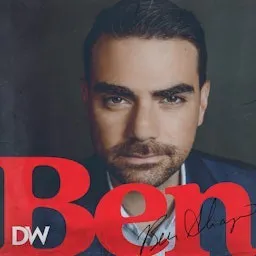
Episode Summary
Executive Summary: The episode argues that Kamala Harris’s post-Biden surge is media-driven, fragile, and based on style rather than substance. It contrasts her recent momentum and celebrity-heavy campaign with her past policy positions and claims the Trump campaign must immediately define her. The show then pivots to Israeli strikes killing Hezbollah and Hamas leaders, framing them as restored deterrence amid Biden-Harris weakness and diplomatic failure.
Main Topics: Kamala Harris’s sudden momentum and media rebranding: The transcript says Harris is benefiting from a rapid, media- and celebrity-fueled reset after Biden’s exit, with enthusiasm rising among Democrats but little substantive scrutiny. Harris’s past record and policy reversals: The host repeatedly argues Harris has reversed or softened positions on reparations, policing, ICE, immigration, health care, trans inmate surgery, fracking, plastic straws, Afghanistan, border policy, and internet rollout. Polling, election dynamics, and Electoral College math: The segment reviews swing-state polling, notes volatility and skepticism about some cross-state results, and cites Nate Silver’s view that Harris may do better in the popular vote but worse in the Electoral College. Trump campaign strategy and opposition framing: The host says Trump should spend heavily and immediately define Harris with ads centered on her actual statements and record, while distancing himself from Project 2025. Media bias and perception management: The transcript criticizes mainstream media for allegedly protecting Democrats, forgetting Biden’s decline, and amplifying descriptors like 'brat' instead of questioning Harris on policy. Israel’s targeted killings of Hezbollah and Hamas leaders: The episode praises Israeli strikes in Beirut and Tehran as a forceful response to Hezbollah/Hamas aggression and a restoration of deterrence after U.S. pressure constrained Israel. U.S. leadership, Afghanistan, and foreign policy weakness: The host argues Biden and Harris have been weak or ineffective on Afghanistan, the border, and support for Israel, portraying their governance as consequence-free failure.
Key Arguments: Harris’s rise is a temporary 'hot moment' amplified by media and celebrity enthusiasm, not a settled electoral realignment. Her current moderate branding conflicts with a recent record of progressive positions, suggesting she is changing positions purely for electoral convenience. The media held Biden’s health problem in place until it became politically inconvenient, then rapidly shifted to praising Harris, showing bias and self-preservation. Trump needs to define Harris early and aggressively through policy-based advertising because most voters do not follow her record closely. Nate Silver’s model suggests Harris may narrowly win the popular vote while still trailing Trump in the Electoral College. Israeli targeted killings of Hezbollah and Hamas leaders are framed as necessary deterrence after years of proxy attacks and U.S.-encouraged restraint. Biden-Harris foreign policy is depicted as weak, especially on Afghanistan, the border, and Israel, and Harris is portrayed as complicit in those failures.
Data Points: Bloomberg Morning Consult swing-state average: Harris 48%, Trump 47% - Overall swing-state polling snapshot cited by the host, with skepticism about its internal consistency. Georgia: Tie - Bloomberg Morning Consult swing-state poll result. Nevada: Harris +2 - Bloomberg Morning Consult swing-state poll result. Arizona: Harris +2 - Bloomberg Morning Consult swing-state poll result. Michigan: Harris +11 - Bloomberg Morning Consult swing-state poll result described as hard to believe alongside Pennsylvania. North Carolina: Trump +2 - Bloomberg Morning Consult swing-state poll result. Wisconsin: Harris +2 - Bloomberg Morning Consult swing-state poll result. Pennsylvania: Trump +4 - Bloomberg Morning Consult swing-state poll result. Democratic satisfaction with Harris: About 8 in 10 Democrats - AP/NORC poll showing enthusiasm has risen sharply since Biden withdrew. Democratic satisfaction with Biden: About 4 in 10 Democrats - AP/NORC poll comparison referenced by the host. Nate Silver popular vote chance for Harris: 54% - Host cites Silver’s model predicting Harris slightly ahead in the national vote. Nate Silver popular vote share: Harris 47.7%, Trump 47.1% - Projected vote shares according to the cited model. Nate Silver Electoral College advantage: Trump about 60-40 - Model-based Electoral College edge cited for Trump. Black reparations position: 2019 - Clip cited where Harris said there should be 'some form of reparations.' Police funding position: 2019 - Clip cited where Harris argued it is wrong to think only more officers make communities safe. ICE comparison to KKK: 2018 - Clip cited where Harris rejected the comparison when pressed on perceptions of ICE. Border decriminalization vote: 2019 - Clip shown of Harris raising her hand in favor of treating illegal border crossing as a civil offense. Private insurance elimination: 2019 - Clip cited where Harris indicated Medicare for All would eliminate private insurance. Fracking ban: 2019 - Clip cited where Harris said she was in favor of banning fracking. Plastic straw ban: 2019 - Clip cited where Harris said plastic straws should be banned. Afghanistan: 2021 - Clip cited where Harris confirmed she was 'the last person in the room' on the decision. High-speed internet funding: $42.5 billion - Infrastructure bill funding cited in discussion of Harris’s broadband assignment. Americans connected to high-speed internet: 0 - Host cites reporting that no Americans were connected under the initiative. Electric school bus funding: $1 billion - Cited as federal funding for the Clean School Bus Program. School districts assisted: 389 - Number of districts mentioned as receiving support. School buses delivered: About 2,400 - Total buses referenced in the program. Districts proving delivery: 27 - Only 27 districts reportedly proved delivery to EPA. Buses actually deployed: 60 - Only 60 buses were reportedly deployed after the program. Per-bus implied cost: About $16.7 million - Host’s rough calculation from $1 billion for 60 buses. Hezbollah rocket attack casualties: 12 Druze children - Mentioned as the trigger for Israel’s retaliation narrative. Hezbollah rockets in northern Israel: About 125,000 total, 25,000 with targeting capacity - Host describes Hezbollah’s capabilities and the evacuation of northern Israel.
Pivotal Quotes: "She has momentum that's being media generated. It is being generated by the celebrity class." — Host: Opening critique of Harris’s sudden rise and media support. "Why has she reversed every single major position that she has held over the course of the last five years in the last week?" — Host: Central challenge to Harris’s credibility and policy consistency. "What we are doing here is very clear: they are re-establishing deterrence." — Host: Explanation of Israel’s targeted strikes on Hezbollah and Hamas leaders.
Implications: The episode frames Harris as vulnerable if her record is publicized, urging rapid opposition messaging. It also predicts continued media protection and escalating Middle East conflict unless U.S. policy changes.
About The Ben Shapiro Show
Tired of the lies? Tired of the spin? Are you ready to hear the hard-hitting truth in comprehensive, conservative, principled fashion? The Ben Shapiro Show brings you all the news you need to know in the most fast moving daily program in America. Ben brutally breaks down the culture and never gives an inch! Monday thru Friday.