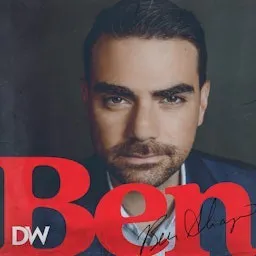
Episode Summary
Executive Summary: The episode is a highly partisan breakdown of the 2024 race, arguing Trump has momentum while Kamala Harris is an empty, over-prepared candidate whose surface seriousness hides weak policy and risky instincts on crime, economy, and foreign policy. It also covers media bias, polling uncertainty, early voting, delayed election results, and a broader critique of progressive narratives about agency and victimhood.
Main Topics: Trump vs. Harris: authenticity and seriousness: The host argues Trump projects unseriousness publicly but has serious policy achievements, while Harris presents as serious but lacks substance underneath. Polling, momentum, and turnout: The discussion reviews swing-state polling, suggests Trump has momentum, and emphasizes turnout operations and early voting as decisive factors. Harris policy critique: economy, policing, and minimum wage: Harris is portrayed as offering simplistic or harmful policy ideas, especially a federal minimum-wage hike and aggressive criminal-justice positions. Crime, Daniel Penny, and public disorder: The transcript links Harris-aligned law-enforcement views to disorder, the Daniel Penny prosecution, and broader concerns about urban crime. Middle East and Israel/Hamas: Harris is criticized for urging ceasefire pressure on Israel and allegedly strengthening Hamas’s bargaining position, while the host defends Israel’s war aims. Media bias and election manipulation concerns: The host attacks 60 Minutes, the New York Times, Newsweek, and other outlets for editing, framing, or fact-checking in ways said to benefit Harris and hurt Trump. Agency, ideology, and campus culture: A broader philosophical point argues that progressives deny personal agency and blame systems rather than choices, a mindset the host says fuels political and cultural dysfunction.
Key Arguments: Trump’s public persona is chaotic, but his policy record is presented as materially strong: low inflation, economic growth, peace deals, and no major new wars. Harris’s carefully managed image masks a lack of substance; she requires heavy staging, prep, and message control to appear competent. The Harris campaign’s fallback strategy is fear-based anti-Trump rhetoric, including claims that he is a fascist or existential threat. A federal minimum-wage increase is described as politically simplistic because very few U.S. workers earn the federal minimum wage and most affected workers are young. Harris is characterized as anti-police and as having supported measures like weakening qualified immunity, which the host says would worsen crime and public disorder. The Daniel Penny case is framed as a test of whether citizens who try to stop violence will be punished, with implications for urban safety and race politics. Harris’s posture on Israel is depicted as undermining deterrence and rewarding Hamas by pushing ceasefire pressure before hostage release. Mainstream media coverage is accused of selectively editing interviews and amplifying anti-Trump narratives while protecting Harris from scrutiny. Delayed vote counting in swing states is presented as a major threat to election trust, regardless of who wins. The broader cultural critique is that progressive politics often treats people as victims without agency, leading to bad policy and worse outcomes.
Data Points: Swing-state lead (Michigan): Over 1 point - RealClearPolitics average cited as Trump leading in Michigan Swing-state lead (Pennsylvania): Almost 1 point - Polling average cited in the race breakdown Swing-state lead (Wisconsin): 0.4 points - RealClearPolitics average cited as Trump ahead Swing-state lead (Arizona): 1.6 points - Polling average cited in the race breakdown Swing-state lead (North Carolina): 0.5 points - Polling average cited as Trump ahead Swing-state lead (Georgia): 1.8 points - Polling average cited as Trump ahead Federal minimum-wage workers: About 1 million - Host cites U.S. workers paid at or below the federal minimum wage Minimum-wage workers under 25: 45% - Bureau of Labor Statistics data cited to show minimum wage is mostly a starter-job issue Hourly workers ages 16-19 paid minimum wage or less: About 3% - Used to argue the minimum wage mainly affects younger workers Hourly workers age 25 and older paid minimum wage or less: Just under 1% - Used to support the claim that the minimum wage is not a major labor-market issue for older workers Urban violent crime increase: 40% between 2019 and 2023 - Cited in discussion of disorder and police policy Median home price in Las Vegas area: $445,000 - Used to illustrate housing-cost pressure in Nevada Home-price increase in five years: More than 50% - Same Nevada housing-cost example Price of gold: Up 40% over the past four years - Used in an ad read about protecting savings from inflation Early votes cast nationally: More than 15 million - Discussing early voting trends Early votes cast in seven swing states: 5.3 million - Used to assess turnout patterns Early votes by Democrats in states with party registration: About 47% - Early-vote composition analysis Early votes by Republicans in states with party registration: 33% - Early-vote composition analysis Returned ballots by Democrats: About 49% - Compared to GOP in early-voting data Returned ballots by Republicans: 31% - Compared to Democrats in early-voting data Mid-election vote-count timing in Michigan: Unofficial results by close of business Wednesday - Secretary of State Jocelyn Benson says results may not be available until the day after Election Day Expected election call timing: Saturday - Fox News decision desk head Arnon Mishkin’s estimate for when the race may be called 2016 Trump vote share: 46.1% - Used to argue Trump’s support has been stable 2020 Trump vote share: 46.7% or 46.8% - Same point about Trump’s consistent vote ceiling Hamas attack deaths: 1,200 - Host references October 7th casualties in Israel Hostages taken: 250 - October 7th attack figures cited Hostages still held: 100 - Used in the Israel/Hamas discussion Gaza deaths discussed in UCLA Q&A: Over 40,000 - Questioner cites this figure during campus appearance
Pivotal Quotes: "In many, many ways, Donald Trump is an unserious man. But the consequences of him being president of the United States are brutally serious." — Ben Shapiro: Contrast between Trump’s style and policy substance "Underneath the facade of serious politician, there is nothing serious there. There's nothing serious there." — Ben Shapiro: Critique of Kamala Harris’s competence and substance "It is not incumbent on the Israeli government to surrender just because terrorists are evil enough to hide behind civilians." — Ben Shapiro: Defense of Israel’s Gaza war conduct
Implications: The segment frames the race as a choice between Trump’s known style and Harris’s empty branding, warning that delayed counting, media framing, and weak policy clarity could intensify post-election distrust and polarization.
About The Ben Shapiro Show
Tired of the lies? Tired of the spin? Are you ready to hear the hard-hitting truth in comprehensive, conservative, principled fashion? The Ben Shapiro Show brings you all the news you need to know in the most fast moving daily program in America. Ben brutally breaks down the culture and never gives an inch! Monday thru Friday.