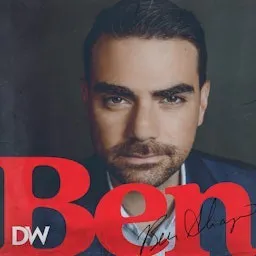
Episode Summary
Executive Summary: The episode centers on three major themes: the Trump administration’s legal and political clashes with Harvard over antisemitism, the deportation and due-process fight over Salvadoran nationals and campus activists, and the rapidly shifting tariff war with China. It also covers foreign policy concerns about Russia/Iran, plus cultural commentary on political violence, Coachella, and Blue Origin’s all-woman space flight.
Main Topics: Harvard funding freeze and civil-rights enforcement: The host argues Harvard’s federal funding should be conditioned on compliance with civil-rights law, especially amid campus antisemitism and DEI controversies. He frames the Trump administration’s freeze as legally and morally justified, though some specific demands may exceed the core complaint. Deportation, due process, and the Abrego Garcia case: The transcript discusses the Supreme Court and executive-branch dispute over Kilmar Abrego Garcia, a Salvadoran national with alleged MS-13 ties. The host stresses that deportation is separate from citizenship and argues the left is overreacting to an ultimately likely removal. Tariff war, China, and market instability: A major segment analyzes Trump’s tariff strategy, the partial exemptions for electronics and autos, and the uncertainty this has created in markets. The host supports the goal of containing China but criticizes the execution as chaotic, politically favoring large firms, and potentially inflationary. China’s retaliation and geopolitical maneuvering: The episode notes that China is responding to U.S. tariffs by deepening ties with Vietnam and restricting exports of rare earth metals and magnets, while also limiting Boeing-related purchases. The host argues this shows why allies and supply-chain resilience matter before escalating trade conflict. Foreign policy: Russia, Ukraine, and Iran negotiations: The host criticizes Steve Witkoff’s role as a negotiator, saying he appears too soft on Russia and too close to an Obama-style Iran deal. He argues Trump should rely more on stronger officials and pursue real disarmament from Iran, not a watered-down enrichment framework. Political violence and cultural decay: The segment condemns the arson attack on Josh Shapiro’s home and criticizes public praise for Luigi Mangione and other violent or extremist figures. The host warns that normalizing political violence and radical rhetoric could encourage more attacks. Pop-culture commentary: Coachella and Blue Origin: The episode closes with satirical commentary on Coachella fashion and Blue Origin’s celebrity space trip, mocking the vanity and performative feminism of the event while conceding that private spaceflight can eventually lower costs through market competition.
Key Arguments: Harvard’s massive endowment makes its reliance on federal money politically indefensible, and federal funding can legitimately be conditioned on civil-rights compliance. The administration is correct to target antisemitism and DEI practices that allegedly violate civil-rights norms, even if some demands may not survive judicial review. Abrego Garcia’s case is about process, not innocence; deportation authority exists even if procedural errors occurred. Trump’s tariff goal of boxing in China is strategically sensible, but the rollout is too abrupt and inconsistent to sustain American supply chains or allies. Large companies are likely to receive exemptions through lobbying, while smaller businesses bear the brunt of tariff costs. China is retaliating rationally by seeking allies, restricting rare-earth exports, and pressuring Boeing, which highlights the need for U.S. supply-chain diversification. Steve Witkoff is presented as too inexperienced and conciliatory for high-stakes negotiations with Russia and Iran; the host prefers a firmer, more experienced foreign-policy team. Political violence is becoming normalized by the left, and public figures who praise or excuse violent actors contribute to a dangerous environment.
Data Points: Harvard federal funding (FY 2024): approximately $686 million - Annual federal agency funding received by Harvard, primarily for research Harvard share of sponsored research revenue: about 68% - Portion of Harvard’s sponsored research revenue coming from federal funding Harvard share of operating revenue: roughly 11% - Estimated overall operating revenue tied to federal funding Largest federal funding source: Department of Health and Human Services: $520 million - Major federal contributor to Harvard in FY 2024 Harvard endowment: $53 billion - Used to argue the university does not need taxpayer support Harvard grant freeze: $2.26 billion - Amount frozen by the Trump administration in multi-year grants and contracts Life insurance example price: $292 per year for $1 million coverage - PolicyGenius ad copy cited during the episode Pure Talk plan: $35/month - Unlimited talk, 15GB data, and hotspot offered in sponsor read Rare earth export halt: 7 heavy rare earth metals - China stopped exporting key processed minerals after April 3 Rare earth magnet supply: about 90% of world supply - China’s dominance in heavy rare earth magnets Abrego Garcia legal status: credibly accused of MS-13 membership - Described as the basis for deportation authority, not a final criminal conviction Family detention/payment arrangement with El Salvador: $6 million - Payment referenced for the prison arrangement with El Salvador Tariff rate on China: 145% - The host cites the administration’s China tariff level Tariff rate on non-China imports: 10% - Broad tariff applied after rollback of some measures CNBC supply-chain survey result: 61% said relocation would be more cost-effective to lower-tariff countries - Used to argue reshoring may shift production to Vietnam rather than the U.S.
Pivotal Quotes: "The idea that Harvard University is somehow owed federal money is absurd." — Ben Shapiro: Argument supporting the federal funding freeze on Harvard "With respect to you, he's a citizen of El Salvador." — Stephen Miller: Oval Office discussion about Abrego Garcia and U.S. authority over deportation "Nobody is getting off the hook for the unfair trade balances and non-monetary tariff barriers that other countries have used against us, especially not China." — Donald Trump: Clarification of the administration’s tariff stance after exemptions were announced
Implications: The episode frames coming battles over universities, immigration, tariffs, and foreign policy as tests of executive power, judicial limits, and economic resilience. For listeners, the key takeaway is that policy chaos may benefit large institutions and lobbyists while raising costs and instability for everyone else.
About The Ben Shapiro Show
Tired of the lies? Tired of the spin? Are you ready to hear the hard-hitting truth in comprehensive, conservative, principled fashion? The Ben Shapiro Show brings you all the news you need to know in the most fast moving daily program in America. Ben brutally breaks down the culture and never gives an inch! Monday thru Friday.