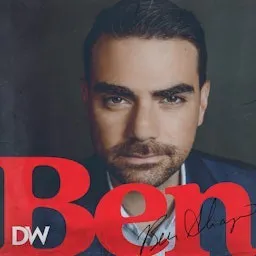
Episode Summary
Executive Summary: The transcript is a political commentary segment arguing Republicans face real danger heading into 2026 because weak economic sentiment, tariff uncertainty, and voter dissatisfaction are eroding their coalition. It also covers the government shutdown, the politicization of Elon Musk/Tesla, Democratic leadership confusion, Mamdani-style socialism, and Elise Stefanik’s New York governor campaign.
Main Topics: Republican political vulnerability heading into 2026: The segment frames recent off-year election losses as a warning that Republicans are underperforming across multiple states and could lose the House if economic dissatisfaction continues. Economy, inflation, and investor uncertainty: A major theme is that the public feels squeezed by prices, job-market softness, and market instability, with the host blaming tariffs, regulation, and government intervention for suppressing broad-based growth. Stock market speculation and Tesla/Elon Musk compensation: The discussion shifts to market concentration in Big Tech and Tesla’s extreme valuation, defending Musk’s pay package as a shareholder-driven response to his importance to Tesla’s future. Government shutdown and fiscal brinkmanship: The host argues Republicans are trying to minimize shutdown damage while Democrats use the shutdown politically, especially over Obamacare subsidies and SNAP funding disputes. Democratic Party fragmentation and lack of leadership: Polling is cited to show Democrats do not agree on who leads the party, suggesting a vacuum that could be filled by more radical figures or remain strategically useful for Democrats. Mamdani-style socialism and anti-Israel politics: The transcript criticizes Zohran Mamdani and the DSA, portraying their demands as extreme, Israel-obsessed, and evidence that Democrats may be moving further left. New York governor race: Elise Stefanik vs. Kathy Hochul: Elise Stefanik’s gubernatorial run is presented as a serious challenge to Hochul, focusing on affordability, crime, taxes, and Trump alignment as core campaign issues.
Key Arguments: Republicans are politically exposed because midterm-style backlash, weak enthusiasm, and poor economic perceptions are converging at once. The economy is the decisive issue; voters are worried about prices, jobs, and whether growth is broad-based or limited to tech/AI. Tariffs and regulatory uncertainty are discouraging investment and making markets overly speculative instead of fundamentally driven. Tesla’s massive valuation and Musk’s compensation package are framed as shareholder rationality, not simply greed or political favoritism. The shutdown is being used as a political weapon, with Democrats willing to prolong it if they think it hurts Trump. Democrats lack a clear leader, which reflects party fragmentation and ideological drift. Mamdani and the DSA are portrayed as far-left extremists whose agenda is centered on anti-Israel demands and socialism. Stefanik is positioned as a viable alternative in New York because Hochul is unpopular, tied to inflation and crime, and vulnerable to voter backlash.
Data Points: Cook Political Report toss-up seats: 16 - Estimated competitive House seats discussed as a key reason Republicans are vulnerable in 2026. Toss-up seats held by Republicans: 10 of 16 - Shows Republicans are defending more competitive districts than Democrats. Potential seat variance mentioned: 34 seats - Combined total of toss-up and leaning seats described as possible movement range. Average House seat loss in midterms since WWII: 26 seats - Used to argue the president’s party usually loses ground in midterms. Average Senate seat loss in midterms since WWII: 3 to 4 seats - Historical baseline for presidential-party losses. House losses when president approval is below 50%: 37 seats on average - Used to emphasize the danger of weak presidential approval. House losses when president is popular: 14 seats on average - Comparison point for approval-based midterm outcomes. Stock market gains concentration: Nearly all gains to top 7 companies - Used to argue growth is narrow and concentrated in tech/AI. Private company employment: Mixed September/October readings - ADP and Revelio data are cited as conflicting but generally soft. October job cuts: More than 150,000 - New York Times figure cited as evidence of rising layoffs. Magnificent Seven average drop: 2.2% - Big Tech declined more than the rest of the market during the selloff. Rest of the S&P 500 drop: Less than 1% - Shows the selloff was concentrated in speculative names. Tesla P/E ratio: 307 - Used to argue Tesla’s valuation is extreme and reflects future expectations. NVIDIA P/E ratio: 53-54 - Cited as very high but less extreme than Tesla. Apple P/E ratio: 36 - Part of the discussion comparing major tech valuations. Microsoft P/E ratio: 34 - Part of the comparison of mega-cap valuations. Amazon P/E ratio: 34 - Part of the comparison of mega-cap valuations. Alphabet P/E ratio: 30-28 - Cited as relatively more reasonable than peers. Inflation rate referenced: Nearly 3% - Used to argue inflation is lower than under Biden but still too high to ignore politically. Gasoline price comparison: Close to $2/gallon vs. $4.50-$5 under Biden - Presented as evidence Republicans have improved affordability. SNAP recipients affected: 42 million - Referenced in the shutdown fight over food aid funding. Legacy Box donation: $10,000 worth of legacy boxes - Promotional mention tied to Veterans Day. Stefanik district turnout: Highest turnout of any congressional district in New York State - Used by Stefanik to argue she can mobilize voters statewide. Kathy Hochul election margin cited: Won by about 5.5 points in 2022 - Used to show she is not overwhelmingly popular. Trump vote total in New York cited: Close to 3.4 million - Stefanik uses this to suggest a broad anti-Hochul coalition is possible. Hochul vote total cited: 3.1 million - Used to argue Trump outperformed Hochul in New York despite the state’s Democratic lean.
Pivotal Quotes: "The reality is, as I talked about a couple of days ago, the elections this week weren't just obviously in Virginia or in New Jersey or in New York City." — Host: Opening the political analysis of Republican weaknesses after off-year elections. "The economy is the number one issue." — Host: Summary of exit polls and the central thesis for Republican vulnerability. "The future of the party is Zoron and Abigail and Mikey, right?" — Senator Chris Murphy (quoted by host): Illustrates Democratic confusion and the internal struggle over party direction.
Implications: The episode argues 2026 will hinge on economic confidence: if prices, jobs, and tariffs keep worrying voters, Republicans could lose control of the House and Democrats may drift further left. In New York, Stefanik’s run tests whether a Republican can exploit Hochul’s weakness and Mamdani backlash.
About The Ben Shapiro Show
Tired of the lies? Tired of the spin? Are you ready to hear the hard-hitting truth in comprehensive, conservative, principled fashion? The Ben Shapiro Show brings you all the news you need to know in the most fast moving daily program in America. Ben brutally breaks down the culture and never gives an inch! Monday thru Friday.