Episode Summary
Executive Summary: The episode centers on an attempted assassination at the White House Correspondents’ Dinner and uses it to argue that left-wing conspiratorial rhetoric and the normalization of political violence are creating dangerous “permission structures” for extremists. The host details the security breach, reads from the alleged shooter’s manifesto and posts, and connects the incident to broader trends in online radicalization, media amplification, and declining civic norms.
Main Topics: White House Correspondents’ Dinner shooting attempt: The host recounts the timeline of the attack, the suspect’s breach of hotel and event security, the evacuation of Trump, Melania, and others, and the law-enforcement response. Alleged shooter’s ideology and manifesto: The transcript dissects the suspect’s social media activity and manifesto, arguing he was influenced by left-wing conspiracism, anti-Trump narratives, and Epstein-related theories. Permission structures for political violence: A central thesis is that repeated claims that Trump and other conservatives are pedophiles, fascists, or traitors can make violence seem like self-defense to unstable people. Role of online ecosystems and influencers: The host argues that platforms and prominent commentators reward inflammatory language, which intensifies radicalization among younger, highly online audiences. Dispute over right-wing vs. left-wing violence: The episode pushes back on claims that political violence is mainly right-wing, citing examples and studies the host says show more support for violence among liberals or the left. Media, conspiracy theories, and staged-event narratives: The host criticizes commentators who speculate that attacks were staged and argues that conspiracism itself erodes trust and increases the risk of violence.
Key Arguments: The attack was enabled by serious security failures, including weak monitoring of hotel areas where the suspect stayed and assembled weapons. The alleged shooter’s writings and posts reflect left-wing conspiratorial beliefs about Trump as a pedophile, rapist, traitor, and antichrist-like figure. Repeatedly portraying political opponents as monstrous criminals creates a psychological and moral framework in which violence feels justified. Influencers and media figures who embrace or platform extremist rhetoric help mainstream dangerous ideas. Political violence is not ideologically symmetric; the host argues the left has cultivated more robust permission structures for such violence. Conspiratorial narratives are not harmless exaggerations; they can motivate real-world violence and destabilize public trust. Online virality rewards rage and absolutist language more than reasoned disagreement, especially among younger users.
Data Points: Attack timing: About 8:30 p.m. Eastern - The suspect reportedly breached the checkpoint and began firing while guests were eating at the White House Correspondents’ Dinner. President’s social post time: 9:17 p.m. - Trump posted on Truth Social that Secret Service acted quickly and bravely and said he recommended letting the show go on if law enforcement allowed it. Event cancellation time: A few minutes after 9 p.m. - The White House Correspondents Association announced the dinner would not continue. Press conference time: About 10:33 p.m. - Trump spoke at the White House after the event was evacuated. Suspect’s education: Caltech graduate, 2017 - The host described the suspect as having a BS in mechanical engineering and later a master’s in computer science. Suspect’s academic performance: 3.0 GPA - Presented as part of the suspect’s background before turning to his politics. Manifesto warning: Sent 10 minutes before attack - The manifesto reportedly preceded the assault by about ten minutes. Distance breached: 60 feet - The Washington Post schematic was described as showing the shooter sprinting through security before being stopped. Weaponry found: Shotgun, handgun, and multiple knives - D.C. police said the suspect carried multiple weapons. Polling on justifying Trump’s murder: 38.5% overall; 56% left of center; 20% right of center - Cited from a Network Contagion Research Institute study referenced in the episode. Political violence survey: 59% of Democrats and 71% of Republicans say violence is never justified - A chart mentioned in the transcript comparing responses by party. Very liberal respondents: 25% say violence can be justified - The host cited a YouGov poll showing higher acceptance among very liberal Americans. Very conservative respondents: 6% say violence can be justified - Used to argue that support for political violence is much lower among conservatives. Age 18–29: Almost 20% say violence can be justified - The host said younger Americans are more likely to accept political violence. Age 45–64: 8% say violence can be justified - Used to support the claim that permissiveness is strongest among younger cohorts. Code Pink signage: "death to tyrants" - Mentioned as protesters outside the event, used to illustrate the broader atmosphere.
Pivotal Quotes: "You cannot hug Luigi Mangione and pretend you hate political violence." — Ben Shapiro: Used to argue that some on the left normalize or excuse violent actors while claiming to oppose violence. "The permission structures for violence have been set up and bolstered and put into place for years now." — Ben Shapiro: Core thesis of the episode tying rhetoric, conspiracism, and radicalization together. "Conspiracism, unbacked by evidence, generates violence." — Ben Shapiro: A direct statement of the episode’s moral and political warning.
Implications: The episode warns that demonizing opponents and rewarding conspiratorial outrage can accelerate radicalization, normalize assassination fantasies, and deepen public distrust. It argues future stability depends on rejecting falsehoods and lowering the temperature of political discourse.
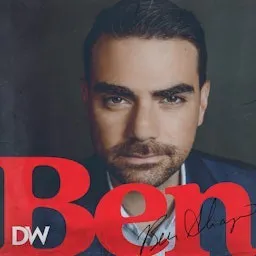
About The Ben Shapiro Show
Tired of the lies? Tired of the spin? Are you ready to hear the hard-hitting truth in comprehensive, conservative, principled fashion? The Ben Shapiro Show brings you all the news you need to know in the most fast moving daily program in America. Ben brutally breaks down the culture and never gives an inch! Monday thru Friday.