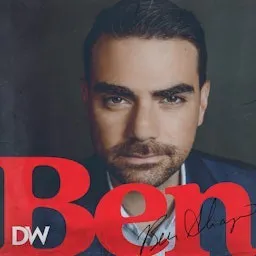
Episode Summary
Executive Summary: The episode centers on Ben Shapiro’s response to the Parkland school shooting, criticizing emotional media/political reactions, arguing that gun confiscation and repeal of the Second Amendment are impractical and dangerous, and defending the NRA against accusations of controlling politics. He also covers failed Senate immigration/DACA votes, Trump-related scandal updates, cultural commentary, and listener Q&A on policy, economics, and identity.
Main Topics: Parkland shooting and the gun-control backlash: Shapiro frames the post-shooting debate as a predictable cycle of outrage and counters calls for sweeping gun restrictions with arguments about constitutional rights, enforcement limits, and the practical impossibility of confiscating hundreds of millions of guns. Media exploitation and emotional politics: He criticizes CNN, Jimmy Kimmel, and others for using grieving victims and families to push policy agendas, arguing that grief should not confer special authority over policy analysis and that media are manipulating emotions over reason. Second Amendment repeal debate: Shapiro responds to a Brett Stephens column resurfacing online, dismantling the case for repealing the Second Amendment by disputing cited studies, arguing armed citizens deter tyranny, and emphasizing individual self-defense and liberty. NRA influence and political money: He pushes back on claims that the NRA 'buys' politicians, compares NRA spending to union and abortion-lobby spending, and argues elected officials generally already reflect voters’ pro-gun preferences rather than being corrupted into them. Immigration, DACA, and Senate gridlock: He reviews several failed immigration proposals, arguing Democrats and Republicans both used the issue tactically, that Democrats refused compromise, and that Trump’s leadership on the issue was inconsistent. Trump scandal and moral commentary: He briefly addresses Stormy Daniels/Karen McDougal stories and the 'King David' comparison, dismissing the analogy because repentance is central to that biblical model and is absent here. Mailbag: culture, economics, and values: He answers listener questions on protectionism, conservatism’s cultural standing, political systems, right-wing dictatorships/Hitler, welfare policy, language standards, conservative inspiration, and same-sex attraction.
Key Arguments: Post-shooting gun-control advocacy is often emotionally driven, vague, and ultimately points toward confiscation rather than targeted reform. Mass shootings and gun violence cannot be solved by simplistic state-level gun-ownership correlations or by assuming more restrictions equal safety. The Second Amendment is tied to life, liberty, and the practical need for self-defense against criminals and potentially overreaching government. Grieving victims deserve sympathy, but their pain does not make them policy experts; media should not exploit them for political messaging. The NRA is influential, but claims that it dominates politics via money are overstated when compared with spending by unions and abortion-rights groups. Election outcomes and legislative gridlock on guns reflect public opinion and political incentives more than NRA cash. Large-scale gun confiscation would be politically impossible and likely ineffective given the existing stock of civilian firearms. Immigration/DACA deadlock shows both parties using symbolic fights while avoiding durable compromise. The government’s failure to act on a credible FBI tip underscores incompetence in enforcement and public safety. Values such as responsibility, discipline, and monogamy/behavioral self-control matter more than abstract political slogans in shaping culture.
Data Points: Lives lost in Parkland shooting: 17 - Referenced repeatedly as the central tragedy driving the debate. Police calls to shooter's house: 39 times - Used to argue that the system failed on warning signs before the shooting. Gun ownership in households: 42% - Cited to show how politically and practically difficult confiscation would be. Estimated number of guns in the U.S.: 300 million - Used in the argument that confiscation or repeal would not solve the problem quickly or easily. NRA spending supporting Trump in 2016: $21 million+ - Used to rebut claims that NRA money uniquely controls politics. NRA total spending on all candidates (1998-2016): $13 million - Attributed to PolitiFact in discussion of political influence. NRA political activity spending (18 years): $203.2 million - Includes PAC spending, ads, and lobbying over 18 years. NRA spending in 2016: $54.4 million - Used as a high-end annual example of NRA political activity. Labor union political/lobbying spending in 2016: $1.713 billion - Compared against NRA spending to argue unions are far larger political spenders. Planned Parenthood outside spending (2012 and 2016): $34 million - Used to challenge the idea that the NRA uniquely 'buys' politics. Emily's List spending in 2016: $33.2 million - Another comparison point in his broader political spending argument. Senators voting for Grassley White House DACA/wall bill: 39 to 60 - The bill failed on the Senate floor. Support for Rounds/King DACA compromise: 54 votes - It fell short of the 60 needed to overcome filibuster rules. DACA population mentioned by Cruz: 690,000 people - Used in an argument that Republicans were expanding amnesty too far. Annual border-security grant in McCain/Coons proposal: $110 million - Part of a DACA deal that excluded wall funding. Border wall/security funding in Grassley bill: $25 billion - Conditioned on a path to citizenship for DACA recipients. Mass public shootings per million people (U.S.): 0.078 - Cited from Crime Prevention Research Center comparison with EU countries. Average incident rate for 28 EU countries: 0.0602 - Used to argue the U.S. is not statistically different from Europe on this measure. Trends in U.S. growth under Reagan: Largest peacetime growth in American history - Referenced in a mailbag response defending Reagan-era economics.
Pivotal Quotes: "If they do have a plan, it really is to confiscate guns." — Ben Shapiro: Core claim about what gun-control advocates ultimately want. "The government sucks at everything and they prove it once again." — Ben Shapiro: Reaction to the FBI missing a credible warning tip about the shooter. "We have to be bold, we have to go forward, and we cannot let the National Rifle Association... decide what the character of America is." — Nancy Pelosi: Used by Shapiro to illustrate Democratic framing of the NRA as the key obstacle.
Implications: Shapiro’s framing pushes listeners toward skepticism of emotional gun-control rhetoric, suspicion of media-driven activism, and support for constitutional limits, while also reinforcing a broader conservative critique of institutional incompetence and political theater.
About The Ben Shapiro Show
Tired of the lies? Tired of the spin? Are you ready to hear the hard-hitting truth in comprehensive, conservative, principled fashion? The Ben Shapiro Show brings you all the news you need to know in the most fast moving daily program in America. Ben brutally breaks down the culture and never gives an inch! Monday thru Friday.