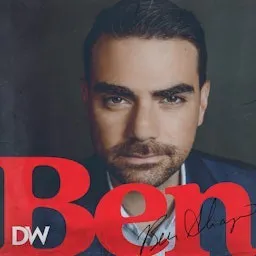
Episode Summary
Executive Summary: The episode argues that a close Ohio special election and strong Democratic special-election performances signal Republican vulnerability, despite a narrow GOP win. Shapiro says Democrats are veering left toward figures like Alexandria Ocasio-Cortez, whose policy ideas he mocks as economically unrealistic. He also defends Twitter’s refusal to blanket-ban Alex Jones and criticizes online mobbing, while highlighting media double standards and culture-war excesses.
Main Topics: Ohio special election and GOP warning signs: Shapiro frames the Ohio 12th District race as a near-loss in a heavily Republican seat, arguing the narrow Balderson win shows weak Republican enthusiasm and suburban backlash to Trump. Washington primaries and broader Democratic strength: He cites Washington state primary results as additional evidence that Democrats are overperforming in districts Republicans should hold comfortably, reinforcing the idea of a possible blue wave. Democratic radicalization and Alexandria Ocasio-Cortez: A large portion of the episode attacks Ocasio-Cortez as a symbol of the Democratic future, arguing that her media rise reflects the party’s turn toward socialism and policy ignorance. Cost critique of Medicare for All and progressive spending: Shapiro argues that proposed Democratic programs would massively expand federal spending, strain the budget, and require huge tax hikes, citing left-leaning analyses to support his case. Republican scandal and political messaging failure: He says scandals like Chris Collins distract Republicans from making Democrats’ agenda the central issue, and that GOP focus on Trump-centric drama hurts electoral prospects. Alex Jones, platform bans, and mob censorship: Shapiro praises Twitter’s more limited approach to Alex Jones and warns that social-media mobs and deplatforming campaigns on both left and right damage public discourse. Culture-war commentary and media hypocrisy: He criticizes activist culture around race, gender, and identity, arguing that the left applies inconsistent standards while mainstream media rewards ideological conformity.
Key Arguments: A razor-thin Republican win in a deep-red Ohio district is not reassuring; it suggests Republicans are underperforming even in favorable territory. The special-election polling was accurate, which means the result should be taken seriously rather than dismissed as a polling anomaly. Democrats are increasingly energized by their base’s radical wing, which may help them in primaries but could hurt them in general elections if they nominate candidates like Ocasio-Cortez. Ocasio-Cortez’s claims about the disappearance of the upper middle class and the way America used to be are factually wrong or oversimplified. Progressive proposals such as Medicare for All would require enormous new spending and tax increases; even left-leaning analyses say the math is difficult or unrealistic. Republicans should focus on making elections a referendum on Democrats and their agenda, not on defending Trump’s ego or reacting to every scandal and tweet. Twitter’s decision not to instantly ban Alex Jones was, in Shapiro’s view, the correct standard-based approach because arbitrary bans create more conspiratorial backlash. Online mobs are harmful regardless of political orientation; sincerity does not make a mob morally acceptable. The left increasingly treats ordinary preferences, including dating choices, as discriminatory, which Shapiro sees as an absurd overreach of identity politics.
Data Points: Ohio 12th District presidential lean: about R+10 to R+14 - Used to show the district was expected to be safely Republican Balderson vote share: 50.2% - Troy Balderson’s final margin in the Ohio special election Danny O’Connor vote share: 49.6% - Democratic challenger’s share in the Ohio special election Green Party vote total: 1,100 votes - Shapiro notes these votes may have affected the margin Republican seats less friendly than OH-12: 114 seats - He argues many GOP-held seats are more vulnerable than the district they nearly lost Potential GOP losses threshold: If half of 68 vulnerable Republicans lose, Democrats win the House with 11 seats to spare - Scenario offered to illustrate Democratic pickup potential Washington 3rd District primary result: Democrats 50.3% to Republicans 49.7% - Evidence of Democratic overperformance in a likely Republican district Washington 5th District primary result: Republicans 50.5% to 47.1% - Another district where GOP margins were weaker than expected Federal budget size: $4.3 trillion per year - Used in argument that federal spending already heavily supports social programs Defense share of federal budget: 16% - Shapiro says the military is not the dominant budget item Mandatory spending share: 62% - Social Security, Medicare, and Medicaid dominate the budget U.S. national debt: $21 trillion - Cited in an ad read and repeated as a warning about inflation and fiscal risk Ocasio-Cortez primary vote base: 17,000 votes - Referenced to downplay her mandate and media prominence Vox-estimated single-payer cost: $32 trillion over 10 years - Used to criticize Medicare for All economics Additional progressive agenda cost estimate: $42.5 trillion over 10 years - Cited from Tax Policy Center/Vox framing of broader progressive plans 30-year projected tab for progressive plans: $218 trillion - Presented as the long-term fiscal burden of single-payer and related proposals Non-heterosexual dating study sample: 958 participants - Study cited in the segment on trans-inclusive dating preferences Straight people selecting trans partners: 1.8% of straight women and 3.3% of straight men - Used to argue attraction preferences are being politicized People who chose trans man or trans woman: 12% - Overall share of participants open to dating trans people Stay-at-home moms increase: 13% - Shapiro uses census data to argue traditional family structures remain significant
Pivotal Quotes: "This is not a seat that should have been competitive." — Ben Shapiro: Commenting on the Ohio 12th District special election outcome "The future of the Democratic Party is stupid." — Ben Shapiro: After criticizing Alexandria Ocasio-Cortez’s interviews and policy claims "We know that's hard for many, but the reason is simple: he hasn't violated our rules." — Jack Dorsey (quoted by Shapiro): Explaining Twitter’s decision not to fully ban Alex Jones
Implications: Shapiro warns Republicans that Trump-driven turnout and weak messaging could cost them the House, while Democrats may sabotage themselves by embracing radical figures and costly policies. He argues public discourse will worsen if social-media mobs and identity politics keep replacing reasoned debate.
About The Ben Shapiro Show
Tired of the lies? Tired of the spin? Are you ready to hear the hard-hitting truth in comprehensive, conservative, principled fashion? The Ben Shapiro Show brings you all the news you need to know in the most fast moving daily program in America. Ben brutally breaks down the culture and never gives an inch! Monday thru Friday.