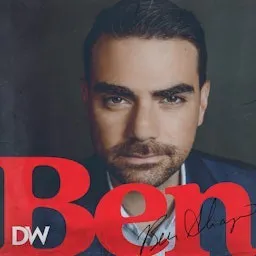
Episode Summary
Executive Summary: The episode dissects the Iowa caucuses as a turning point: Ted Cruz wins the GOP race, Marco Rubio surges into contention, and Donald Trump is portrayed as shaken despite still leading in later states. On the Democratic side, Bernie Sanders nearly beats Hillary Clinton, exposing her weakness and amplifying intraparty tension. The show emphasizes campaign optics, delegate math, and what Iowa means for the nominating contests ahead.
Main Topics: Ted Cruz’s Iowa victory and conservative momentum (Priority: 5/5): Cruz’s win is framed as a major upset over Trump, proving he can beat a front-runner through ground organization and evangelical support. The host argues Cruz’s content is strong even if his optics are weak. Marco Rubio’s breakout third-place finish (Priority: 5/5): Rubio is presented as the night’s biggest surprise among Republicans because he exceeded expectations and delivered a polished, nationally targeted victory speech that elevates him as a viable alternative. Donald Trump’s setback and post-loss reaction (Priority: 5/5): Trump’s Iowa defeat is described as a serious blow to his aura of inevitability. The episode contrasts his initially gracious concession with later angry tweets that suggest fragility and a possible 'glass jaw.' Republican delegate math and paths to the nomination (Priority: 4/5): A substantial segment explains how the delegate map favors different candidates under different scenarios, comparing Cruz’s harder route through red/proportional states with Rubio’s easier route through winner-take-all blue states. Democratic chaos: Sanders vs. Clinton (Priority: 5/5): The Iowa Democratic result is portrayed as a near-tie filled with confusion, coin flips, and tension. Sanders is depicted as energizing his base and threatening Clinton’s position, especially if he broadens his appeal. Optics, media narratives, and political performance (Priority: 4/5): The host repeatedly contrasts candidates’ stagecraft—Obama’s teleprompter speech, Cruz’s long victory address, Rubio’s more polished framing, and Clinton’s visibly angry demeanor—arguing presentation matters as much as substance. Culture-war commentary and media criticism (Priority: 3/5): The episode includes side commentary on political correctness, Hollywood endorsements for Clinton, Chris Matthews’s race framing, and the host’s broader critique of identity-based political signaling.
Key Arguments: Ted Cruz’s Iowa win matters because he beat Trump despite being attacked aggressively and despite having a more difficult image problem; the victory demonstrates real organizing strength. Marco Rubio benefited from being seen as a more electable conservative, and his speech smartly positioned him against Obama and the broader Democratic field rather than against fellow Republicans. Trump remains dangerous in later primaries, but his reaction after Iowa suggests emotional volatility could undermine him if he loses momentum. The delegate structure means Cruz has a narrower path than Rubio if Trump exits, but if Trump stays in and splits the field, a brokered convention becomes plausible. On the Democratic side, Sanders’ near-win shows Clinton is vulnerable; if Sanders expands his coalition, especially among Black voters, Clinton could be in serious trouble. Optics matter: candidates who speak with discipline and visual strategy can shape national perceptions more effectively than those who merely give long, substantive speeches. The host argues that identity-based endorsements for Clinton are shallow and policy-light, reflecting gender solidarity more than substantive evaluation.
Data Points: Trump Iowa polling average before caucuses: 28.6% - RealClearPolitics average cited before Iowa results Cruz Iowa polling average before caucuses: 23.9% - RealClearPolitics average cited before Iowa results Rubio Iowa polling average before caucuses: 16.9% - RealClearPolitics average cited before Iowa results Trump Iowa final result: 24.3% - Actual Iowa caucus result discussed on air Cruz Iowa final result: 27.7% - Actual Iowa caucus result discussed on air Rubio Iowa final result: 23.1% - Actual Iowa caucus result discussed on air Trump change vs. Iowa polling: -4.3 points - Difference between poll average and final result Cruz change vs. Iowa polling: +3.8 points - Difference between poll average and final result Rubio change vs. Iowa polling: +6.2 points - Difference between poll average and final result Trump New Hampshire polling lead: 33.7% average, about 22-point lead - RealClearPolitics average cited after Iowa Cruz New Hampshire polling average: 11.5% - RealClearPolitics average cited after Iowa Kasich New Hampshire polling average: 11.3% - RealClearPolitics average cited after Iowa Bush New Hampshire polling average: 10.5% - RealClearPolitics average cited after Iowa Rubio New Hampshire polling average: 10.2% - RealClearPolitics average cited after Iowa Christie New Hampshire polling average: 5.8% - RealClearPolitics average cited after Iowa GOP nomination threshold: 1,237 delegates - Number needed to secure the Republican nomination Iowa Democratic coin tosses: 6 of 6 went to Hillary Clinton - Used to illustrate the closeness of the Democratic result Chance of six straight coin flips: 1.5% - Host’s rough probability estimate for Hillary’s coin-toss luck Black vote in Iowa Republican caucus: about 60% of nonwhite vote mentioned; Ben Carson 9%, Cruz 27%, Rubio 23% - Host notes Republican diversity and criticizes media framing Bernie Sanders New Hampshire advantage: about 30 points - Host cites Sanders as heavily favored in New Hampshire
Pivotal Quotes: "Tonight is a victory for the grassroots." — Ted Cruz: Cruz’s Iowa victory speech framing his win as an anti-establishment triumph "For months, they told us we had no chance." — Marco Rubio: Rubio’s Iowa speech positioning himself as an underestimated underdog "I absolutely love the people of Iowa." — Donald Trump: Trump’s conciliatory concession speech after finishing second in Iowa
Implications: The Iowa results reopen both primaries: Cruz and Rubio gain credibility, Trump’s inevitability is shaken, and Democrats face a more fragile Clinton. The race is now about momentum, delegate strategy, and whether Trump can absorb a real setback.
About The Ben Shapiro Show
Tired of the lies? Tired of the spin? Are you ready to hear the hard-hitting truth in comprehensive, conservative, principled fashion? The Ben Shapiro Show brings you all the news you need to know in the most fast moving daily program in America. Ben brutally breaks down the culture and never gives an inch! Monday thru Friday.