Episode Summary
Executive Summary: The episode examines skilled immigration in the U.S. through the hosts’ and guest Didi’s lived experiences as Indian immigrants. They explain the H-1B lottery, EB green card backlogs, and the legal/psychological toll on families and careers. They argue the system is outdated, overly random, and politically conflated with illegal immigration, while proposing reforms like points-based selection, per-country cap changes, and faster work/travel authorization.
Main Topics: Personal immigration journey and lived experience: Didi, Aarti, and Sriram describe moving between India and the U.S., losing and regaining status, and the emotional significance of eventually becoming permanent residents and citizens. How the U.S. skilled immigration system works: The conversation defines visa categories and explains student visas (F1/OPT), work visas (H-1B, L1), green cards (EB2/EB3/EB1), and citizenship, emphasizing how status depends on paperwork and timing. H-1B lottery and green card backlog problems: They argue the H-1B lottery is arbitrary and outdated, and that employment-based green cards—especially for Indian-born applicants—face extreme delays due to per-country caps. Human costs of uncertainty and status dependence: The guests share stories about travel restrictions during COVID, layoffs triggering countdowns to leave the country, inability to change jobs or start businesses, and everyday indignities like short-duration driver’s licenses. Why skilled immigration benefits the U.S.: The speakers argue skilled immigrants drive innovation, founder creation, company formation, job growth, and the broader U.S. tech ecosystem, making reform a national-interest issue. Policy reform ideas: Suggested fixes include removing per-country caps, granting work/travel docs after long waits, freezing children’s ages, extending grace periods after layoffs, and moving toward a points-based system. Politics, conflation, and public messaging: They discuss how skilled immigration gets bundled with illegal immigration in political debate, making reform hard to pass despite bipartisan economic benefits.
Key Arguments: The H-1B lottery is random and does not prioritize skill, allowing the same odds for highly accomplished candidates and weak applicants. Employment-based green card backlogs disproportionately harm Indian-born applicants because of per-country caps and limited annual numbers. Skilled immigrants disproportionately create companies, jobs, and innovation, so the U.S. benefits economically from making this system work. The biggest harm is uncertainty: family emergencies, layoffs, travel, and even minor bureaucratic tasks become destabilizing when status is tied to employer sponsorship. America should distinguish skilled immigration from undocumented immigration instead of conflating them politically. A points-based system would better align immigration with education, salary, and talent, similar to Canada or the UK. For founders, current rules can block entrepreneurship unless they route through workarounds such as O-1, EB-1A, a U.S. citizen cofounder, or spouse-dependent status.
Data Points: H-1B cap: 85,000 - Annual H-1B approvals are selected through a lottery capped at 85,000. H-1B applicants last year: 750,000 - Didi cites this as the number of applicants competing for 85,000 slots. EB-2 wait time for Indian applicants: around 130 years - Used to illustrate the scale of the employment-based green card backlog. Green card annual quota by country: roughly 10,000 to 20,000 a year - Broad estimate of the employment-based green card allocation after country limits and calculations. COVID visa appointment delays: 6 to 7 months - Describes long waits for stamping appointments after visa offices reopened. Layoff grace period on H-1B: about 2 months - A person laid off must find a new job quickly or leave the country. EB1A criteria: 4 of 10 categories - Applicants must satisfy four criteria and submit recommendation letters to prove extraordinary ability. EB5 investment threshold: $900,000 and $1.8 million - Two mentioned investment levels for the investor green card route. OPT duration for STEM graduates: 3 years - Used to explain why STEM degrees are attractive for international students. Humanization story frequency: multiple anecdotes throughout - The episode repeatedly references family emergencies, layoffs, and travel stress to show the issue's impact.
Pivotal Quotes: "You could be the most accomplished, the next Einstein of the world, or you could be barely scraping through. Same lottery." — Didi: Critiquing the H-1B lottery as a random system that ignores merit. "The elephant in the room is just get married to a U.S. citizen, make that happen." — Didi: Discussing practical but awkward pathways people use to resolve status problems, especially for founders and employees. "There is massive conflation of skilled versus the undocumented illegal immigration topic." — Didi: Explaining why skilled immigration reform is politically difficult and misunderstood.
Implications: Skilled immigration remains a major talent, family, and competitiveness issue for U.S. tech and policy. Without reform, the system will keep pushing talent into workarounds, uncertainty, or other countries, weakening America’s ability to attract and retain builders.
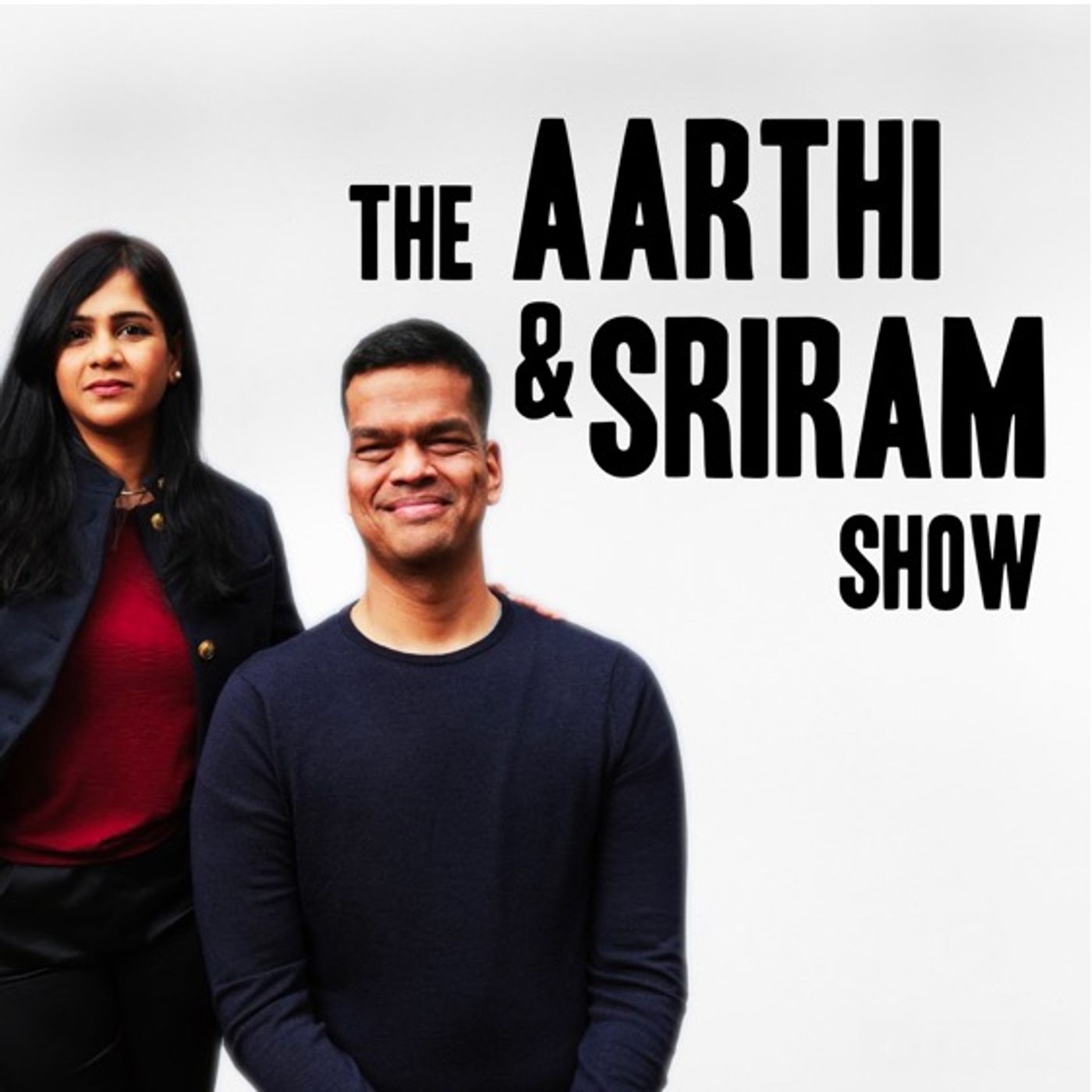
About The Aarthi and Sriram Show
A show on optimistic conversations with people building and creating new products and technologies, hosted by veteran technologists Aarthi Ramamurthy and Sriram Krishnan.