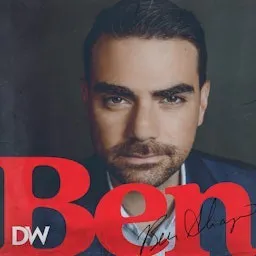
Episode Summary
Executive Summary: The episode centers on Trump’s refusal to clearly disavow David Duke and the KKK, which Shapiro frames as evidence of dishonesty and possible political calculation. It also covers Republican infighting before Super Tuesday, Democratic chaos around Tulsi Gabbard backing Bernie, a firsthand account of a disruptive CSULA speech event, and criticism of the Oscars for performative identity politics and Hollywood virtue signaling.
Main Topics: Trump and the David Duke/KKK controversy (Priority: 5/5): Shapiro argues Trump’s CNN interview showed evasiveness and dishonesty, especially because Trump had previously disavowed Duke and knew exactly who he was. He contrasts Trump’s response with Reagan’s unequivocal condemnation of the Klan. Why Trump’s behavior matters politically (Priority: 5/5): Shapiro suggests Trump either reflexively values anyone who likes him or is knowingly avoiding disavowals because white supremacists are part of his support base. He frames this as troubling for conservatives and evidence of Trump’s character flaws. Republican primary strategy and intra-party attacks (Priority: 4/5): The show surveys Cruz, Rubio, Christie, and Sessions as Trump alternatives or allies. Shapiro praises Rubio and Cruz for attacking Trump aggressively, while condemning Christie’s sudden embrace of Trump as opportunistic. Cal State Los Angeles free-speech confrontation (Priority: 5/5): Shapiro recounts a campus event that was initially canceled, then reinstated, and ultimately surrounded by protesters. He describes the situation as mob intimidation and a broader sign of hostility to opposing views on college campuses. Oscar ceremony and Hollywood politics (Priority: 3/5): Shapiro criticizes the Oscars for overcorrecting to the #OscarsSoWhite controversy, mocking race-based virtue signaling, Joe Biden’s appearance on sexual assault, and Leonardo DiCaprio’s climate speech as hypocritical. Culture-war and media critique (Priority: 4/5): Throughout the episode, Shapiro argues that media, universities, and Hollywood are aligned against conservative speech and values, and he presents these fights as part of a larger cultural struggle.
Key Arguments: Trump’s CNN answer was not a harmless misunderstanding; Shapiro says Trump already knew David Duke’s name and had disavowed him before, making the explanation implausible. Reagan’s 1984 response is held up as the correct standard: public figures should explicitly reject racist groups and their doctrines. Trump is portrayed as fundamentally untrustworthy, willing to shift positions for strategic gain and to preserve support from any faction that benefits him. A significant subset of Trump supporters are described as white supremacists, which makes Trump’s reluctance to condemn them politically meaningful. Shapiro argues that conservatives should not idolize candidates; support should be conditional on ideology, electability, and consistency. The CSULA incident is used to argue that college administrations and protesters increasingly suppress speech rather than debate it. The Oscars are framed as a self-congratulatory liberal spectacle that mistakes symbolic diversity and celebrity activism for moral seriousness.
Data Points: Primary states leading: Trump was leading in 10 or 11 of 12 primary states - Shapiro discusses Trump’s position heading into Super Tuesday. Super Tuesday timing: Tomorrow - The show is recorded the day before Super Tuesday primaries. Trump support in New Hampshire poll: 35 percent - Cited by Shapiro in the discussion of Trump’s broad appeal. Campaign video views: In excess of 1.5 million views - Shapiro references his own anti-Trump video online. Live viewers for CSULA speech: About 60,000 - He says this many people watched part of the speech live online. CSULA video views: About half a million - Shapiro says the speech video had been viewed roughly this many times. Chris Christie time horizon: Eight months into this campaign - Used to argue Trump’s wall plan still lacked specifics. Tax returns released by Cruz: Nine years - Cruz uses this to criticize Trump’s refusal to release his tax info. Students smuggled into venue: Four at a time - Shapiro describes how attendees had to enter the CSULA event.
Pivotal Quotes: "I don't know anything about David Duke, OK? I don't know anything about what you're even talking about with white supremacy or white supremacists." — Donald Trump: Trump’s CNN interview with Jake Tapper, used as the episode’s central controversy. "Those of us in public life can only resent the use of our names by those who seek political recognition for the repugnant doctrines of the hate they espouse." — Ronald Reagan: Shapiro cites Reagan’s 1984 condemnation of the KKK as the proper model. "I have been told by campus police that it is literally a threat to life and limb to go out there." — Ben Shapiro: His account of the CSULA protest situation and why the crowd could not be confronted directly.
Implications: The episode frames 2016 as a cultural and political collapse: Trump exposes Republican weakness, campuses punish dissent, and elite institutions reward performative politics over principle. Shapiro urges listeners to prioritize ideology, free speech, and distrust of political branding.
About The Ben Shapiro Show
Tired of the lies? Tired of the spin? Are you ready to hear the hard-hitting truth in comprehensive, conservative, principled fashion? The Ben Shapiro Show brings you all the news you need to know in the most fast moving daily program in America. Ben brutally breaks down the culture and never gives an inch! Monday thru Friday.