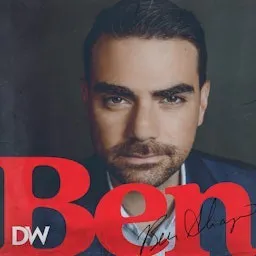
Episode Summary
Executive Summary: The episode centers on Ben Shapiro’s critique of the first public impeachment hearings, arguing Democrats offered no truly new evidence and relied on optics, hearsay, and emotionally resonant but distant witnesses. He contrasts media praise with his view that the testimony failed to prove impeachable intent, then pivots to campus free-speech issues and a personal recap of his Boston University talk.
Main Topics: Impeachment hearings as media theater: Shapiro argues the hearings were framed by major media as a bombshell moment, but that the coverage focused more on presentation and tone than substantive new facts. William Taylor and George Kent testimony: He reviews the testimony of Taylor and Kent, emphasizing that both were far removed from direct contact with Trump and relied heavily on what others told them. Intent and the impeachment standard: Shapiro repeatedly returns to the question of Trump’s intent, arguing that even if the conduct was bad policy, Democrats had not shown impeachable criminal intent. Republican rebuttal and hearsay criticism: He highlights GOP questioning that challenged the witnesses’ knowledge base and the chain of hearsay, arguing the Democrats’ witnesses were not firsthand observers. Campus speech and free-expression issues: He briefly discusses his Boston University event, framing it as a successful example of open debate despite protests and ideological opposition. University of Florida student impeachment dispute: He criticizes efforts to impeach a student body president for inviting Donald Trump Jr. to speak, presenting it as another example of campus intolerance toward conservatives.
Key Arguments: The hearings did not produce new evidence that changed minds; the media inflated their significance through dramatized coverage. Taylor and Kent were not direct witnesses to Trump’s thinking, making their conclusions about his motives weak and largely inferential. Even if Trump’s Ukraine policy was bad or politically motivated, impeachment requires proof of improper intent, not just disagreement over foreign policy. Republican questioning effectively exposed the distance between the witnesses and the actual decision-makers, especially Trump, Giuliani, Sondland, Mulvaney, and Bolton. The Democratic case leans on hearsay chains and secondhand accounts, which Shapiro argues are poor substitutes for direct evidence in a serious impeachment inquiry. Trump’s ask to Ukraine may reflect scattershot thinking, general anti-Ukraine sentiment, or concern about 2016 interference rather than a specific plot to target Biden. Campus protests and the University of Florida dispute are presented as examples of left-wing hostility to conservative speech and viewpoint diversity.
Data Points: Length of public testimony: about 5 hours - Shapiro summarizes the opening day of public impeachment hearings and the New York Times’ description of the proceedings. Witness age: 72 - William Taylor is described as a septuagenarian Vietnam veteran with reassuring gray hair. Number of speakers at BU event: 1,500 students - Shapiro says about 1,500 students attended his Boston University appearance. Payment to speakers at University of Florida: $50,000 - The UF student body president allegedly paid Donald Trump Jr. and Kimberly Guilfoyle from university funds. Number of hearings referenced as public impeachment hearings: first public hearings - The episode focuses on the inaugural public impeachment hearing session featuring Taylor and Kent. Number of witnesses highlighted in detail: 2 - William Taylor and George Kent are the main witnesses analyzed in the episode.
Pivotal Quotes: "history certainly was." — The New York Times (quoted by Shapiro): Shapiro mocks the Times’ dramatic line that framed the hearings as historically significant regardless of immediate impact. "what I can do here for you today is tell you what I heard from people" — William Taylor: Shapiro uses this line to argue the witness relied on secondhand information rather than direct knowledge. "I’ve seen church prayer chains that are easier to understand than this." — Jim Jordan: Shapiro cites Jordan’s attack on the complex hearsay chain and distance between the witnesses and Trump.
Implications: Shapiro argues the hearings will matter less for facts than for political optics, with Democrats struggling to prove intent. He also frames campus battles as a broader free-speech fight where conservative voices remain contested.
About The Ben Shapiro Show
Tired of the lies? Tired of the spin? Are you ready to hear the hard-hitting truth in comprehensive, conservative, principled fashion? The Ben Shapiro Show brings you all the news you need to know in the most fast moving daily program in America. Ben brutally breaks down the culture and never gives an inch! Monday thru Friday.