Episode Summary
Executive Summary: The episode is a post-election discussion framing Trump’s win and the rise of Elon Musk/Vivek Ramaswamy’s “Doge” as a potential reset for U.S. government, tech regulation, and immigration policy. The hosts argue that first-principles, zero-based thinking, greater transparency, and less bureaucracy could unlock innovation, while also examining how Democrats lost tech, cities, and online audiences.
Main Topics: Post-election mood and Trump’s victory: The hosts react to Trump’s win and the likely Republican control of Congress, expressing cautious optimism about a new political era and the symbolism of younger leaders entering power. Doge and government efficiency: A major focus is Elon Musk and Vivek Ramaswamy leading the Department of Government Efficiency, which the speakers compare to founder-mode thinking applied to federal bureaucracy and spending. Elon Musk’s management style and Twitter/X parallels: The conversation uses Musk’s Twitter/X playbook—zero-based budgeting, first-principles problem solving, and speed—as a model for how Doge might operate in government. Democratic Party failures and loss of natural allies: The hosts argue Democrats alienated tech workers, immigrants, urban residents, and even former allies like Elon and the crypto community by embracing bureaucracy and ignoring crime, regulation, and city decline. Podcasts, X, and the shift in political media: They discuss how long-form podcasts and online platforms helped Trump and JD Vance reach voters, suggesting the online world has overtaken traditional ground-game politics. Critique of mainstream media and Wired: The speakers criticize outlets like Wired for becoming overly political and failing to cover science and engineering achievements, arguing this has damaged their relevance and trust. Skilled immigration and country caps: A long segment debates U.S. immigration policy, especially country caps, arguing the current system is broken and should be rebuilt around merit, national security, and global talent competition.
Key Arguments: The election represents a chance to reset government and technology policy after years of bureaucracy, especially for startups and innovators. Doge could apply zero-based budgeting to federal departments: every dollar, role, and project should be justified from scratch. Musk’s core principle is first-principles reasoning—if physics does not forbid an outcome, the system should ask why it cannot be done. Greater transparency in government spending and headcount is framed as inherently positive because taxpayers deserve to know what they fund. Democrats hurt themselves by antagonizing natural allies such as tech, crypto, and Elon Musk, rather than celebrating innovation and entrepreneurship. Podcasts and online media now matter more than traditional campaigning because they let candidates build trust and reveal depth over long conversations. Mainstream media outlets like Wired have drifted away from their core mission of covering technology and science, instead prioritizing social justice narratives. The skilled immigration debate has stalled because advocates focus too much on suffering and not enough on removing country caps and making a strategic, persuasive case. A stronger immigration argument may be national-security based: America needs the best talent to compete with China and stay ahead in AI and tech. If the U.S. system remains rigid, other countries such as Canada and the UK should aggressively recruit global talent instead. There is a broader cultural demand for honest discussion—people are afraid to say how they voted, and institutions need to acknowledge public anger rather than gaslight it.
Data Points: Time since election: About a week to a week and a half - The episode is recorded shortly after the election, during the immediate post-election period. Deadline for Doge: Sometime in 2026 - The speakers say the new efficiency push is expected to run through roughly 2026. Age of one host: 41 - One speaker mentions turning 41 and being struck that JD Vance and Vivek Ramaswamy are people his age. Twitter/X video limit mentioned: 10 minutes - The speaker recalls that old Twitter only allowed 10-minute uploads before longer podcast videos were enabled. Company budgeting approach: Zero-based budgeting - Elon’s approach at X is described as starting every team at zero and requiring justification for all spending. Historical reference to Obama and Musk: 2008/2012 era - The hosts reference Obama-era alignment with tech and contrast it with the current political shift. Print subscription duration: 15 years - The speaker says he has been a paid Wired print subscriber for 15 years. Country cap issue duration: 20+ years - The immigration debate is described as having remained stuck for more than 20 years. Time spent working through immigration issues: 15 years - One host says he has been involved in immigration conversations for 15 years.
Pivotal Quotes: "What do the laws of physics mandate? And if the laws of physics don't mandate it, then let's question everything." — Speaker discussing Elon Musk: Used to explain Musk’s first-principles approach and how it could inform Doge. "We are going to start everybody at zero and work up from there." — Speaker discussing X and Doge budgeting: Describes zero-based budgeting as the operating model for efficiency and spending justification. "The parasite has eaten the host." — Referenced as Nabeel Ravikant's view: A blunt assessment of media outlets like Wired, suggesting they are beyond repair.
Implications: Listeners should expect more public scrutiny of government spending, sharper fights over regulation and immigration, and continued migration from legacy media to podcasts and online platforms. The episode signals a broader pro-innovation, anti-bureaucracy reset across U.S. politics and tech.
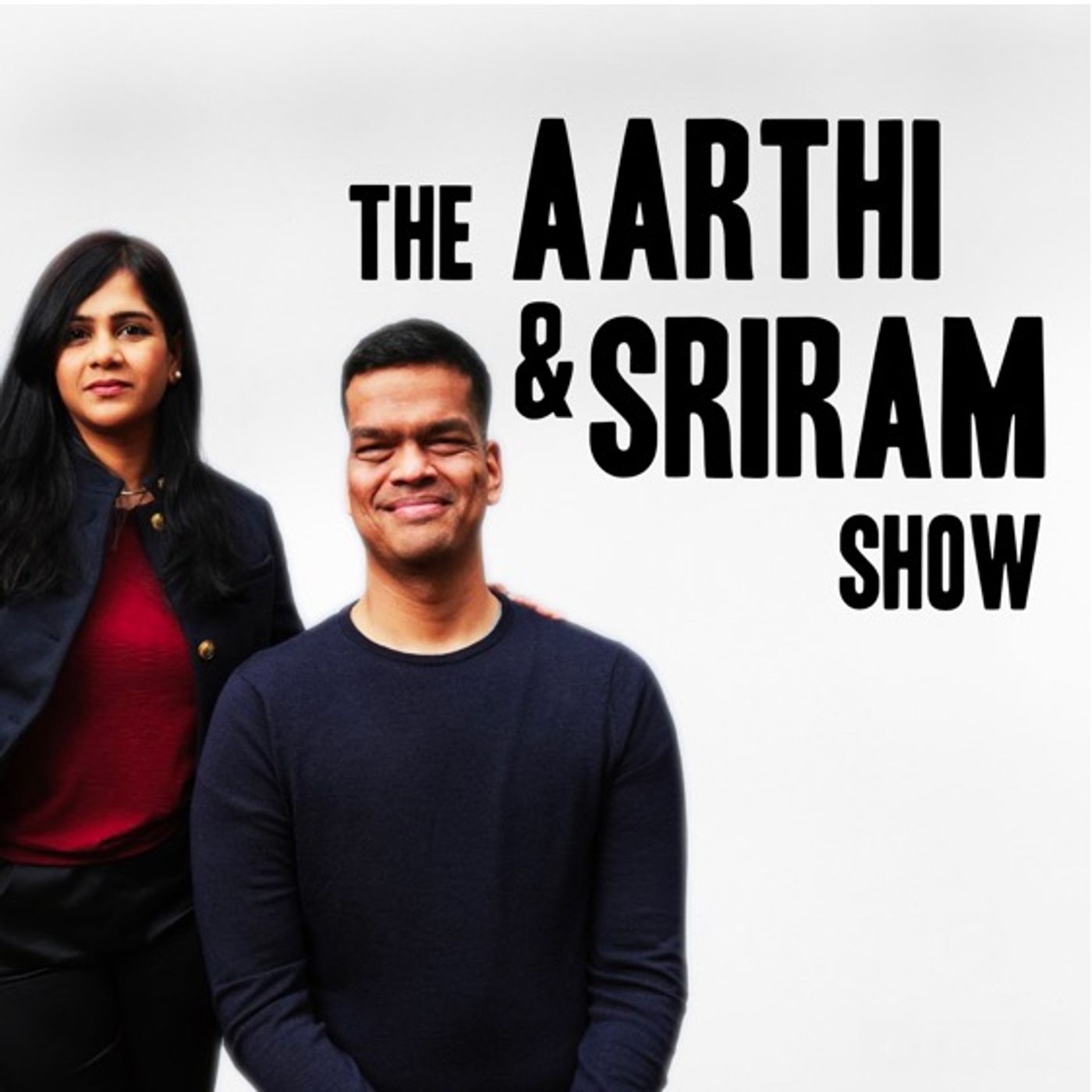
About The Aarthi and Sriram Show
A show on optimistic conversations with people building and creating new products and technologies, hosted by veteran technologists Aarthi Ramamurthy and Sriram Krishnan.