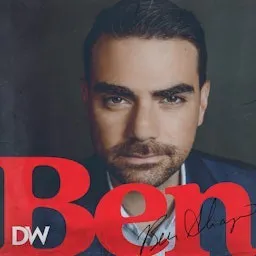
Episode Summary
Executive Summary: The episode centers on Ben Shapiro’s critique of President Obama’s response to the Brussels terror attacks and broader Democratic/liberal approaches to jihadism, profiling, and national security. He argues political correctness and weak leadership prevent effective counterterrorism, contrasts this with Israel and France’s security measures, and warns Trump’s vulgarity undermines legitimate anti-PC conservatism. The show also includes media criticism, a Casablanca-inspired defense of resisting tyranny, and mailbag pop-culture/classical music commentary.
Main Topics: Obama’s “tango” optics and terrorism response (Priority: 5/5): Shapiro mocks Obama’s dancing and travel during the Brussels crisis as emblematic of superficial optics and weak leadership, arguing the president prioritizes image over decisive action. Political correctness vs. counterterrorism (Priority: 5/5): The host argues that refusing to profile or focus law enforcement on Muslim communities enables terrorism and gets people killed, citing Brussels and European security failures as proof. Cruz, profiling, and the media backlash (Priority: 4/5): Shapiro defends Ted Cruz’s calls for targeted policing and refugee scrutiny, saying critics misrepresent basic risk assessment as prejudice and ignore real threat patterns. Israel and France as models of security (Priority: 4/5): The show contrasts U.S. liberal rhetoric with Israel’s aggressive profiling and France’s state-of-emergency measures, presenting them as practical responses to terror. Trump as corrupted anti-PC politics (Priority: 4/5): Shapiro argues Trump channels legitimate disgust with political correctness but mixes it with vulgarity, narcissism, and triviality, damaging conservatism’s credibility. Media and progressive hypocrisy (Priority: 3/5): He criticizes MSNBC, CNN-style framing, and liberal figures like Keith Ellison and Hillary Clinton for minimizing Islamic terrorism or calling reasonable measures extremist. Mailbag, culture, and listener questions (Priority: 2/5): The episode closes with questions on Hillary/Comey, Andrew Klavan books, a Cleveland convention, third-party politics, and favorite symphonies, plus a brief movie/music segment.
Key Arguments: Obama’s public behavior during the Brussels attacks shows he values optics over substance, even while claiming terrorism is his top priority. Political correctness in the West prevents targeted surveillance and profiling of high-risk communities, making terrorist attacks more likely. Cruz’s and Trump’s rhetoric is partly a reaction to real security failures, but Trump’s vulgarity and cruelty undermine the seriousness of the underlying concern. Israel and, increasingly, France demonstrate that targeted security measures and profiling can reduce attacks without abandoning civil society. The media’s insistence that terrorism is unrelated to Islam or that profiling is equivalent to extremism ignores observable patterns and law-enforcement practice. Democrats’ refugee and immigration policies, especially toward Syrian Muslims, are portrayed as reckless because vetting is inadequate. Obama’s and Clinton’s approach is framed as a mix of moral vanity and denial that leaves the public vulnerable. Trump’s behavior turns a valid anti-PC instinct into spectacle, which may alienate people who would otherwise support tougher counterterrorism measures.
Data Points: Brussels Muslim population: 26% - Cited as the share of Brussels’ population that is Muslim to illustrate the scale of the issue in major European cities. Amsterdam Muslim population: 24% - Used in a list of European cities with substantial Muslim populations. Antwerp Muslim population: 17% - Included in the speaker’s survey of Muslim population shares in major cities. Barcelona Muslim population: ~18% - Mentioned as an estimate from a Wikipedia-sourced city list. Blackburn Muslim population: 29% - Referenced as an especially high percentage among UK cities. Cologne Muslim population: 12% - Part of the European city-by-city population list. London Muslim population: up to 13% - Used to show visibility and concentration in a major capital. Malmö Muslim population: 20% - Included in the list to support the claim that major European cities have large Muslim minorities. Marseille Muslim population: 25% - Cited as another high-density city example. Milan Muslim population: nearly 10% - Used to emphasize broad distribution across Europe. Paris Muslim population: 10% to 15% - Referenced as a large and growing share of the city. Rotterdam Muslim population: 25% - Included among the major cities with notable Muslim presence. Muslim screening assumption: 20% - Shapiro proposes a hypothetical low-end share of Muslims who may warrant surveillance to make a point about resource allocation. Example surveillance ratio: 4,000 of 20,000 - Illustrates how a 20% risk assumption would scale in a larger population sample. Example surveillance ratio: 40,000 of 200,000 - Further illustrates scaling of surveillance needs with higher immigration numbers. Brussels synagogue shutdown: All synagogues shut down yesterday - Mentioned in connection with Purim celebrations and fear of attacks. Anti-terror fence length in Israel: 96 miles long - Shapiro says Israel’s barrier has reduced suicide bombings. Projected anti-terror fence length: about 300 miles - He speculates about the fence’s eventual length. NFL draft position of Michael Sam: late in the 7th round - Used to support the claim that Sam was drafted for political reasons rather than merit. Michael Sam NFL tenure: about five seconds - Hyperbolic phrasing used to underscore the brevity of his NFL career.
Pivotal Quotes: "We defeat them by saying, you are not strong. You are weak." — Barack Obama (quoted by Ben Shapiro): Shapiro ridicules Obama’s stated approach to defeating ISIS as symbolic and ineffective. "Political correctness gets people killed." — Ben Shapiro: Central thesis of the episode regarding terrorism, profiling, and security policy. "The president of the United States is what happens when you combine a tyrannical mindset with political correctness." — Ben Shapiro: Summarizes his view of Obama’s governing style and security posture.
Implications: Listeners are urged to see security policy as a matter of risk assessment, not sentiment. The episode argues future counterterrorism debates will hinge on whether leaders adopt targeted measures or continue symbolic, politically correct responses that Shapiro believes fail in practice.
About The Ben Shapiro Show
Tired of the lies? Tired of the spin? Are you ready to hear the hard-hitting truth in comprehensive, conservative, principled fashion? The Ben Shapiro Show brings you all the news you need to know in the most fast moving daily program in America. Ben brutally breaks down the culture and never gives an inch! Monday thru Friday.