Episode Summary
Executive Summary: The episode uses the GameStop frenzy to examine deeper problems in American capitalism: financialization, market manipulation, declining trust in rules, and the shift from productive investment toward speculation. The hosts and guest Matt Stoller argue that easy money and platform design have encouraged gambling-like behavior, while also debating whether 'cheating' is the right lens for these abuses and what Congress should investigate.
Main Topics: GameStop as a symptom of broader economic dysfunction: The discussion frames GameStop not just as a meme-stock event but as a cultural and political signal of a society increasingly drawn to speculation over productive activity. Cantillon effect and unequal benefits of easy money: Stoller connects GameStop to the Cantillon effect: when money is created or cheaply available, those closest to the source benefit most, amplifying inequality and speculation. Speculation vs. real economy: The hosts debate whether financial markets are serving capital formation or functioning like a casino that diverts talent, time, and money away from useful goods and services. Cheating, rule-rigging, and the limits of law: A major thread is how to define cheating: explicit illegality, rule manipulation, or gray-area conduct. The panel worries that broad cynicism can make enforcement and reform harder. Robinhood, payment for order flow, and digital bucket shops: Robinhood is criticized as a business model that monetizes trading behavior, encourages risky speculation, and may profit from opacity and kickbacks rather than customer welfare. Short sellers, market discipline, and manipulation: The conversation defends short sellers as countercyclical fraud-finders while acknowledging that the current environment has made many investors hostile to them because the game feels increasingly rigged. Congressional hearings and institutional accountability: The hosts argue hearings can be useful if well-prepared and evidence-based, citing Pecora and big tech antitrust hearings as models, but fear GameStop hearings may devolve into theater.
Key Arguments: GameStop reveals a deeper societal shift toward using capital, talent, and time for gambling-like speculation instead of productive work. The Cantillon effect explains why near-zero rates and financial system design disproportionately enrich those closest to the money spigot. Retail brokerages like Robinhood are criticized not merely for legality issues but for a business model that may be structurally corrupt or harmful to users. Short selling is important because it disciplines markets and helps detect fraud, even if short sellers are often unpopular. Many people no longer trust the rule of law in finance because past crises and bailouts left major wrongdoing effectively unpunished. Broad cynicism about 'everyone cheating' can paralyze reform; clearer distinctions are needed between illegal cheating, rule-rigging, and bad but legal practices. Congressional investigations should focus on market structure, payment for order flow, and the connection between finance and the real economy rather than just personalities or headlines. The GameStop episode is less about one stock than about financialization, monopoly power, and a society increasingly organized around speculation.
Data Points: Near-zero interest rate era: Since the financial crisis / last 10 years or so - Used to explain the environment that fueled speculation and the Cantillon effect. GDP share of financial profits: 9% - Cited as the level Thomas Philippon found in the modern system. Pre-1980 GDP share of financial profits: 2% - Presented as the earlier benchmark before greater financialization. Congressional investigation length for big tech: 16 months - Referenced as the preparation period before the 2020 antitrust hearings. Shorting Tesla stock: Occurred over a year before the episode - Used as an example of how short sellers can be punished by rapid price moves and public backlash. Pecora hearings: 1930s - Invoked as a historical model of effective congressional investigation and reform.
Pivotal Quotes: "we've given up on the ability to stop cheating in the economy" — Matt Stoller: Core thesis about how financial markets and institutions now normalize rule-bending and speculation. "everybody should get equal access to cheating" — Matt Stoller: Sharp critique of the idea that democratizing finance means expanding access to speculation rather than curbing it. "When the capital development of a country becomes a byproduct of the activities of a casino, the job is likely to be ill done" — John Maynard Keynes: Quoted to argue that excessive speculation undermines productive investment and economic development.
Implications: The episode suggests the financial system needs stricter rules, better enforcement, and more evidence-based oversight. For listeners, the key takeaway is that GameStop was not just a meme-stock story but a warning about financialization, trust, and the health of capitalism.
About Capitalisnt
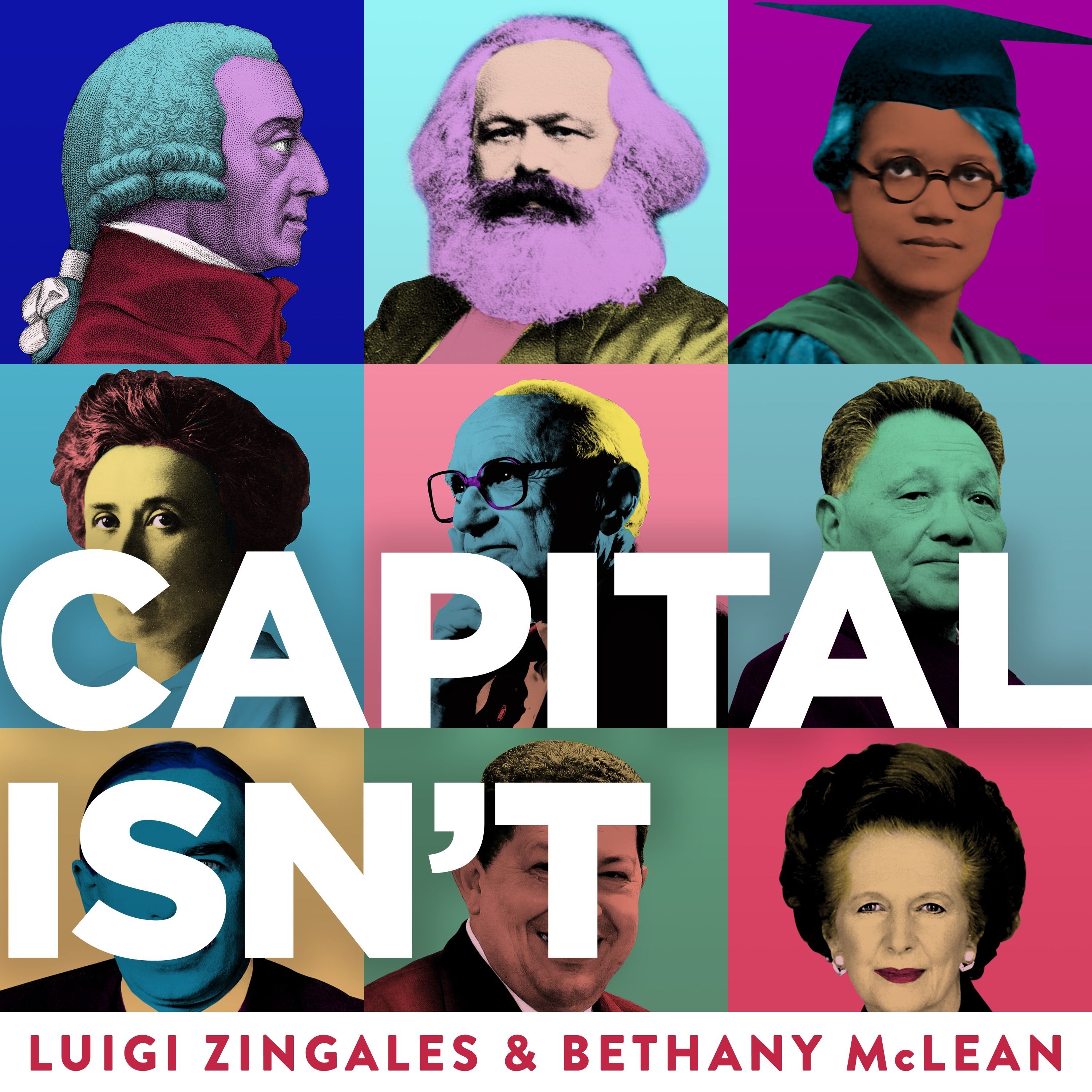
Is capitalism the engine of destruction or the engine of prosperity? On this podcast we talk about the ways capitalism is—or more often isn’t—working in our world today. Hosted by Vanity Fair contributing editor, Bethany McLean and world renowned economics professor Luigi Zingales, we explain how capitalism can go wrong, and what we can do to fix it. Cover photo attributions: https://www.chicagobooth.edu/research/stigler/about/capitalisnt. If you would like to send us feedback, suggestions fo...