Episode Summary
Executive Summary: The episode examines how giant law firms have become powerful “enablers” of corporate misconduct, using Jones Day as a case study. Bethany McLean, Luigi Zingales, and guest David Enrich argue that modern big law often serves moneyed clients through aggressive litigation, lobbying, and behind-the-scenes influence, contributing to a “shadow justice system” that weakens transparency, accountability, and equal access to justice.
Main Topics: The rise of giant law firms as corporate enablers: The conversation frames big law firms as central actors in distorting capitalism by helping companies avoid regulation, liability, and public scrutiny. Jones Day as a case study of industry transformation: Enrich uses Jones Day’s growth from a Midwestern firm into a global powerhouse to illustrate broader changes in legal practice, client selection, and aggressive lawyering. Corporations vs. individuals in the right to defense: A major theme is the mistaken conflation of an individual’s constitutional right to counsel with a corporation’s supposed right to the same zealous defense in non-criminal matters. The shadow justice system and lack of transparency: The speakers discuss how settlements, lobbying, and prosecutorial decisions are often negotiated outside public view, reducing accountability in major cases like opioids, banking, and fraud. Competition, growth, and professional ethics: They debate whether competition, rising partner compensation, and law-firm growth pressures have pushed lawyers away from civic duty and toward short-term profit maximization. Media access and the difficulty of covering big law: The discussion highlights how journalists depend on lawyers for sources and can be punished via loss of access, making aggressive coverage of law firms difficult.
Key Arguments: Big law firms no longer mainly provide courtroom defense; they increasingly help clients minimize taxes, weaken regulation, and lobby governments, often near or beyond ethical lines. The constitutional rhetoric about zealous defense properly applies to individuals charged with crimes, not to corporations seeking broad strategic advantages in civil, regulatory, or political arenas. Jones Day is not necessarily the most profitable firm, but it exemplifies the industry’s trajectory toward centralized leadership, client aggressiveness, and political leverage. The legal system has become less balanced because wealthy firms can overwhelm plaintiffs through resources, intimidation, and procedural tactics, especially outside the courtroom. The real harm of big law often occurs behind the scenes: in state capitals, Washington, small towns, agency negotiations, and deferred-prosecution or settlement deals. Pro bono programs may serve a reputational and recruitment function as much as a moral one, acting as a partial offset or “greenwashing” for profit-driven behavior. Journalists underreport big law because lawyers are valuable sources and firms retaliate against criticism by cutting off access. Transparency is a core remedy: if settlements, prosecutorial decisions, and investigative outcomes were more public, it would be harder for corporations and firms to obscure wrongdoing.
Data Points: Average income per partner of top 100 law firms: rose from $600,000 to more than $2 million in 2020 - Used to show the long-term financialization and escalating compensation in big law Growth in law-firm partner income: more than triple in real terms - Bethany summarizes the increase after adjusting for inflation Jones Day profit-per-partner ranking: 71st - Luigi notes Jones Day is not among the most profitable firms by this measure Time period of Jones Day political involvement: past 10 to 15 years - Enrich describes Jones Day’s expansion into election law and Trump-era influence Time period of Trump administration involvement: 2016 onward - Jones Day helped run the Trump campaign and placed lawyers inside the administration Historical period of legal-industry change: late 1970s onward - Cited as the era when competition, size, and American Lawyer-style rankings intensified Jones Day pro bono spending: many millions of dollars a year - Used to argue the firm also invests heavily in non-profitable work for reputational and recruiting reasons
Pivotal Quotes: "we've conflated an individual's right to a vigorous defense with a corporation's right to a vigorous defense" — Bethany McLean: Introduces the episode’s central legal and ethical distinction "these law firms, they exert huge sway, and I think often kind of corrosive sway in court, but a lot more of it is actually taking place behind the scenes" — David Enrich: Describes how big law influences outcomes outside public litigation "the shadow justice system" — Luigi Zingales: Names the phenomenon of secretive legal and regulatory dealmaking
Implications: Listeners are left with a sharper view of big law as a hidden engine of corporate power. The episode suggests that transparency, media scrutiny, and structural reform are needed if justice is to be less skewed toward wealthy institutions and more accountable to the public.
About Capitalisnt
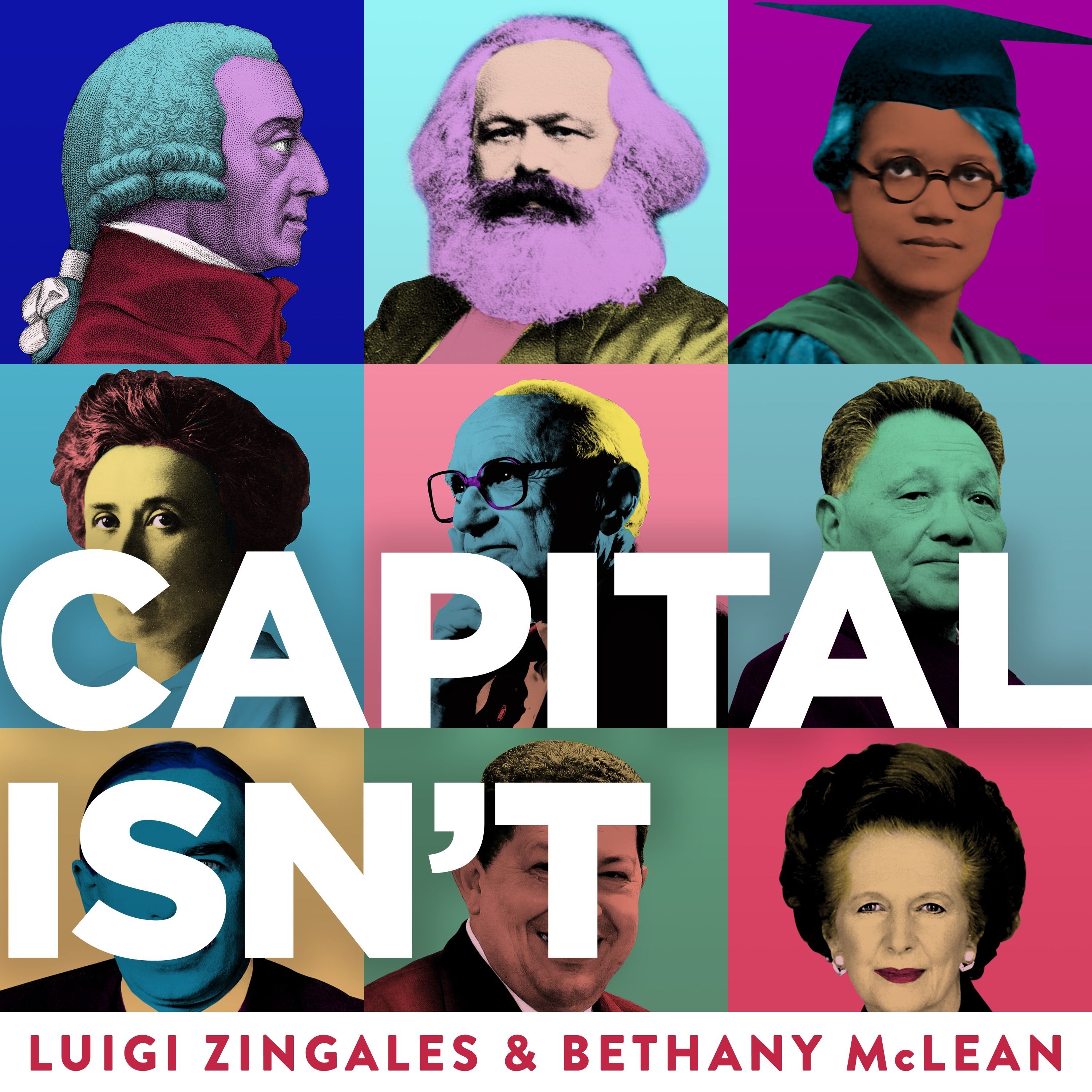
Is capitalism the engine of destruction or the engine of prosperity? On this podcast we talk about the ways capitalism is—or more often isn’t—working in our world today. Hosted by Vanity Fair contributing editor, Bethany McLean and world renowned economics professor Luigi Zingales, we explain how capitalism can go wrong, and what we can do to fix it. Cover photo attributions: https://www.chicagobooth.edu/research/stigler/about/capitalisnt. If you would like to send us feedback, suggestions fo...