Episode Summary
Executive Summary: The episode debates whether private credit is a healthier alternative to bank lending or a hidden source of future instability. Bethany McLean, Luigi Zingales, and Jim Grant weigh its benefits—less leverage, fewer runs, more flexibility in renegotiation—against concerns about opacity, conflicts of interest, regulatory arbitrage, and the likelihood that losses could eventually spill back into the regulated system and trigger bailouts.
Main Topics: What private credit is and why it has grown: Private credit is lending outside the regulated banking system. The panel links its post-2008 expansion to tighter bank regulation, growth in private equity/LBO activity, and investor demand for yield in a low-rate era. Benefits of private credit versus banks: Luigi argues private credit can be safer systemically because it is funded by long-term commitments and equity, reducing maturity mismatch and bank-run risk. He sees negotiated restructurings as a feature, not a bug. Risks of opacity and conflicts of interest: Jim Grant and Bethany stress that private equity firms often both sponsor deals and lend into them, creating conflicts. The lack of public data makes it hard to assess underwriting quality, pricing, and true default risk. Are low default rates real or masked?: Grant argues private credit’s low defaults may be an artifact of friendlier accounting—amend-and-extend, PIK interest, and renegotiation—rather than genuinely superior credit quality. McLean questions whether losses are being hidden rather than reduced. Systemic spillovers and bailout risk: McLean warns private credit may leak back into banks through partnerships and synthetic risk transfers, so losses could still end up requiring intervention. Grant argues the broader financial system’s repeated rescues distort incentives and encourage excess. Disclosure and regulation of private markets: The hosts converge on the need for more transparency, especially because pension funds hold a large share of private credit assets and taxpayers may ultimately bear losses if defined-benefit plans suffer.
Key Arguments: Private credit has surged because banks face tighter regulation after 2008, private equity deal volume has expanded, and investors are chasing higher returns than Treasuries offer. Private credit may reduce systemic fragility because it is typically funded with long-term capital rather than runnable short-term deposits. Jim Grant argues private credit’s favorable default statistics may be misleading because defaults are often redefined through amendments, deferred interest, or payment-in-kind structures. The close relationship between private equity sponsors and private credit lenders creates a built-in conflict of interest and raises the odds of weak underwriting. Even if private credit begins outside the banking system, it may still spill back into banks through partnerships, securitizations, and synthetic risk transfers. Bethany argues that private credit firms may still seek government rescue if trouble hits, while paying little or nothing upfront for that implicit protection. Luigi argues losses should remain with investors unless they threaten the broader system, and that private credit is preferable to banks because it places risk on capital providers rather than deposit-backed institutions. Both hosts agree that greater disclosure is needed because pension funds are heavily exposed and current secrecy prevents meaningful outside scrutiny.
Data Points: Private credit market size: About $1.7 trillion - Estimated current outstanding loans in U.S. private credit Dry powder growth since 2014: Quadrupled - Fed-described available lending capital that has not yet been deployed Share used for private equity/LBO financing: Roughly 50% - Fed estimate cited for private credit financing leveraged buyouts or PE-backed expansion Private credit financing of PE deals: About 80% - Mentioned as an estimate during the Jim Grant discussion Private and public pension fund share of private credit assets: 31% - Fed estimate cited by Bethany and Luigi Treasury yield example: 4.3% - Used to explain why 10–12% private credit yields attract sophisticated investors Typical private credit yields cited: 10% to 12% - Illustrates the income incentive drawing pension funds and insurers Private equity deal sourcing among PE buyers: 75% in 2021 (one estimate) - Bethany cites a high share of PE transactions occurring within the PE complex Regulated bank leverage: 10 to 1 - Used by private credit advocates to contrast with much lower private credit leverage Private credit leverage: A little over 1 to 1 - Presented as a structural advantage of private credit funds Deposit insurance coverage: Up to $250,000 - U.S. FDIC coverage referenced when explaining bank safety nets Market rate reference: 10-year Treasury at 4.3% - Benchmarked against private credit returns
Pivotal Quotes: "We have socialism for the very rich, rugged individualism for the poor." — Luisa Zingales: Opening framing of the show’s critique of who bears risk in capitalism "The trouble with capital isn't. It's that the people who take it don't bear it." — Bethany McLean: Conclusion about moral hazard and why bailouts distort finance "Every good idea on Wall Street is finally driven into the ground like a tomato steak." — Jim Grant: Used to argue that financial innovations tend to deteriorate under competition
Implications: Private credit may be safer than bank lending in one narrow sense, but its secrecy, conflicts, and links to banks make it a potential source of hidden systemic risk. More disclosure and tighter oversight appear necessary, especially given pension exposure.
About Capitalisnt
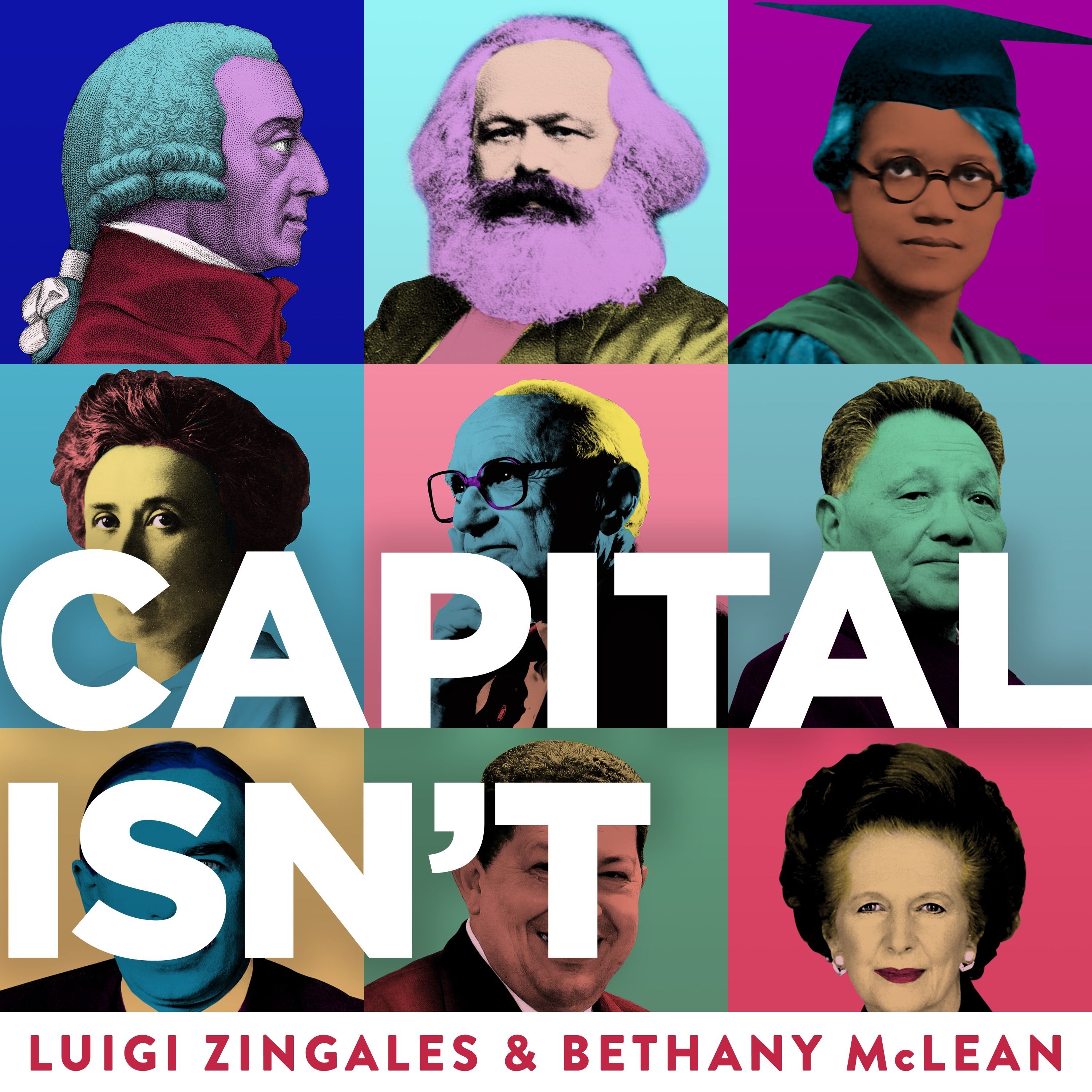
Is capitalism the engine of destruction or the engine of prosperity? On this podcast we talk about the ways capitalism is—or more often isn’t—working in our world today. Hosted by Vanity Fair contributing editor, Bethany McLean and world renowned economics professor Luigi Zingales, we explain how capitalism can go wrong, and what we can do to fix it. Cover photo attributions: https://www.chicagobooth.edu/research/stigler/about/capitalisnt. If you would like to send us feedback, suggestions fo...