Episode Summary
Executive Summary: Finnish President Alexander Stubb argues that global power is shifting away from Western dominance toward a more multipolar order shaped by the Global South and technology giants. He warns democracies are struggling to govern AI and social media, urges reform of the UN and NATO burden-sharing, and frames Europe’s future as more united, more geopolitical, and more pragmatic.
Main Topics: A shifting world order and the rise of the Global South: Stubb says the post-Cold War order is ending and that future rules will be shaped by emerging powers in the South, not by a single Western or Eastern bloc. Technology, AI, and the power of big tech: The discussion centers on AI as a transformative force that will reshape politics, work, war, science, and governance, while often outpacing democratic regulation. Democracy, regulation, and the challenge of speed: Stubb argues democracies are too slow for the pace of modern technology and that governance frameworks need new control bodies and international coordination. Security, NATO, and Russia: He explains Finland’s long-standing defense preparedness, NATO accession, hybrid warfare, and his view that Ukraine will achieve a defense victory. Europe’s unity and geopolitical future: Stubb is more optimistic about the EU than before, citing Brexit, COVID, Ukraine, and U.S. pressure as forces that have strengthened European cohesion. Values-based realism and multilateral reform: He advocates sticking to democratic values while accepting compromise and reforming the UN Security Council to give the Global South more agency. Personal leadership, relationships, and life advice: The interview ends with reflections on diplomacy as relationship-building, fitness, reading, personal mistakes, and advice to young people to dream, believe, work hard, and succeed.
Key Arguments: The world order is changing, and the Global South will increasingly help decide the next one because of its population, economic scale, and technological relevance. The West’s mistake was not malicious intent but arrogance—assuming history had ended and everyone would follow Western leadership. Big tech and AI may be more powerful than states in practice, so governance must catch up with compute, data, energy, and chip capacity. Democracies were designed to be slow and are struggling to handle real-time technological and media pressure, making them vulnerable to manipulation and polarization. AI can either equalize society or deepen inequality and even create new categories of human beings through biotech and genome manipulation. A practical AI governance model should start locally or among major powers before being lifted into a broader multilateral framework such as the UN. Europe is becoming more united and geopolitical because of external pressure from Russia and the United States, and should not revert to internal squabbling after current crises fade. Finland’s security posture was built on historical experience with Russia; strong defense, conscription, and NATO compatibility were deliberate long-term choices. NATO is not in crisis but in transition: Europe must assume more responsibility for conventional forces while the U.S. remains involved. Ukraine is expected to achieve a defensive victory if it maintains sovereignty and independence, even if a full peace timeline is unclear. Diplomacy requires values, interests, and power, but for a small country like Finland, influence comes mainly through relationships and networks. Success for young people is not status or money, but a meaningful life that includes helping others.
Data Points: World order turning points: 1918, 1945, 1989 - Stubb compares the current transition to previous global order shifts. Population of Finland: 5.5 million - Mentioned in the host’s introduction to emphasize Finland’s size. Border with Russia: 1,340 kilometers - Used to highlight Finland’s security exposure. Happiest-country ranking: 9 years in a row - Stubb references Finland’s repeated top ranking in happiness surveys. UN Security Council reform proposal: 1 Latin America, 2 Africa, 1 more Asia - His suggested expansion of permanent representation. NATO spending shift: 2% to 5% - Stubb cites rising defense expenditure as evidence NATO is in transition, not crisis. Finnish NATO accession speed: Quickest in alliance history - He says Finland was already highly NATO-compatible. Russian population wanting war to end: Over half - He argues domestic pressure inside Russia may help end the war. Finnish presidential term age reference: 58 - Stubb jokes that 58 is the new 20 while discussing exercise and age. Icebreakers for the U.S.: 11 total; 4 built in Finland, 7 in the U.S. - Part of Finland-U.S. cooperation discussed by Stubb. Children: 2 - He mentions his two children, ages 24 and 22.
Pivotal Quotes: "The most important message is that the world order is changing... and the choices between multilateral norms-based institutional order and cooperation versus multipolar transactional chaos and conflict." — Alexander Stubb: Summarizing the core thesis of his book and the interview's central theme. "Democracies have not been able to cope with social media and with modern technology yet, and they're losing the struggle." — Transcript opening quote attributed to Stubb: Sets up the discussion on AI, tech power, and democratic vulnerability. "Dream, believe, work hard, and succeed." — Alexander Stubb: His closing advice to young people.
Implications: Listeners should expect more geopolitical fragmentation, stronger tech-driven power shifts, and slower governance than innovation. The message: democratic states must cooperate, reform institutions, and invest in resilience or risk being outpaced by states, companies, and conflict.
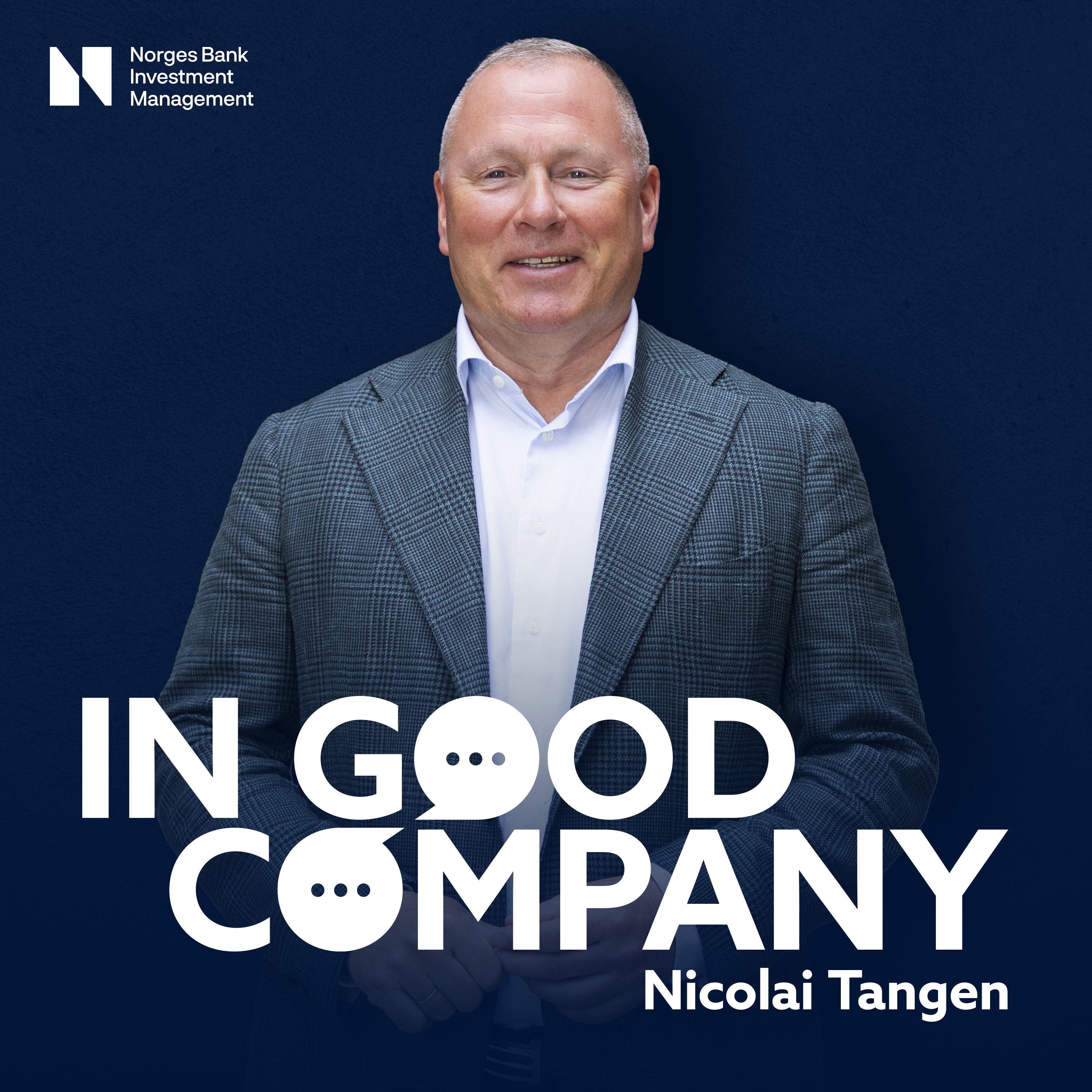
About In Good Company
The CEO of the largest single investor in the world, Norges Bank Investment Management, interviews leaders of some of the largest companies in the world. You will get to know the leader, their strategy, leadership principles, and much more. Hosted on Acast. See acast.com/privacy for more information.