Episode Summary
Executive Summary: Kara Swisher and Scott Galloway examine the ethical and reputational costs of Saudi investment in Silicon Valley after the suspected murder of journalist Jamal Khashoggi, arguing that tech leaders cannot claim ignorance while accepting Saudi capital. They also discuss Facebook’s shifting explanation of Portal ad targeting, celebrate examples of moral leadership, and predict where Amazon may locate HQ2.
Main Topics: Saudi capital and Silicon Valley’s ethical obligations: The hosts discuss the breadth of Saudi investment in technology and venture funding after Khashoggi’s murder. They criticize companies and investors for withdrawing from a Saudi conference while continuing to accept the money, and argue that firms should publicly address their ties. SoftBank’s Vision Fund and concentrated investment power: They describe SoftBank’s aggressive investing and the Saudi Public Investment Fund’s major role in its Vision Fund. Galloway suggests SoftBank could distinguish itself by declining further Saudi capital, while Swisher notes that firms have not returned existing investments. Business ethics, national reputation, and long-term value: Galloway argues that accepting money tied to abuses undermines the moral credibility and brand trust that support American businesses and markets. He contrasts short-term capital with the long-term value of rule of law and ethical leadership. Facebook Portal and trust in technology companies: Swisher recounts that Facebook initially said Portal data would not be used for ad targeting, then clarified that data from apps could be used. Both hosts treat the reversal as another example of Facebook’s difficulty communicating clearly and earning user trust. Examples of moral and inclusive leadership: Galloway highlights Japanese diplomat Chiune Sugihara, who issued visas to Jews fleeing the Holocaust, and Nike’s recognition of runner Justin Gallegos, who has cerebral palsy. The examples illustrate moral courage and inclusion as forms of leadership. Amazon HQ2 prediction: Galloway predicts that Amazon will choose the Washington, D.C. region, interpreting the HQ2 contest as a process shaped substantially by where Jeff Bezos wants to spend time. Swisher considers Maryland and Pittsburgh possibilities and mentions Miami as a dark horse.
Key Arguments: Tech companies cannot credibly claim ignorance of the origins or political implications of Saudi investment; the hosts argue that executives should at least speak publicly about their relationships, even if returning funds is unrealistic. Withdrawing from the Saudi investment conference while retaining Saudi-backed capital is a limited response: it signals disapproval but avoids the financial consequences of severing ties. Galloway argues that ethical conduct protects long-term economic value because consumer trust, rule of law, and national reputation contribute to stronger brands and market confidence. The hosts portray the Vision Fund’s scale and aggressive offers as distorting venture competition and encouraging companies to seek ever-larger financial war chests, even when they may not need them. Facebook’s Portal clarification damaged trust because its initial statement about ad targeting was followed by a qualification that app data could be used for advertising. Sugihara’s visa-issuing and Nike’s recognition of Gallegos are presented as positive examples of courage and inclusion, counterbalancing a week dominated by ethical failures.
Data Points: Saudi share of SoftBank Vision Fund: 45% / $45 billion - Swisher says the Saudis supplied $45 billion, or 45%, of the fund. Planned size of another SoftBank fund: $100 billion - The hosts say SoftBank was preparing to raise another exceptionally large fund. Saudi-linked investment in Uber: About $14 billion total; approximately $7 billion attributed to Saudi money - Swisher says Uber received about $14 billion through the investment structure and estimates roughly half was Saudi-backed. SoftBank investment in Wag: $300 million - Cited as an example of the Vision Fund making large investments, including in a dog-walking app. Saudi ownership stake in Tesla: 5% - Swisher says the Saudis own 5% of Tesla and notes that an open-market stake is difficult for the company to prevent. Saudi ownership stake in Snapchat: About 30% - Swisher describes the Saudi Public Investment Fund’s stake as a large holding. U.S. public-market valuation comparison: 19 times earnings versus 11 or 12 times in other markets - Galloway uses the comparison to argue that rule of law and moral credibility help support U.S. market valuations. U.S. tax share cited by Galloway: 23 cents per dollar - Galloway says taxes fund government capacity to think and act for the long term. People potentially saved by Chiune Sugihara: Likely 6,000; possibly as many as 40,000 - Galloway recounts estimates of the number of Jewish lives saved through Sugihara’s visas. Jeff Bezos’s wealth and age, as stated in the discussion: $145 billion at age 54 - Galloway cites these figures while arguing that Bezos can choose where to live and work.
Pivotal Quotes: "We have put a price on moral leadership." — Scott Galloway: He argues that strategic and commercial relationships with Saudi Arabia are being prioritized over accountability for the journalist’s murder. "Silicon Valley cannot say it didn't know." — Kara Swisher: She emphasizes that technology companies are aware of the sources and political context of capital flowing into the industry. "The reason we have inflows of capital, the reason why our publicly traded stocks traded at 19 times PE, not like 11 or 12 in other markets, is because we have rule of law and some sense of moral leadership here." — Scott Galloway: He links ethical reputation and institutional credibility to the long-term economic strength of U.S. companies and markets.
Implications: Tech firms and investors face growing pressure to scrutinize capital sources and reconcile public statements with financial ties. Short-term funding may come at the cost of trust and reputation; transparent, principled leadership can be both an ethical choice and a long-term business asset.
About Pivot
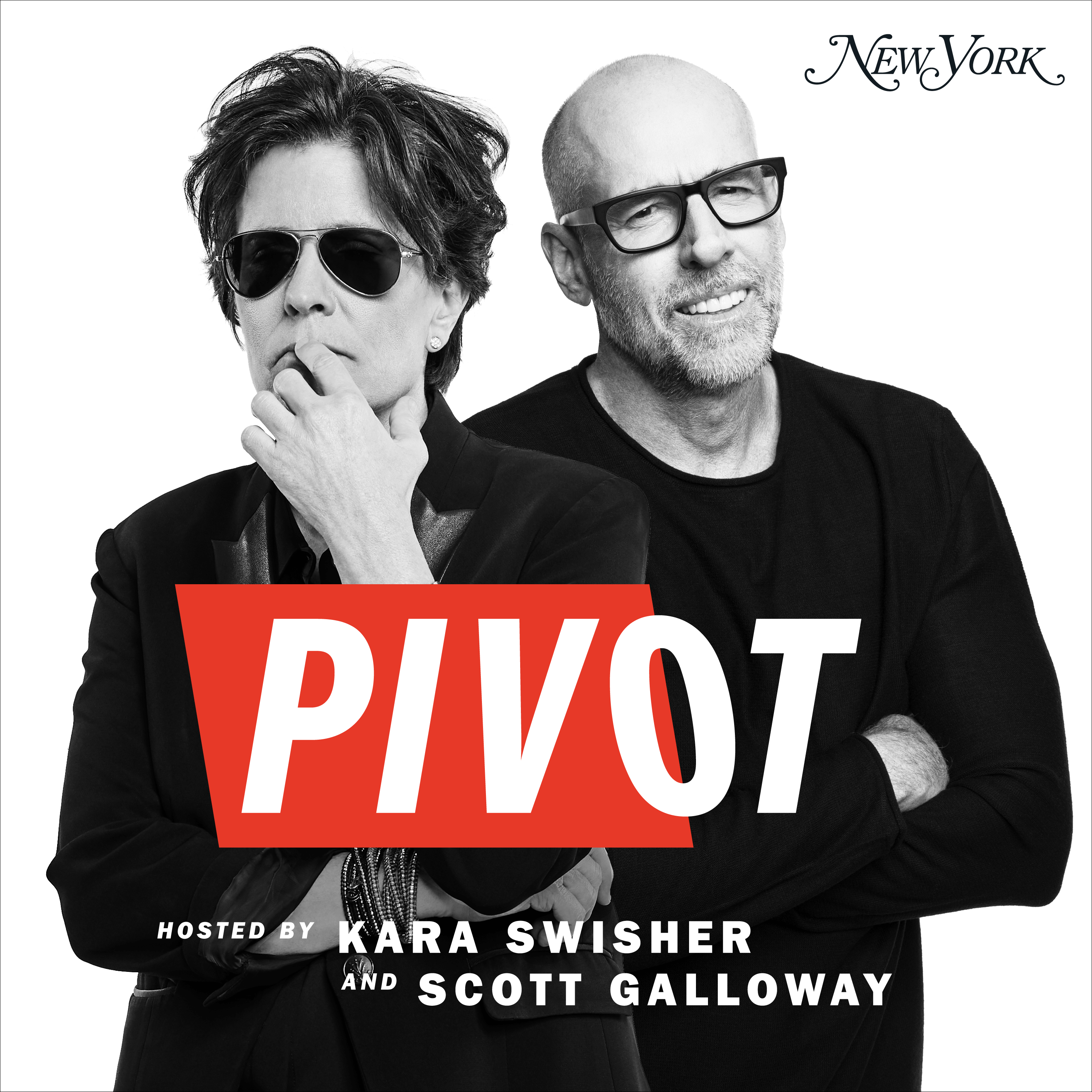
With great power, comes great scrutiny. Every Tuesday and Friday, journalist Kara Swisher and NYU Professor Scott Galloway offer sharp, unfiltered insights into the biggest stories in tech, business, and politics. They make bold predictions, pick winners and losers, and bicker and banter like no one else. From New York Magazine and the Vox Media Podcast Network.