Episode Summary
Executive Summary: The episode frames a major shift in economic thinking: away from trickle-down/neoliberal theory and toward middle-out economics, which argues that a thriving middle class drives growth and stability. The hosts say Bidenomics reflects this logic through worker empowerment, public investment, and competition policy, and that the current moment could determine whether the U.S. moves toward renewed democracy or deeper instability.
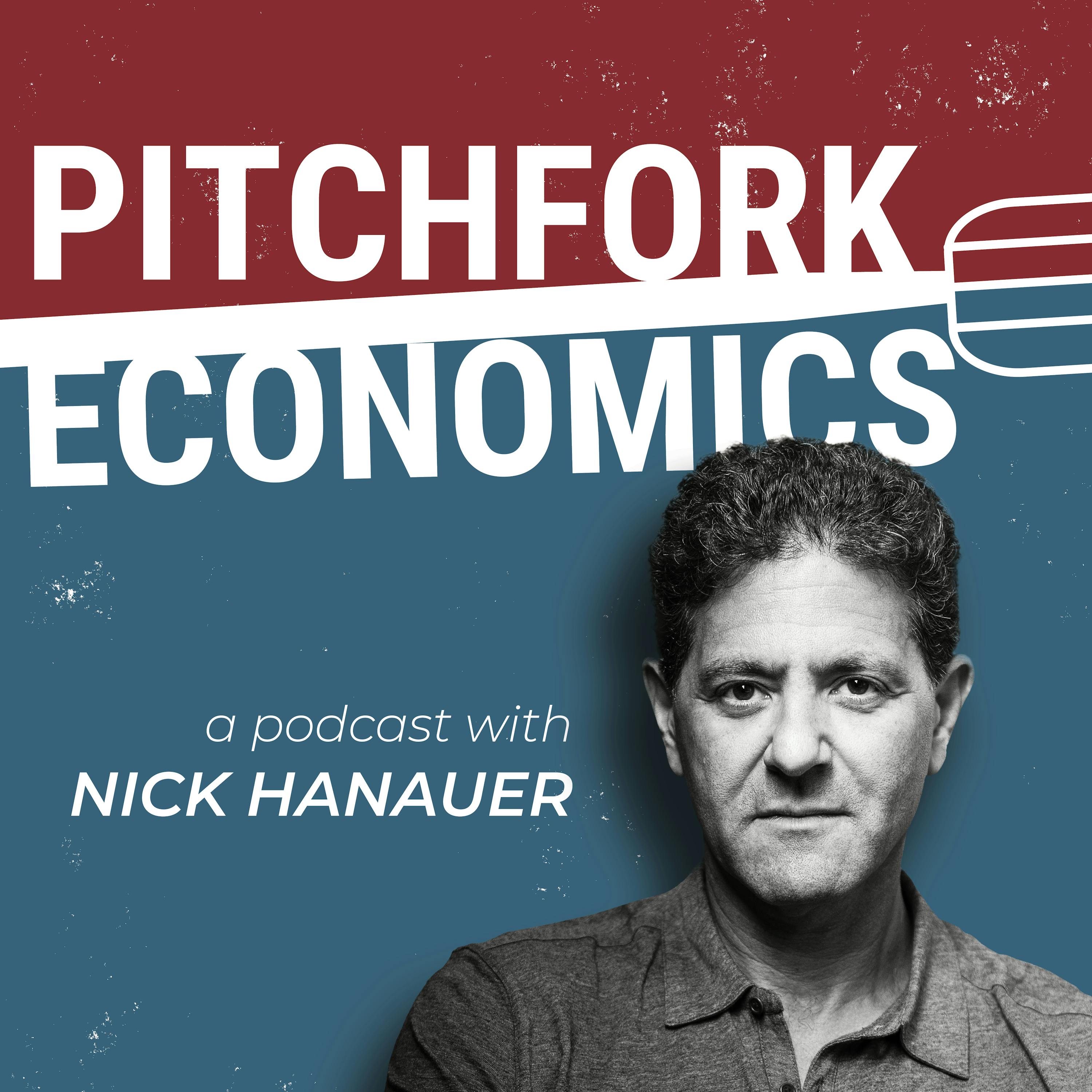
Main Topics: Rebranding and a new era for the podcast: The hosts explain the show's new opening and visual identity as a reflection of a broader shift in the economic and political landscape, from outsider critique to a more mainstream middle-out consensus. Middle-out economics vs. trickle-down: They define middle-out economics as the idea that broad middle-class prosperity causes growth and stability, contrasting it with trickle-down economics, which treats wealthy investment as the primary engine of prosperity. Bidenomics as policy built on middle-out theory: Bidenomics is presented as the policy expression of middle-out economics, with the administration explicitly using language about bottom-up and middle-out growth. Empirical challenges to orthodox economics: The speakers argue that evidence, especially around the minimum wage, has repeatedly contradicted neoclassical claims that higher wages kill jobs and that markets self-correct efficiently. Worker power, public investment, and competition: They identify three pillars of a successful middle-out agenda: empowering workers, investing in people and infrastructure, and promoting competition by limiting corporate concentration. Political stakes and democratic stability: The episode warns that rising inequality and political instability could lead either to democratic renewal or authoritarian/fascist backlash, making the next election cycle highly consequential.
Key Arguments: Middle-out economics argues that a strong middle class is the cause of economic growth and political stability, not just a result of them. Bidenomics is described as the policy framework that operationalizes middle-out economics through wages, investment, and competition. Trickle-down economics is portrayed as a failed 50-year neoliberal project that concentrated power among capital owners while suppressing worker wages. The Federal Reserve’s anti-inflation strategy was framed as an attempt to weaken labor demand by raising unemployment and restraining wage growth. Empirical research on minimum wage increases has repeatedly shown no job losses and, in some cases, job gains from larger increases. Market concentration reduces wages, raises consumer prices, and lowers innovation because firms face less competition. A thriving middle class can generate capital through pensions and broad participation, so wealth creation does not depend on rich individuals alone. The current political moment is depicted as a turning point: either the U.S. reverses neoliberal mistakes or moves toward authoritarian collapse.
Data Points: Years of podcast rebranding/work: Almost a decade - Goldie says she has worked with Nick for nearly 10 years on the project to redefine capitalism. Middle-out coined: 2010 - The term was said to originate in the book Gardens of Democracy by Nick Hanauer and Eric Liu. Economic paradigm timeline: Past 50 years - Referenced as the period dominated by neoliberal/trickle-down policymaking. Policy horizon: Next 5 to 10 years - The hosts say recent legislation could transform the country over this period. Election cycle: Next 4 to 5 years - They suggest another round of legislation in this window could materially improve the country.
Pivotal Quotes: "It's time to build our economy from the bottom up and from the middle out, not the top down." — Nick Hanauer: Opening statement framing the core philosophy of the episode and the podcast. "The core economic insight at the heart of middle-out economics is that a thriving middle class is the cause of both economic growth and political stability." — Nick Hanauer: Definition of middle-out economics and its central claim. "We are at that moment where there's a lot of good to talk about." — Nick Hanauer: Explaining the podcast’s posture shift from mainly critique to more constructive advocacy.
Implications: The episode signals a major ideological transition in U.S. economics and politics. For listeners, it suggests the future depends on protecting democracy by strengthening workers, investing broadly, and resisting concentrated corporate power.
About Pitchfork Economics
We are living through a paradigm shift from trickle-down neoliberalism to middle-out economics — a new understanding of who gets what and why. Join zillionaire class-traitor Nick Hanauer and some of the world’s leading economic and political thinkers as they explore the latest thinking on how the economy actually works.