Episode Summary
Executive Summary: The episode explains how short sellers help capitalism by uncovering negative information, using Fanny Kadir’s Valiant Pharmaceuticals trade as the central case. The hosts debate whether short sellers are truth-tellers or merely profit-seekers, and whether their role should be celebrated. The conversation highlights the mechanics and risks of shorting, the moral case for exposing fraud, and the tension between public-good arguments and the private, often adversarial nature of hedge fund shorting.
Main Topics: What short selling is and why it matters: The hosts define short selling, explain how borrowed shares are sold and later repurchased, and argue that short sellers help markets process negative information that would otherwise be harder to spread. Risks and economics of shorting: They discuss the asymmetric payoff of short positions, the risk of short squeezes, collateral requirements, and why few funds run pure short-only strategies. Fanny Kadir’s Valiant Pharmaceuticals short: Kadir describes how she identified Valiant’s anomalous business model, used industry knowledge and due diligence, and profited from exposing what she viewed as fraud and harmful practices. Short sellers as market police vs. profit-seekers: A major debate unfolds over whether short sellers are socially useful truth-tellers or simply opportunistic hedge fund managers who benefit from market inefficiency. Public exposure, regulators, and journalists: The discussion compares the role of short sellers with that of journalists and regulators in bringing fraud to light, emphasizing that information often reaches the public through multiple channels. Gender, outsider status, and industry culture: Kadir reflects on being a woman in male-dominated finance and how outsider status can help short sellers question accepted narratives and avoid groupthink. Tesla and future short bets: The episode closes with a brief mention of Kadir’s interest in Tesla and Elon Musk, reinforcing the ongoing, high-profile nature of short activism.
Key Arguments: Short sellers are essential because capitalism depends on negative information being produced and disseminated, not just positive news. Short selling is risky because losses can be large if a stock rises or if lenders demand the shares back, creating a short squeeze. Pure short-only funds are rare because markets drift upward over time, making persistent bearish bets difficult to sustain. The best short opportunities are usually companies with fraud, scandal, weak business models, or near-failure conditions, not merely undervalued firms. Kadir argues that companies hostile to short sellers may be hiding something, while well-run firms should welcome scrutiny. The Valiant trade was based on a belief that the company’s business model was anomalous for pharmaceuticals: cutting R&D, raising prices, and using leverage to boost profits. Kadir says short sellers must do far more work than long investors because they face greater downside and must be right on the facts. The hosts disagree on whether making money from exposing fraud deserves celebration; one side sees it as socially useful, the other as potentially glorifying finance. The episode suggests that regulators and journalists are important, but slow and resource-constrained, so short sellers can accelerate discovery of wrongdoing. The discussion argues that outsider perspectives can be valuable because they are less constrained by industry consensus and relationships.
Data Points: Age: 26 - Kadir was 26 when she exposed Valiant Pharmaceuticals and made a fortune for the fund she worked for. University male share: 70% men - Kadir says Harvey Mudd was about 70% men when she attended, illustrating her experience in male-dominated environments. Trade ranking: Second short ever - Kadir says Valiant was the second short position she ever put on in her career. Short position downside: Potentially infinite - The hosts explain that losses on a short can theoretically keep rising as the stock price rises, though collateral and margin can force closure. Stock downside on long positions: Can only go to zero - Kadir contrasts the risk profile of being long versus short. Research burden: 10 times the work - Kadir says short sellers must do far more due diligence than the person on the other side of the trade.
Pivotal Quotes: "For a capitalist system to work properly, we need information to be produced and disseminated." — Luigi Zingales: Opening explanation of why short sellers matter in market efficiency and information flow. "We’re going after companies that are engaged in bad corporate practice. And that involves exploiting people, including exploiting Americans." — Fanny Kadir: Kadir’s defense of short selling as a morally justified strategy aligned with exposing wrongdoing. "If you are a believer in the free markets, then you should be a supporter of short sellers." — Fanny Kadir: Kadir argues that short sellers improve price discovery and market integrity.
Implications: The episode frames short sellers as controversial but potentially valuable watchdogs. For listeners, it suggests markets need skeptics to expose fraud, though the ethical line between public service and private profit remains contested.
About Capitalisnt
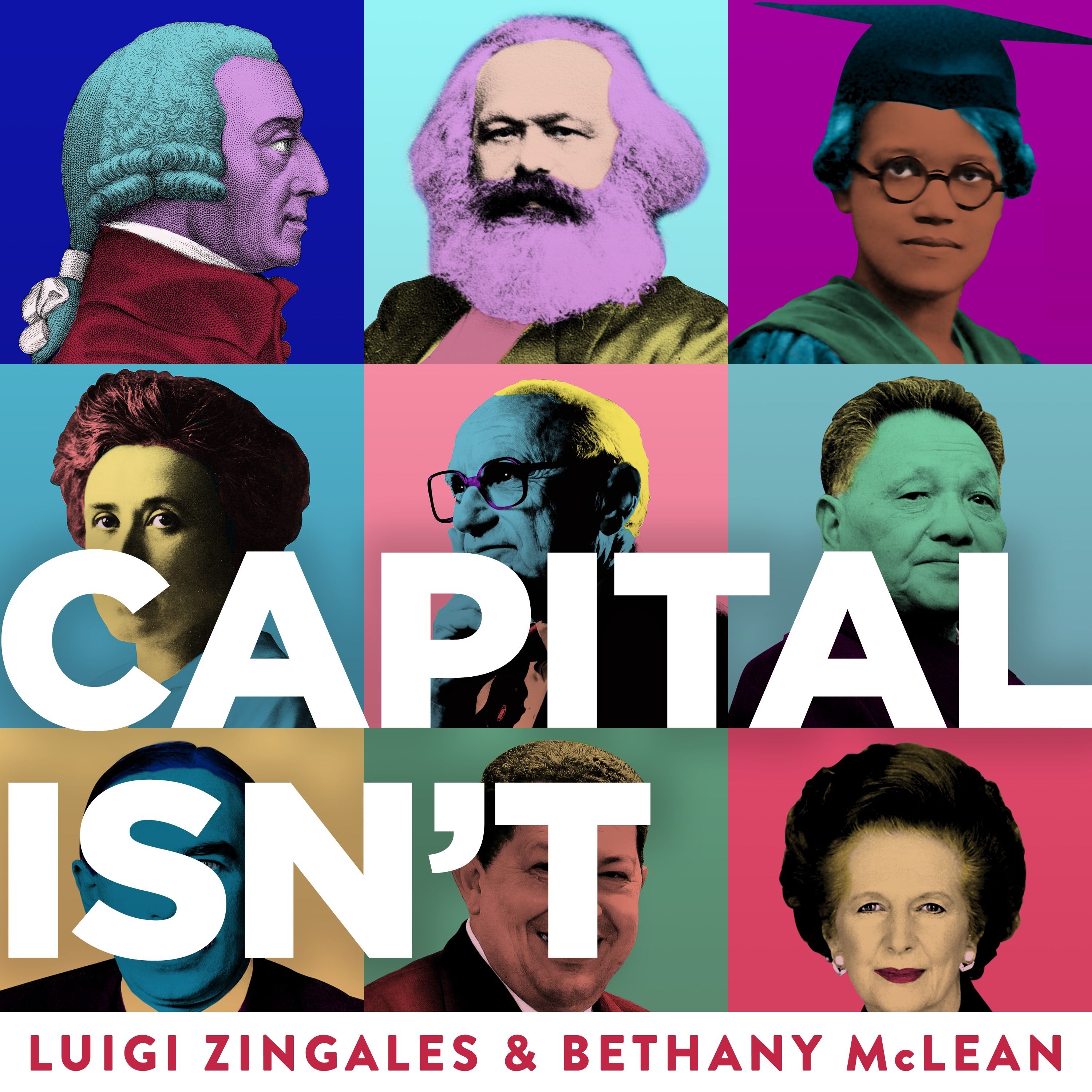
Is capitalism the engine of destruction or the engine of prosperity? On this podcast we talk about the ways capitalism is—or more often isn’t—working in our world today. Hosted by Vanity Fair contributing editor, Bethany McLean and world renowned economics professor Luigi Zingales, we explain how capitalism can go wrong, and what we can do to fix it. Cover photo attributions: https://www.chicagobooth.edu/research/stigler/about/capitalisnt. If you would like to send us feedback, suggestions fo...