Episode Summary
Executive Summary: The episode debates whether a wealth tax is a fair and effective tool for reducing inequality and raising revenue. It compares Warren’s proposal with European precedents, weighs revenue and fairness benefits against distortions, avoidance, and investment disincentives, and concludes a wealth tax can fit capitalism if tightly capped and designed with a strong base.
Main Topics: What a wealth tax is and Warren’s proposal: The hosts explain Senator Warren’s plan: annual taxes on net wealth above high thresholds, plus an exit tax for those renouncing citizenship to avoid it. International precedents and the Swiss case: They note that wealth taxes exist in some OECD countries, especially Switzerland, where cantonal variation offers evidence on how such taxes behave in practice. Revenue, fairness, and redistribution: A major argument for the tax is that it can raise money from the ultra-wealthy rather than from low-income workers, and it may feel more equitable. Administrative burden, loopholes, and tax avoidance: The discussion covers underreporting, legal avoidance strategies, trust structures, and the role of lawyers in shrinking the tax base. Incentives, savings, and investment effects: The hosts debate whether a wealth tax would reduce saving and long-term investment, and whether those distortions would be large enough to matter. Slippery-slope fears vs. limits on taxation: One side worries a wealth tax could expand into expropriation; the other argues caps and constitutional limits can prevent abuse and that the real risk is tax erosion through loopholes.
Key Arguments: Wealth taxes are not inherently socialist or unprecedented; several developed countries have used them, especially Switzerland. Warren’s proposal is politically notable because it targets only about 80,000 families and includes an exit tax to prevent flight. The strongest case for a wealth tax is diversification of tax sources and compensating for legal tax avoidance by the wealthy. A wealth tax may help address unproductive capital by taxing assets that grow in value without active productive contribution. The main economic cost is that wealth taxes are taxes on savings, which can discourage investment and long-term capital formation. Empirical evidence suggests reported wealth is sensitive to wealth taxes, but in Switzerland the biggest effects appear to be underreporting and reduced saving rather than migration. The decline of wealth taxes in Europe is partly due to residency-based tax systems that make it easy for wealthy people to move to lower-tax jurisdictions. Rich taxpayers are likely to lobby for loopholes and trusts, which can make a wealth tax administratively complex and less productive. A tax’s political visibility tends to center on rates, while its real effectiveness depends on the base and the loopholes that narrow it. Supporters argue a modest wealth tax is unlikely to trigger runaway expropriation, and that limits or constitutional caps can contain it.
Data Points: Warren wealth tax rate: 2% up to $50 million; 3% above $1 billion - Senator Warren’s proposed annual tax on ultra-high net worth households Targeted families: About 80,000 families - Estimate of households affected by the Warren proposal Estimated revenue: $2.75 trillion over 10 years - Berkeley economist estimates cited for Warren’s plan Exit tax rate: 40% on net worth above $50 million - Penalty for U.S. citizens renouncing citizenship to avoid the tax OECD countries with wealth taxes: 5 - Current number of OECD nations with a wealth tax mentioned in the discussion Countries with wealth taxes in 1995: 15 - Historical comparison showing decline in use of wealth taxes Swiss wealth tax rate: About 0.5% to 0.7% - Typical cantonal wealth tax rates in Switzerland Swiss tax threshold: Around $200,000 to $300,000 - Lower wealth thresholds at which Swiss cantons begin taxing wealth American wealth concentration: 1% of American households own 40% of the country’s wealth - Closing argument for why wealth taxation is seen as necessary Historic income tax peak: 90% - Example used to argue taxes can expand substantially once introduced Wealth tax threshold in discussion: $50 million - Main U.S. threshold referenced for taxing wealthy households Alternative high threshold: $1 billion - Higher rate applies to wealth above this level in Warren’s plan
Pivotal Quotes: "I think the idea that rich people are undertaxed is ridiculous." — Unnamed speaker at opening of transcript: Opening framing of the political argument for a wealth tax "The biggest benefits, in my view, is to diversify your source of tax raising." — Luigi Zingales: Explaining the main public-finance rationale for a wealth tax "I think, if anything, the truth would be the opposite: if a sort of wealth tax were ever implemented at all, the slippery slope would move in the opposite direction." — Kate Waldock: Rejecting fears that a wealth tax would inevitably become extreme expropriation
Implications: The episode suggests wealth taxes can be capitalistic if narrowly designed, capped, and paired with anti-avoidance rules. For listeners, the key issue is not whether to tax wealth at all, but how to design the tax base, rate, and enforcement to avoid loopholes and distortion.
About Capitalisnt
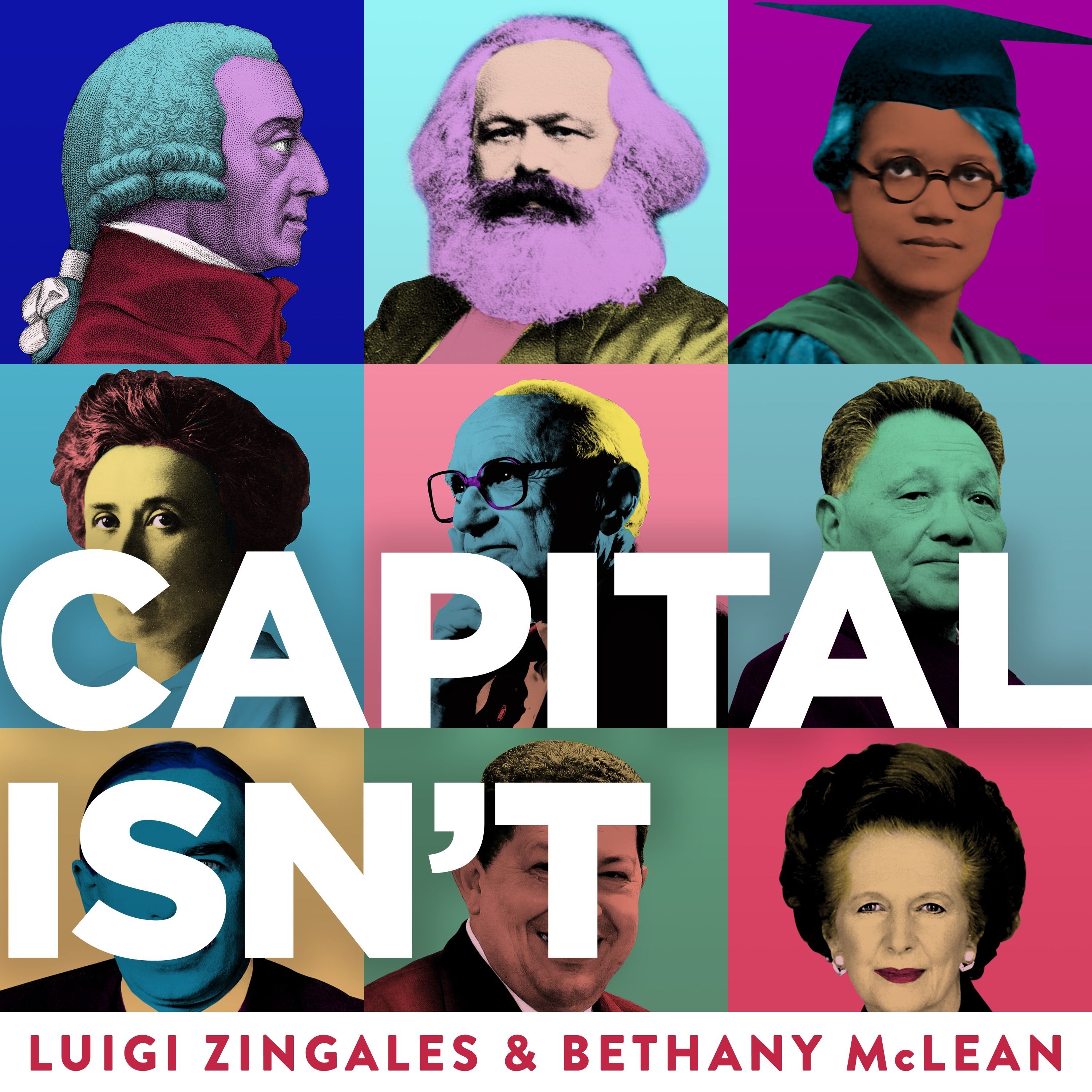
Is capitalism the engine of destruction or the engine of prosperity? On this podcast we talk about the ways capitalism is—or more often isn’t—working in our world today. Hosted by Vanity Fair contributing editor, Bethany McLean and world renowned economics professor Luigi Zingales, we explain how capitalism can go wrong, and what we can do to fix it. Cover photo attributions: https://www.chicagobooth.edu/research/stigler/about/capitalisnt. If you would like to send us feedback, suggestions fo...