Episode Summary
Executive Summary: The episode examines the Biden DOJ’s draft merger guidelines and whether they represent a major shift in U.S. antitrust. Through an interview with DOJ chief economist Susan Athey, the hosts debate competition, monopsony, labor markets, market definition, and whether the guidelines will meaningfully restrain consolidation or simply be symbolic if courts do not follow them.
Main Topics: Why the new merger guidelines matter: The hosts frame the Biden administration’s draft merger guidelines as potentially the biggest antitrust change in decades, arguing that they may deter mergers even before courts rule on them. Historical evolution of antitrust enforcement: The discussion traces merger guidelines from 1968 structural analysis, to the 1982 efficiency-focused Reagan-era approach, to the 2010 consumer-welfare framing, setting up the current revision as a possible reversal. Competition beyond prices: labor, innovation, and monopsony: Susan Athey explains that competition affects prices, quality, innovation, workers, suppliers, and labor markets, and that the new guidelines more explicitly address buyer power and wage suppression. Market definition and the role of legal precedent: The conversation explains how Brown Shoe, the Clayton Act, and the hypothetical monopolist test shape merger analysis, and how the new guidelines try to align modern economics with binding precedent. Burden shifting and rebuttal of merger harms: The interview explores how the guidelines list anti-competitive risks first, then allow merging parties to rebut harms with evidence of efficiencies or pro-competitive effects. Will the guidelines actually change behavior?: The hosts and guest debate whether the guidelines will have real-world impact or be limited by underfunded agencies, conservative courts, and firms with resources to litigate. Simplicity vs. realism in economics: A recurring theme is whether antitrust analysis is too simplistic when it focuses only on efficiency, and whether more realistic but complex frameworks are necessary to capture actual market harms.
Key Arguments: The merger guidelines matter because they can deter mergers through an IRS-like announcement effect, even if courts make the final decision. Antitrust law has been vague for decades, so the guidelines have played a central practical role in shaping enforcement. The Biden draft broadens attention beyond consumer prices to labor markets, monopsony, innovation, and market power throughout supply chains. Athey argues that competition reduces customer-service problems, improves innovation, and helps allocate labor efficiently, especially in sectors like hospitals. The guidelines try to connect modern economics to the Clayton Act’s language about a merger that “may substantially lessen competition.” Brown Shoe and related precedents still matter as binding law, even if the economic tools used to interpret them have evolved. The draft uses a burden-shifting framework: agencies identify likely harms first, then merging parties can rebut with evidence of verifiable, merger-specific pro-competitive benefits. Some critics see the guidelines as hostile to mergers, but Athey says they are meant to be more open-ended and evidence-based than that reading suggests. The hosts worry that wealthy firms may litigate successfully while smaller firms are deterred by legal risk, producing uneven enforcement. Both hosts conclude the guidelines may be a major conceptual shift, but their practical effect depends on agency resources and court behavior.
Data Points: Live recording date: October 5 - Opening announcement for a live Ask Me Anything episode. Question submission deadline: October 3 - Listeners are invited to send questions before the live recording. Year of Boston Tea Party anniversary: 250th anniversary - Used to connect anti-monopoly sentiment to American history. Original merger guidelines issuance: 1968 - First merger guidelines were based on structural concentration analysis. Reagan-era revision: 1982 - Guidelines shifted toward an efficiency test. Last major update before draft: 2010 - Guidelines were updated to focus more on consumer prices. Estimated timing between updates: 10 to 15 years - Susan Athey says merger guidelines are generally revised on this cadence. Economic value lost to weaker competition: $1 trillion - Thomas Philippon’s estimate of how much larger the U.S. economy could be if competition had stayed at 2000 levels. Thomas Philippon comparison year: 2000 - Benchmark year used in the estimate of lost economic output. Brown Shoe market shares: 4%, 0.5%, and 1.2% - Brown Shoe was the fourth-largest shoe producer at 4%; Kinney had 0.5% as producer and 1.2% as retailer. Supreme Court citations in draft guidelines: 11 direct citations - Brown Shoe is cited repeatedly as a binding precedent in the draft.
Pivotal Quotes: "the most important economic policy thing that the Biden administration will do this year" — Tim Wu (quoted by host): Used to underscore the significance of the draft guidelines. "competition is the value and the benefits of competition. Lower prices, higher quality, long term innovation are really what this is all about" — Susan Athey: Summarizes the normative purpose of antitrust enforcement. "I think that it is a Copernican change" — Luigi Zingales: His assessment that the draft guidelines represent a major conceptual shift.
Implications: The episode suggests the draft guidelines could reshape merger behavior, broaden antitrust to labor and monopsony, and revive tougher enforcement. But real impact depends on agency capacity, courts, and whether the rules deter only weaker firms while powerful ones still litigate.
About Capitalisnt
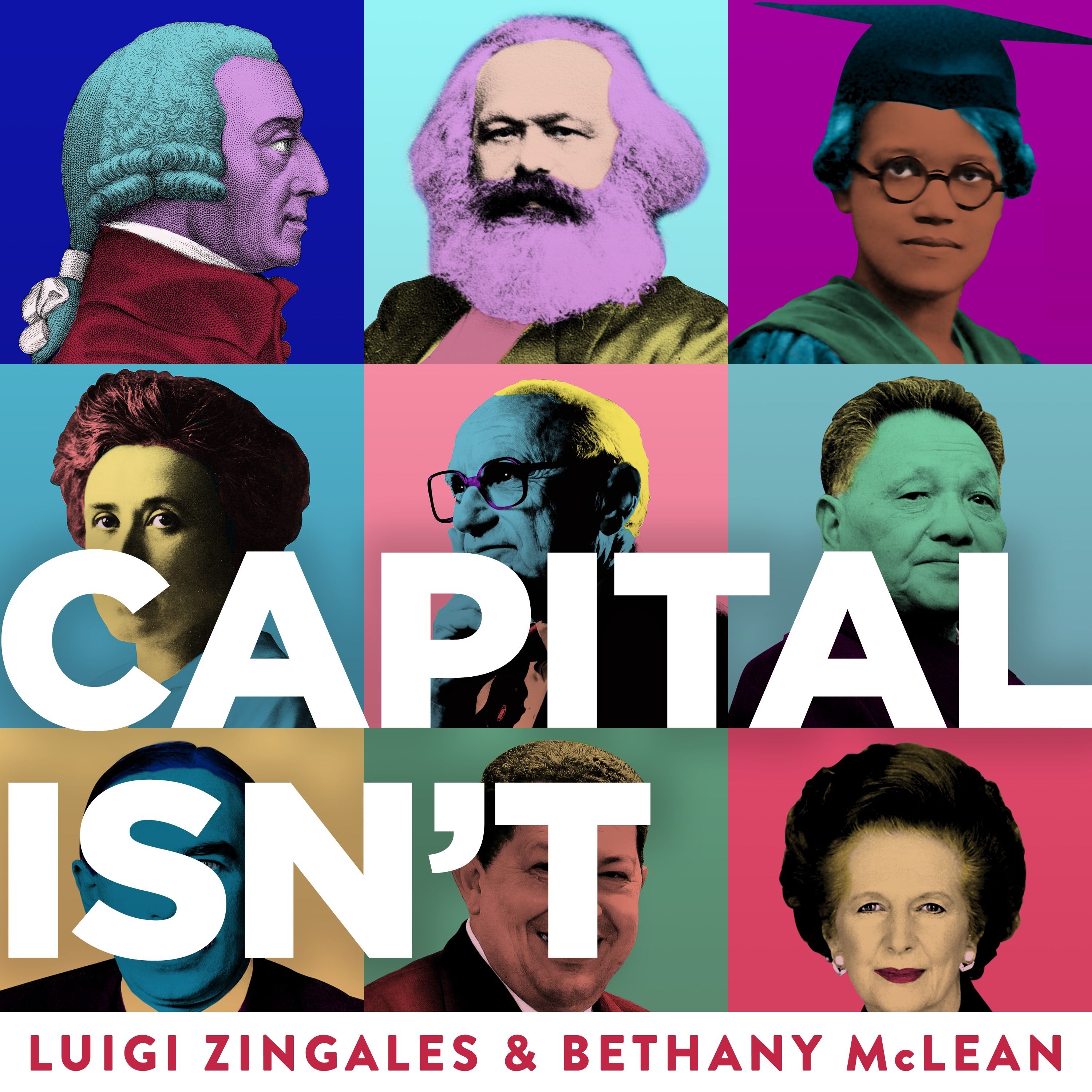
Is capitalism the engine of destruction or the engine of prosperity? On this podcast we talk about the ways capitalism is—or more often isn’t—working in our world today. Hosted by Vanity Fair contributing editor, Bethany McLean and world renowned economics professor Luigi Zingales, we explain how capitalism can go wrong, and what we can do to fix it. Cover photo attributions: https://www.chicagobooth.edu/research/stigler/about/capitalisnt. If you would like to send us feedback, suggestions fo...