Episode Summary
Executive Summary: The episode argues that sanctions on Russia can work if they are broad, coordinated, and targeted at Putin’s financial networks, not just generic trade restrictions. Bill Browder frames Putin as a criminal actor whose psychology and regime structure make standard sanctions analysis insufficient, emphasizing central bank reserves, SWIFT exclusion, oligarch wealth, enablers, and Russian energy revenue as key pressure points.
Main Topics: Why Putin requires a different sanctions framework: Browder argues sanctions must be designed around Vladimir Putin’s criminal behavior and psychology, not around general historical sanctions cases or ordinary states. What sanctions are already working: He highlights the freeze on Russian central bank assets and partial SWIFT restrictions as major steps that can weaken Russia’s financial capacity. Targeting oligarchs and enablers: The discussion focuses on freezing oligarch assets and turning lawyers, trustees, and accountants into legally liable whistleblowers to expose hidden wealth. Western complicity and money laundering hubs: The speakers criticize London and parts of the Western financial/legal system for enabling dirty money and protecting corrupt elites through weak enforcement. Economic ties, capitalism, and institutional design: The conversation broadens into how markets fail without rule of law, transparency, and ownership disclosure, and how capitalism can become a jungle without institutions. Risks of escalation and nuclear brinkmanship: A concern is raised that sanctions could corner Putin; Browder responds that appeasement will not stop him and that financial pressure is the only non-military tool available. Consumer, investor, and corporate responsibility: The episode closes with calls for boycotts, divestment, and pressure on firms that stay in Russia, framing such spending as morally tainted under current conditions.
Key Arguments: Sanctions should be judged by their fit to Putin’s regime, not by generic historical comparisons; his criminal, highly centralized system makes him uniquely vulnerable to financial pressure. Freezing roughly $350 billion of Russian central bank reserves is one of the strongest sanctions so far because it deprives the state of immediate liquidity and destabilizes the ruble. Cutting only part of Russian banks off SWIFT is insufficient; all Russian banks should be excluded to prevent workarounds. Putin’s offshore money is held through oligarchs, so sanctioning roughly a hundred oligarchs would significantly reduce his access to wealth. A legal regime that forces enablers—lawyers, accountants, trustees—to disclose structures tied to sanctioned persons would help unravel hidden assets. Western jurisdictions, especially London, have served as laundering havens because of weak enforcement, strong property rights, and high tolerance for dirty money. Transparency of ultimate beneficial ownership is presented as a structural fix that would prevent future abuse by criminals and authoritarian elites. Economic integration alone does not deter war; without institutions and rule of law it can instead facilitate corruption and authoritarian power. Consumers and investors can pressure firms that continue operating in Russia by withdrawing business and refusing to fund companies seen as aiding Putin. The sanctions strategy is meant less to negotiate with Putin than to deprive him of the cash flow needed to sustain war. The broader lesson is that capitalism needs policing, transparency, and legal institutions; otherwise it becomes organized crime at scale.
Data Points: Russian central bank assets frozen: $350 billion - Browder cites this as a major sanction already imposed on the Russian state. Russian banks cut off from SWIFT: 70% - He says 70% of Russian banks have been excluded, but argues all should be cut off. Oligarchs to sanction: about 100 - He estimates there are around a hundred oligarchs whose assets help hide Putin’s money. High-value targets already on list: about a dozen to a little more than a dozen - He says sanctions lists already include some major oligarchs but not enough. Russian war cost to Putin: between $1 billion and $2 billion per day - He argues sanctions should raise the cost of sustaining the war until resources run out. Russian oil and gas revenue: about $1 billion to $500 million per day - He identifies energy exports as one of Russia’s remaining money sources. Interpol red notices: 8 - Browder says he has faced eight Interpol red notices from Russian efforts against him. Length of time living in London: 32 years - Browder says he has lived in London for decades while describing it as a laundering hub.
Pivotal Quotes: "I'm not a scholar of sanctions. I'm a scholar of Vladimir Putin." — Bill Browder: Browder explains why sanctions analysis must center on Putin’s specific behavior and regime. "If you are a lawyer or a trustee or an accountant that's in any way been involved in setting up a structure for a person who shows up on a sanctions list, then you have a positive legal duty to report that to the government under penalty of law if you don't." — Bill Browder: He outlines his proposed approach to forcing enablers to become whistleblowers. "London is the money laundering capital of the world." — Bill Browder: He criticizes the UK’s financial and legal environment as a safe harbor for dirty money.
Implications: The episode urges tougher, coordinated financial enforcement, transparency of ownership, and accountability for enablers. For listeners, it reframes sanctions and capitalism as institutional questions: without strong rules, markets can empower authoritarian corruption.
About Capitalisnt
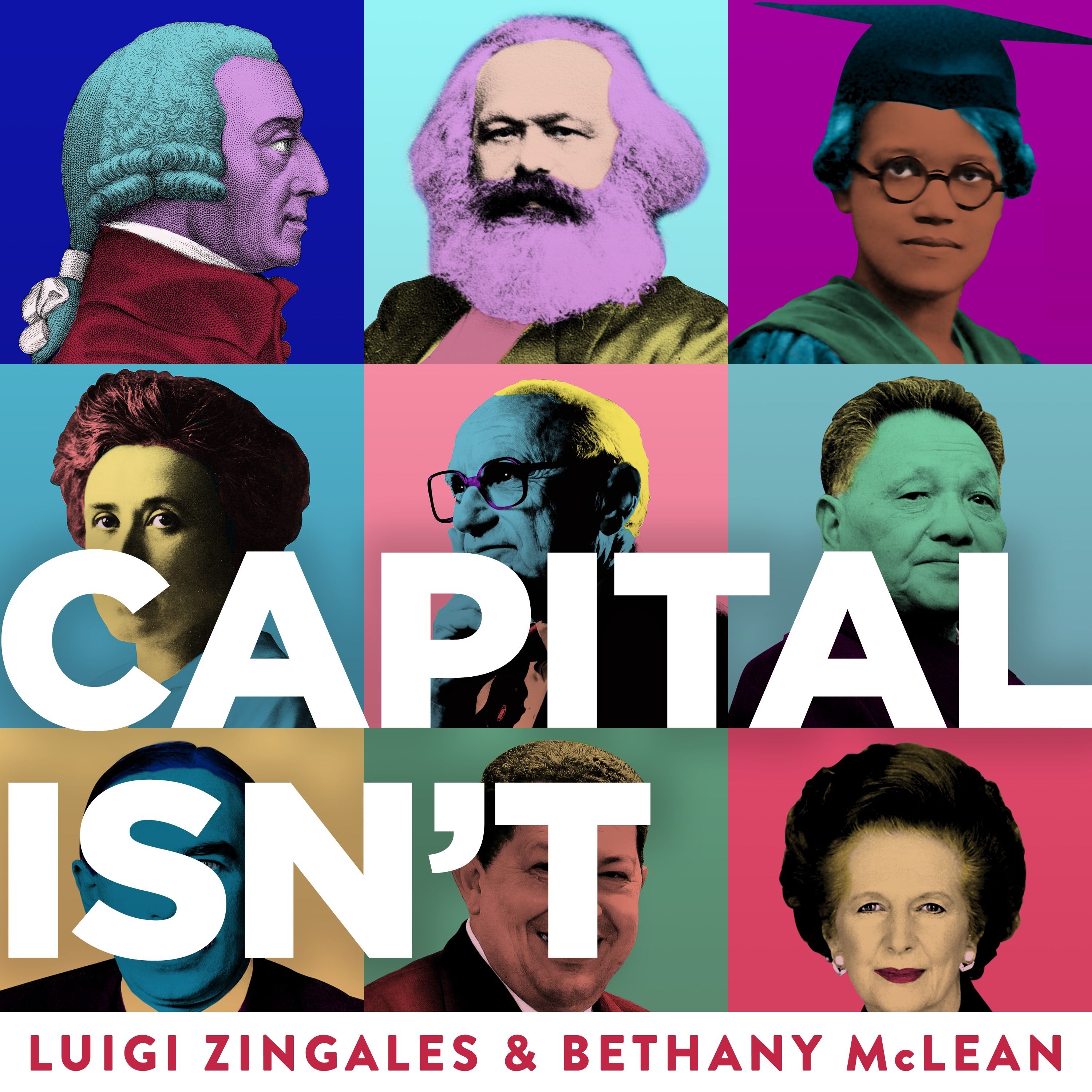
Is capitalism the engine of destruction or the engine of prosperity? On this podcast we talk about the ways capitalism is—or more often isn’t—working in our world today. Hosted by Vanity Fair contributing editor, Bethany McLean and world renowned economics professor Luigi Zingales, we explain how capitalism can go wrong, and what we can do to fix it. Cover photo attributions: https://www.chicagobooth.edu/research/stigler/about/capitalisnt. If you would like to send us feedback, suggestions fo...