Episode Summary
Executive Summary: The episode features Ukrainian economist Timofi Milovanov arguing that sanctions alone are insufficient: Russia’s war capacity is sustained by energy exports, critical imports, and weak enforcement. He emphasizes that Ukraine needs weapons and support, Europe has been too timid, and Russia’s food and logistics leverage make the conflict globally destabilizing. The discussion also highlights Ukraine’s resilience, Zelensky’s leadership, and the strategic importance of blocking military supply chains.
Main Topics: Sanctions: symbolic vs. operational impact: Milovanov argues sanctions matter most when they block critical wartime inputs, not when they merely affect exchange rates or frozen reserves. He says Russia’s economy can still fund war through export revenues and workarounds. Energy as a strategic weapon: Russia’s gas and oil exports are portrayed as leverage over Europe and a source of war financing. The speaker argues the key issue is not stopping energy flows outright, but ensuring Russia is not paid. Critical imports and supply-chain choke points: The conversation stresses that military software, machinery, heating equipment, and dual-use components are the true pressure points. Interrupting these can slow Russian operations far more than broad economic penalties. War logistics, food security, and global destabilization: Milovanov frames Russia’s control over logistics and grain exports as additional weapons. He warns that food shortages can destabilize North Africa, the Middle East, and parts of Asia. Western weakness and information failure: He criticizes NATO and Europe for being too cautious, too focused on economics, and too naive about Russian aggression. He says the West has forgotten Cold War lessons about deterrence and ambiguity. Ukraine’s resilience and political maturity: The interview highlights Ukraine’s history of revolutions, resistance to oligarchs, and Zelensky’s refusal to yield under pressure. This helps explain why Ukraine has performed better than many in the West expected. Human cost and humanitarian support: The episode closes with a plea for donations to medical-kits efforts, underscoring that battlefield survival depends on rapid bleeding control and emergency aid.
Key Arguments: Sanctions are mostly symbolic unless they cut off the specific technologies and components Russia needs to wage war. Frozen Russian central-bank assets matter less in the short term than ongoing cash flow from oil and gas exports. The ruble’s exchange rate is not meaningful under capital controls and forced conversion rules, so it is not a true sign of economic health. Western companies and intermediary states can bypass sanctions; Milovanov is especially concerned about France, Germany, and Georgia. Stopping gas transit without a broader embargo may be counterproductive unless Russia is also denied payment. Russia’s biggest strategic tools are not just energy but also logistics disruption and food insecurity. The West should focus on strengthening deterrence and creating ambiguity about responses rather than publicly ruling out options. Ukraine’s leadership is stronger than outsiders assumed because it has already survived repeated escalation and pressure. Russia’s war aims appear unclear, which makes the conflict more dangerous because it suggests open-ended aggression. Ukraine’s war effort and survival depend on both military aid and civilian medical support.
Data Points: Years of war before 2022 invasion: 8 years - Milovanov says Ukraine had already been at war with Russia for eight years, so he does not feel “betrayed” by Russians. Current account surplus: Large - Used to argue that Russia still receives substantial foreign currency through oil and gas exports. Bank withdrawal limit: 10% - Milovanov says Russian citizens with dollar deposits may be allowed to withdraw only 10% in dollars, with the rest converted to rubles. Central-bank reserve assets: Frozen - He says freezing reserves matters less than stopping wartime cash flow. Potential military-equipment cost: Hundreds of thousands to millions of euros - Milovanov argues critical wartime supplies are relatively affordable compared with broad sanctions effects. War-supporting population in Russia: 40 to 80 million people - He estimates a large share of Russians support the war or aggressive policy. Russia and Ukraine share of wheat/corn/grains: 25% to 30% - He says Russia and Ukraine together supply a major share of global grain markets. People depending on Ukraine for food security: 385 million - He cites this figure to show the geopolitical importance of Ukrainian grain exports. KSE fundraising for medical kits: $17 million - Mentioned near the end as part of Ukraine’s medical aid effort. Cost per medical kit: $100 - Milovanov explains the kits are expensive but essential for stopping blood loss quickly. Russian troop buildup in 2021: 100k–120k troops - He references troop concentrations near Ukraine as part of Russia’s escalation.
Pivotal Quotes: "I feel betrayed by Europe that we're not getting arms." — Timofi Milovanov: He contrasts Western hesitation with Russia’s ongoing aggression. "The price of democracy is paying. In lives." — Timofi Milovanov: He reflects on Ukraine’s history of revolution and the human cost of political freedom. "I think the West has got it wrong or forgot what the Cold War was." — Timofi Milovanov: He criticizes public commitments by the West to avoid escalation.
Implications: Listeners should see the war as a logistics-and-industrial contest, not just a battlefield or sanctions story. The episode suggests Europe’s hesitation, supply-chain leaks, and food/energy dependence could prolong the conflict and widen its global impact.
About Capitalisnt
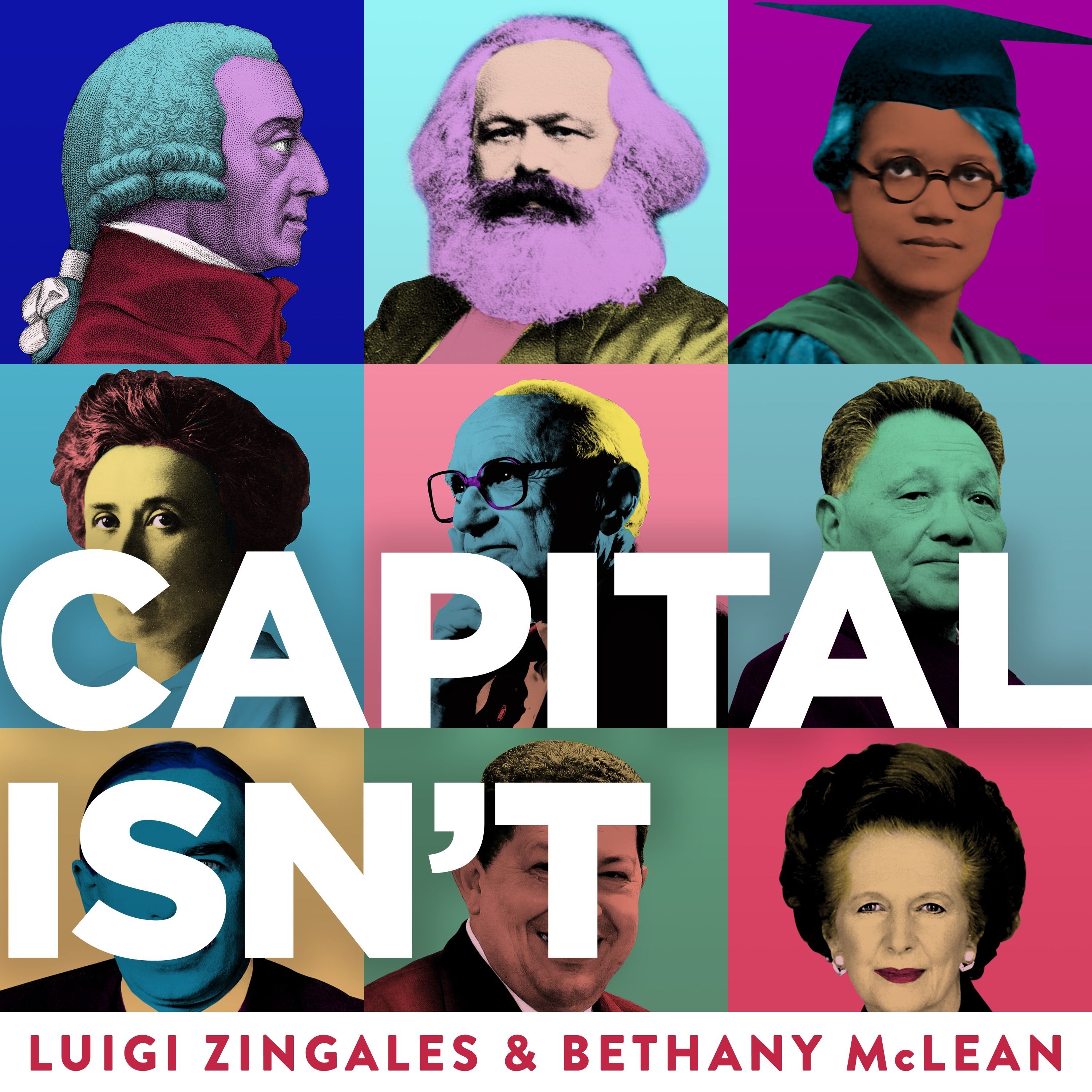
Is capitalism the engine of destruction or the engine of prosperity? On this podcast we talk about the ways capitalism is—or more often isn’t—working in our world today. Hosted by Vanity Fair contributing editor, Bethany McLean and world renowned economics professor Luigi Zingales, we explain how capitalism can go wrong, and what we can do to fix it. Cover photo attributions: https://www.chicagobooth.edu/research/stigler/about/capitalisnt. If you would like to send us feedback, suggestions fo...