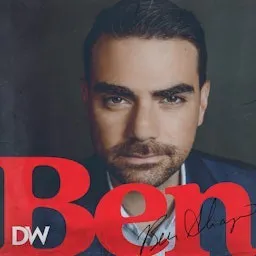
Episode Summary
Executive Summary: The episode argues that U.S. news coverage is driven by political narrative rather than consistency: it spotlights Derek Chauvin and George Floyd while downplaying violent crimes against Pakistani, Asian, and other minority victims when they don’t fit the left’s racial framework. It also frames the Chauvin trial as legally uncertain, criticizes media/activist pressure, and extends the theme to broader culture-war examples and COVID alarmism.
Main Topics: Narrative-driven news coverage (Priority: 5/5): The host contends that media attention is selective: crimes become national stories only when they reinforce a preferred racial/political narrative, while similar or worse crimes are ignored if they do not. Derek Chauvin trial and legal standards (Priority: 5/5): A major segment examines the Chauvin trial, arguing the case is not a foregone conclusion and that prosecutors must satisfy difficult criminal-law standards beyond a reasonable doubt. Violent crime against minorities that receives less attention (Priority: 5/5): The episode highlights the killing of Mohammad Anwar in Washington, D.C., and an attack on an elderly Asian woman in New York, arguing these cases are undercovered because the perpetrators do not fit the dominant narrative. Critique of anti-police and systemic racism claims (Priority: 4/5): The host rejects claims that U.S. policing is broadly racist or that police are primarily used to keep Black Americans “in their place,” arguing the available evidence and statistics do not support such generalizations. Race as a tool in politics and business (Priority: 4/5): Examples include accusations against Gina Carano, pressure on GM by Black-owned media outlets, and the firing of Sharon Osbourne, used to argue that racial accusations are often deployed opportunistically for leverage or conformity. COVID caution and government messaging (Priority: 3/5): The CDC director’s warning of “impending doom” is cited as another example of fear-based messaging that conflicts with improving vaccination and effectiveness data.
Key Arguments: National media decide which crimes matter based on whether they support a broader racial narrative, not on objective severity or consistency. The George Floyd/Derek Chauvin case is legally complex; conviction is not inevitable because criminal standards require proof beyond a reasonable doubt and the evidence includes multiple mitigating/intervening factors. The host claims similar violent crimes against Pakistani, Asian, and nonwhite victims are often minimized or treated as local stories when they do not fit a white-supremacy frame. Police brutality, as a general category, is not supported by the scale implied in media discourse; the number of unarmed Black people killed by police is presented as relatively small compared with the population size. Economic and social disparities are portrayed as being overly attributed to “systems” and race, while family structure and individual decision-making are argued to be major explanatory factors. Racial accusations are portrayed as politically and financially instrumental, whether in celebrity culture, corporate demands, or media workplace disputes. The CDC’s warnings are framed as unnecessary fearmongering given vaccine progress and effectiveness data.
Data Points: Protest size after George Floyd’s death: 15 to 20 million Americans - The host cites estimates of the number of people who protested during the summer 2020 unrest. Time Derek Chauvin knelt on George Floyd: 8 minutes and 46 seconds - Referenced repeatedly as the symbolic length of the incident and subsequent protest gesture. Mohammad Anwar’s age: 66 - Pakistani-American Uber Eats delivery driver killed in Washington, D.C. Suspects’ ages: 13 and 15 - Two teenage girls charged in the carjacking and death of Mohammad Anwar. Vehicles stolen in Washington, D.C. annually: 7,500 - Used to argue the city has a large auto-theft problem. GoFundMe raised: More than $500,000 in three days - Fundraiser for Mohammad Anwar’s family. Asian Americans median household income: About $100,000 - From the cited AEI chart comparing income and family structure by race. Asian Americans single-motherhood rate: 11.7% - Used in the argument linking family structure and income. White Americans median household income: $76,000 - Cited as the second-highest income group in the chart. White Americans single-motherhood rate: 28% - From the AEI chart cited in the discussion of family structure. Hispanic Americans median household income: $56,000 - Used in the chart comparing family structure and income. Hispanic Americans single-motherhood rate: 52% - From the AEI chart. Black Americans median household income: $45,000 - Used in the chart to argue family structure correlates with income. Black Americans single-motherhood rate: 70% - From the AEI chart. Black unarmed police killings per year: Less than 25 - Used to argue the media exaggerates the scale of police violence against Black Americans. GM ad budget requested by Black-owned media coalition: At least 5% - The coalition asked GM to allocate this share to Black-owned media. Current GM spend with Black-owned media: Less than 0.5% - Claimed by the group in its public ad. Suggested GM spend for parity: 14% - Referenced as a recommended target by Byron Allen.
Pivotal Quotes: "What becomes a national story and stays a national story is completely up to a national news media that have decided that each story that is important because it is a data point in support of their broader narrative." — Ben Shapiro: Used to argue that media coverage is politically selective rather than neutral. "The police, I think, really believe and in some ways are led to believe that their greatest challenge and their greatest chore is to keep black people in their place." — Maxine Waters: Quoted by the host as evidence of the left’s anti-police framing. "This is a referendum on how far America has come in its quest for equality and justice for all." — Benjamin Crump: Describing the Chauvin trial as a symbolic test of America, not just a criminal proceeding.
Implications: Listeners are urged to distrust media narratives that reduce complex events to race-based morality tales. The episode suggests future political battles, criminal trials, and corporate disputes will increasingly be framed through this lens, shaping public opinion more than facts or legal standards.
About The Ben Shapiro Show
Tired of the lies? Tired of the spin? Are you ready to hear the hard-hitting truth in comprehensive, conservative, principled fashion? The Ben Shapiro Show brings you all the news you need to know in the most fast moving daily program in America. Ben brutally breaks down the culture and never gives an inch! Monday thru Friday.