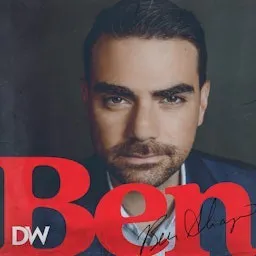
Episode Summary
Executive Summary: The episode centers on Ben Shapiro’s defense of pardoning Derek Chauvin’s federal conviction, criticism of Stephen A. Smith and racial narratives around George Floyd, and broader arguments that Democrats are politically and rhetorically weakened. It also covers fiscal fights in Congress, tariff-driven economic uncertainty, the Syria/HTS crisis and media narratives around it, Iran and Qatar’s regional roles, campus antisemitism funding, and a brief reality-TV marriage dispute used to discuss value compatibility.
Main Topics: Derek Chauvin pardon debate: Shapiro argues Chauvin should be pardoned on federal charges because it could reduce time served and because he believes Chauvin is innocent; he frames the case as wrongly racialized by media and political leaders. Stephen A. Smith and racial identity politics: He attacks Stephen A. Smith as projecting racial identitarianism, using a hypothetical Jewish victim to argue that race should not determine guilt or innocence, and cites past examples of Smith interpreting sports decisions through race. Democratic Party weakness and rhetoric: Shapiro claims Democrats are on their heels politically, cites comments from Alyssa Slotkin about needing strategy, and mocks Rep. Al Green’s call for 'righteous incivility' as evidence of extremism. Government shutdowns, spending, and impoundment: He interviews Rep. Chip Roy about a continuing resolution, arguing a spending freeze is a meaningful conservative win and discussing impoundment, rescission, and broader fiscal restraint efforts under Trump. Tariffs, recession risk, and economic predictability: Shapiro warns tariffs create market uncertainty and can harm business planning, while noting Trump’s more cautious stance on recession predictions and emphasizing the need for stable policy. Syria’s post-Assad chaos and HTS: He describes HTS as a terrorist Sunni Islamist group backed by Turkey, condemns massacres of Alawites and Christians, and criticizes media and commentators who blame the West or Israel for the violence. Iran, Qatar, and campus antisemitism: Shapiro frames Iran as a major terror sponsor and says Trump is offering it an off-ramp. He criticizes Qatar as a financier of terror and influence in U.S. universities, and highlights the administration’s $400 million cut to Columbia.
Key Arguments: Chauvin’s federal pardon would likely reduce total time served because federal good-time credit is less favorable than Minnesota’s state structure. Shapiro says pardons/commutations are appropriate when a person is believed innocent, and he believes Chauvin was wrongly convicted in a racialized case. Stephen A. Smith’s hypothetical about a Jewish victim is dismissed as projection and identitarianism, not a serious factual argument. Democrats have failed narratively and politically because they keep doubling down on extreme positions instead of acknowledging problems. A spending freeze in an inflationary environment is presented as a real conservative win, especially if it enables DOGE-style cuts and later rescissions. Tariffs create uncertainty for investors and businesses; predictability on taxes and regulation is good, but tariff policy undermines that stability. Syria’s violence is attributed to HTS’s Islamist brutality and Turkey’s backing, not to U.S. 'neocons' or Israel. Iran remains a serious foreign threat and terror sponsor, but Trump is trying to secure a negotiated off-ramp before escalation. Qatar is portrayed as a major source of terror financing and university funding that helps fuel campus antisemitism. In the Love Is Blind segment, Shapiro argues relationship failure stemmed from incompatible values and poor judgment by the male participant for ignoring them early.
Data Points: Derek Chauvin state sentence: 22.5 years - Referenced as the Minnesota state sentence in the pardon discussion. Derek Chauvin federal sentence: 21 years - Referenced as the federal sentence that could be pardoned/commuted. State time served estimate: about 15 years - Shapiro says Minnesota inmates usually serve about two-thirds of the sentence in confinement. Chip Roy district: Texas' 21st congressional district - Identification of the congressional guest. Appropriations cycle deadline: September 30 - Roy notes the FY26 appropriations cycle must be completed by then. USAID contracts cut: 83% - Shapiro cites a report that Rubio plans to cut most USAID contracts. Canadian fentanyl seized from Canada: less than 1% - Canadian ambassador says this share of U.S. fentanyl seizures comes from Canada. Fentanyl seized from Canada: 43 pounds last year - Canadian ambassador cites the amount seized coming from Canada. Fentanyl seized from Mexico: 22,000 pounds last year - Compared to Canada to illustrate the scale of the southern border problem. Political polling shift in Canada: 20-point lead to tied - Pierre Poiliev reportedly went from ahead by 20 points to tied with liberals. Christians in Syria before civil war: 1.5 million - Used to show the size of the prewar Christian population. Christians in Syria now: as few as 300,000 - Used to illustrate the dramatic decline after the civil war. Alawite/Christian massacre toll: about 1,000 killed - Shapiro cites the scale of killings by HTS-aligned forces. Columbia University funding cut: $400 million - Trump administration action over alleged failure to address antisemitism. Qatar investment in U.S. higher education: $4.7 billion - Shapiro claims this was spent from 2001 to 2021. Qatar citizen population: 400,000 - Used to emphasize the scale of higher-ed funding relative to population. ESPN contract for Stephen A. Smith: $100 million over 5 years - Used rhetorically to note his status despite criticism of America as a racial environment.
Pivotal Quotes: "It is immoral to allow people who you believe are innocent to languish in prison." — Ben Shapiro: Explaining why he thinks a pardon for Derek Chauvin is warranted. "We have to move forward with righteous incivility." — Rep. Al Green: Describing what Democrats should do politically against Trump. "There is a period of transition, because what we're doing is very big." — Donald Trump: Trump discussing the economy and the possibility of a recession.
Implications: Listeners are left with a strongly pro-Trump, anti-left framing: support for tough fiscal moves, skepticism of tariff volatility, alarm over Middle East Islamist violence, and attention to how media narratives shape public perception and policy.
About The Ben Shapiro Show
Tired of the lies? Tired of the spin? Are you ready to hear the hard-hitting truth in comprehensive, conservative, principled fashion? The Ben Shapiro Show brings you all the news you need to know in the most fast moving daily program in America. Ben brutally breaks down the culture and never gives an inch! Monday thru Friday.