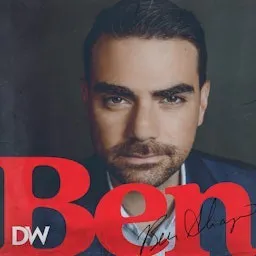
Episode Summary
Executive Summary: The episode centers on Ben Shapiro’s argument that media and courts are selectively targeting Trump-era immigration and law-and-order policies, then pivots into a sustained defense of Derek Chauvin’s pardon case. It also covers tariff uncertainty, key elections in Florida and Wisconsin, alleged political violence against Tesla, and a long interview with Malcolm Gladwell that disputes Chauvin’s innocence and frames the case as a policing and legal-process tragedy.
Main Topics: Media search for a Trump scandal: Shapiro argues mainstream outlets are hunting for a damaging story to weaken Trump, using the Signal controversy as a failed example and framing the immigration case as the latest attempted takedown. Immigration enforcement and the Abrego Garcia deportation story: He criticizes The Atlantic’s reporting on a Maryland father deported to El Salvador, claiming it omitted an immigration judge’s finding that the man was an MS-13 member and exaggerated the sympathetic framing. Judicial resistance to immigration policy: The show discusses a judge blocking the end of TPS for Venezuelans, with Shapiro arguing the judiciary is overstepping because TPS decisions belong to the executive branch. Election politics in Florida and Wisconsin: Shapiro highlights a special House race in Florida’s 6th district and a high-stakes Wisconsin Supreme Court race that could affect redistricting, abortion, voter ID, and congressional power. Tariff uncertainty and economic risk: He warns that Trump’s coming tariff announcement could destabilize markets, saying the White House has not clearly settled on a plan and that broad tariffs would be economically harmful. Political violence, Tesla attacks, and worsening polarization: Shapiro condemns attacks on Tesla property as terrorism and argues the political left is increasingly normalizing or excusing violence and chaos. The Derek Chauvin pardon case and Malcolm Gladwell interview: A major segment argues Chauvin was denied due process and that George Floyd’s death was medically complicated; Gladwell counters that Chauvin’s conduct was abusive and that the legal system reached the right conclusion.
Key Arguments: The media are searching for a Trump-era scandal large enough to damage the administration, but many alleged crises are overstated or collapse under scrutiny. The Abrego Garcia deportation was an administrative mistake, but the Atlantic article was misleading because it omitted that an immigration judge had previously found him to be an MS-13 member and a danger. Federal judges are exceeding their authority when they intervene in TPS and immigration decisions that law places under executive discretion. Trump’s tariff strategy is economically risky because broad, uncertain tariffs undermine market stability and business planning. The Chauvin case should be reconsidered because Floyd’s death involved severe preexisting conditions, drug toxicity, and disputed proximate cause, making a murder conviction difficult to prove beyond a reasonable doubt. Chauvin’s trial was compromised by extraordinary public pressure, political statements, and settlement timing, which Shapiro says made impartial judgment unlikely. Gladwell’s counterargument is that Floyd’s vulnerable condition does not exonerate Chauvin; rather, it makes the use of force more dangerous and the officer’s conduct more blameworthy. Gladwell also argues that policing is messy and difficult, but Chauvin’s behavior in the Floyd case and prior incidents indicates he was not fit for the role.
Data Points: Trump approval rating: around 50% - Shapiro says Trump remains unusually popular at the start of his second presidency. House majority margin: effectively a one-vote majority - Used to argue a recession or major scandal could severely constrain the administration. Deportees sent to El Salvador: three plane loads - Referenced in the Atlantic’s reporting on the administration’s deportation operation. TPS population in question: approximately 350,000 Venezuelans - A federal judge blocked the Trump administration from ending their protected status. Florida 6th district margin: Trump won by 30 points - Used to show how unusual it would be for Democrats to be competitive in that House race. Money in Wisconsin Supreme Court race: $90 million - Illustrates the national stakes and heavy outside spending. Property damage from 2020 unrest: $1 to $2 billion in insured damages - Cited as the highest recorded damage from civil disorder in U.S. history. Arrests during 2020 unrest: at least 14,000 - Used in discussing the scale of the George Floyd protests and riots. Deaths related to riots: at least 19 - Part of the broader argument about civil unrest after Floyd’s death. National Guard and military mobilization: more than 96,000 personnel - Shapiro described this as one of the largest domestic military operations outside war. Minneapolis damage: about $550 million - Estimated property damage in Minneapolis during the unrest. Minneapolis properties damaged: 1,500 properties - Context for the scale of destruction in the city. Chauvin prison stabbing: 22 stab wounds - Shapiro used this to argue Chauvin has already suffered severe extrajudicial punishment. Federal sentence imposed on Chauvin: 21 years - Referenced as part of the overall punishment Chauvin has received. State sentence imposed on Chauvin: 22.5 years - Used to support the argument that Chauvin has been heavily punished. Body-on-ground restraint duration: about 9 minutes - Shapiro and Gladwell debate whether this duration constituted excessive force. Chauvin complaint history: 18-19 year police career with complaint rate no higher than peers - Shapiro uses this to argue against treating Chauvin as uniquely abusive. John Pope incident age: 14-year-old - Gladwell cites this prior encounter as evidence Chauvin was a bad police officer.
Pivotal Quotes: "It is telling the entire American media is going to run a propaganda operation today making you think an innocent father of three was apprehended by a gulag." — J.D. Vance: Vance responds to the Atlantic deportation story and attacks its framing. "The court is not persuaded by the government's arguments, which provide no compelling reason that the court should change its previous determination." — Judge Paul Magnuson: Ruling allowing Chauvin’s defense to examine Floyd’s tissue and fluids. "The truth is that Derek Chauvin did not receive justice." — Ben Shapiro: Closing argument of the Chauvin pardon case.
Implications: The episode frames immigration and public safety as political flashpoints, warns of market disruption from tariffs, and argues the Chauvin case still shapes U.S. policing politics, media narratives, and the legitimacy of criminal justice outcomes.
About The Ben Shapiro Show
Tired of the lies? Tired of the spin? Are you ready to hear the hard-hitting truth in comprehensive, conservative, principled fashion? The Ben Shapiro Show brings you all the news you need to know in the most fast moving daily program in America. Ben brutally breaks down the culture and never gives an inch! Monday thru Friday.