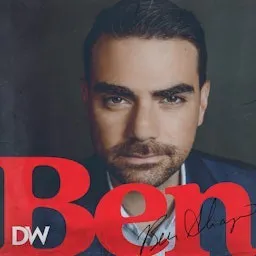
Episode Summary
Executive Summary: The episode centers on three major themes: a heated congressional hearing exposing NPR/PBS political bias and taxpayer funding concerns; the Trump administration’s anti-waste, pro-energy, and immigration enforcement agenda; and an extended case for pardoning Derek Chauvin, arguing his trial was fundamentally compromised by pretrial pressure, venue concerns, and politicized media coverage. The show also treats the Signal chat controversy as an embarrassing but non-fatal procedural mistake.
Main Topics: Congressional grilling of NPR and PBS: Ben Shapiro argues that publicly funded media outlets are overtly left-wing, citing leadership and editorial staff imbalance, bias in coverage, and the inability of NPR/PBS executives to credibly justify receiving taxpayer money. Trump administration anti-waste and pro-growth agenda: The transcript highlights DOGE-style spending cuts, exposure of alleged nonprofit corruption, deregulation, energy production, and falling egg prices as evidence the administration is improving governance and the economy. Tariffs and market uncertainty: Shapiro praises some economic reforms but criticizes Trump’s new auto tariffs as inflationary and disruptive, warning that uncertainty itself can chill investment and raise consumer prices. MS-13 arrest and immigration enforcement: A major enforcement win is presented in the arrest of a top MS-13 leader in Virginia, alongside discussion of court resistance to deportation actions and the broader decline in border crossings. Signal chat scandal as a procedural mistake: The national security team’s accidental inclusion of journalist Jeffrey Goldberg in a Signal thread is framed as a blunder, not a major scandal, because the operation succeeded and no classified plan details were substantively compromised. Case for Derek Chauvin pardon: A long-form segment argues Chauvin’s state and federal convictions were reached under overwhelming mob pressure, biased media coverage, and flawed jury conditions, with Coleman Hughes cited to support reasonable-doubt concerns and the need to reconsider the case.
Key Arguments: Public media should not receive taxpayer money if its editorial staff and output are overwhelmingly partisan and unable to justify claims of neutrality. NPR’s handling of the Hunter Biden laptop story and its ideological staffing demonstrate systematic bias rather than isolated mistakes. Trump-era spending cuts, deregulation, and energy expansion are presented as pro-market reforms that improve growth and security. Auto tariffs are criticized as hidden subsidies that raise costs for consumers and create harmful uncertainty for investors. The arrest of an MS-13 leader is framed as evidence that aggressive immigration enforcement is working. The Signal incident was a careless operational error, but not the sort of scandal that should dominate public attention if the military objective succeeded. Chauvin did not receive a fair trial because of venue denial, juror fear, political pressure, and a $27 million settlement announced during jury selection. Coleman Hughes argues the official autopsy and evidentiary record support reasonable doubt, not certainty beyond a reasonable doubt. The Chauvin case is used to argue that social-media-driven narratives can distort justice and that videos alone are insufficient to determine guilt or innocence.
Data Points: Annual taxpayer funding for NPR and PBS: Approximately $535 million - Federal funding to the Corporation for Public Broadcasting Taxpayer funding over the last decade: About $5.35 billion - Combined federal support for NPR and PBS NPR weekly listeners: 23.5 million - Average weekly terrestrial broadcast listeners in 2022 PBS NewsHour average viewers: 882,000 - Average viewers in 2022 PBS monthly content reach: About 57 million viewers - Estimated monthly audience in 2022 PBS member-station annual reach: 67% of U.S. TV households, over 160 million people - Households tuning in over the course of a year NPR editorial board Democrats: 87 - Reported registered Democrats on the editorial board NPR editorial board Republicans: 0 - No registered Republicans on the editorial board NDC IRS-reported compensation: $450,000 for 10 hours per week - Founder R. Dennis Kennedy’s reported pay in 2020 Back pay claimed by NDC leaders: Almost $3 million - Unilaterally claimed in 2022 by NDC leadership Funds allegedly paid to themselves: More than $1 million - Donor funds allegedly diverted by NDC leadership George Floyd settlement: $27 million - Minneapolis City Council settlement announced during jury selection Chauvin state verdict date: April 20, 2021 - Found guilty on all three charges Chauvin state sentence: 22.5 years - Sentence imposed by Judge Cahill Chauvin federal plea/sentence range: 20 to 25 years - Federal civil rights case plea agreement Chauvin federal sentence: 21 years - Sentence imposed by Judge Paul Magnuson Live TV audience for verdict: Over 23 million - People who watched the Chauvin verdict announcement Jurors seated in final panel: 12 jurors plus 2 alternates - Final Chauvin jury composition Initial juror pool: 326 registered voters - Hennepin County pool used for jury selection MS-13 suspect age: 24 - Top U.S. East Coast MS-13 leader arrested in Virginia Tariff rate announced on imported cars: 25% - Trump announcement on non-U.S.-made cars
Pivotal Quotes: "We don't want to waste the listeners' and readers' time on stories that are just pure distractions." — Catherine Maher / NPR quote referenced by the host: Discussing NPR’s decision not to cover the Hunter Biden laptop story "Every case should be about racial justice." — Judge Peter Cahill: Remarks at the Justice Jackson lecture discussed in the Chauvin segment "I wish elected officials would stop talking about this case, especially in a manner that is disrespectful to the rule of law and to the judicial branch and our function." — Judge Peter Cahill: Reaction to political commentary during the Chauvin trial
Implications: Listeners are urged to view public media, tariffs, and high-profile criminal cases through a skepticism-of-institutions lens: bias, pressure, and political incentives can distort both news and justice, while enforcement, spending cuts, and energy expansion are cast as paths to stronger governance.
About The Ben Shapiro Show
Tired of the lies? Tired of the spin? Are you ready to hear the hard-hitting truth in comprehensive, conservative, principled fashion? The Ben Shapiro Show brings you all the news you need to know in the most fast moving daily program in America. Ben brutally breaks down the culture and never gives an inch! Monday thru Friday.