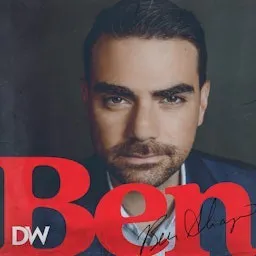
Episode Summary
Executive Summary: The episode centers on Ben Shapiro’s reaction to Derek Chauvin’s conviction, arguing the jury was pressured by media, politicians, and protests into turning a police trial into a referendum on systemic racism. He criticizes Democratic leaders and commentators for framing the verdict as proof America is racist, warns this narrative will weaken policing, and argues the real consequences will fall on ordinary residents in major cities.
Main Topics: Chauvin conviction and legal analysis: Shapiro reviews the verdict, the charges, and why he believes second- and third-degree murder were not supported by the evidence, while manslaughter was more plausible. Political and media pressure on the trial: He argues the trial was heavily influenced by national media, politicians, and public protests, making the outcome more about pressure than evidence. Systemic racism narrative: A central theme is his claim that Chauvin was treated as a stand-in for America’s alleged racist system, even though racism was not charged or proved in court. Democratic reaction to the verdict: He criticizes Biden, Harris, Pelosi, Ellison, and others for using the verdict to advance broader claims about American institutions and to demand more federal power. Impact on policing and public safety: Shapiro warns that anti-policing rhetoric and policy changes will reduce proactive law enforcement, worsen crime, and hurt black communities most. Use of historical analogies and civil rights rhetoric: He attacks comparisons between George Floyd and Emmett Till and says public figures are exploiting civil rights language to intensify the racial narrative.
Key Arguments: The evidence, in Shapiro’s view, did not clearly prove second- or third-degree murder beyond a reasonable doubt; manslaughter was the strongest charge. The jury’s quick deliberation and the surrounding political climate suggest the verdict was influenced by outside pressure. No racism allegation was made or proven at trial, but Chauvin was treated publicly as a proxy for systemic American racism. Pelosi, Harris, Biden, Sharpton, and others used the verdict to argue the system itself is racist and must be torn down. He argues this rhetoric will lead to weaker policing, more resignations, and more deaths in cities, especially among black residents. He contends that public figures are using the case to justify expanded federal authority and progressive policy goals rather than addressing the facts of the case. Comparisons between George Floyd and Emmett Till are, in his view, historically false and morally misleading.
Data Points: Jury deliberation time: About 10 hours - Shapiro notes the jury reached a verdict unusually quickly after a three-week trial. Second-degree murder maximum sentence: 12.5 years - He cites Minnesota sentencing ranges for the conviction. Third-degree murder maximum sentence: 12.5 years - He cites Minnesota sentencing ranges for the conviction. Second-degree manslaughter maximum sentence: 4 years - He cites Minnesota sentencing ranges for the conviction absent prior convictions. Fentanyl level: Three times a deadly level - Shapiro says Floyd had a lethal amount of fentanyl in his system. Arterial blockage: 75% - He says Floyd had a 75% arterial blockage. Police lethal-force reduction estimate: 15% to 20% - He cites a study attributing reduced lethal police force to BLM protests from 2014 to 2019. Fewer police homicides estimate: Roughly 300 - He summarizes the study’s estimate of prevented police homicides. Additional homicides estimate: 1,000 to 6,000 more - He says the same study found protests may have coincided with increased homicides overall. Unarmed black people shot by police annually: Less than 20 - He uses this to argue that claims of widespread lethal police threat are exaggerated.
Pivotal Quotes: "Thank you, George Floyd, for sacrificing your life for justice" — Nancy Pelosi: Shapiro cites Pelosi’s remarks as an example of what he sees as grotesque political exploitation of Floyd’s death. "This isn't justice, it's accountability." — Keith Ellison: Shapiro highlights Ellison’s framing as evidence that Democrats view the verdict as only one step in a broader systemic campaign. "In order to get a nominal degree of justice in this country, that a black man has to be murdered on air" — Jason Johnson: Shapiro uses this MSNBC comment to argue that commentators openly admit public pressure influenced the verdict.
Implications: The episode argues the verdict will intensify distrust in institutions, encourage anti-policing reforms, and deepen partisan racial narratives. Shapiro says ordinary citizens, especially in major cities, will bear the cost through worse public safety and weaker law enforcement.
About The Ben Shapiro Show
Tired of the lies? Tired of the spin? Are you ready to hear the hard-hitting truth in comprehensive, conservative, principled fashion? The Ben Shapiro Show brings you all the news you need to know in the most fast moving daily program in America. Ben brutally breaks down the culture and never gives an inch! Monday thru Friday.