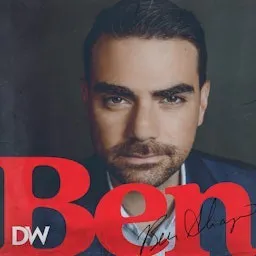
Episode Summary
Executive Summary: The episode frames current U.S. politics as a battle between “American exceptionalists” and a bipartisan “grievance party,” then argues President Trump is decisively pressuring Iran through blockade and military force after failed negotiations. It also critiques anti-Israel/anti-American messaging from the left and right, notes American public support for limited goals in Iran, and covers domestic political scandals involving Eric Swalwell, Pope Leo’s criticism of the war, and broader cultural demoralization narratives.
Main Topics: American exceptionalism vs. the grievance party (Priority: 5/5): The host argues U.S. politics has split into two ideological camps: those who believe America is fundamentally good and capable, and those who see America as irredeemably flawed and urge withdrawal from global leadership. Trump’s Iran strategy and the Strait of Hormuz blockade (Priority: 5/5): The segment centers on Trump’s use of coercive diplomacy, military pressure, and a blockade to force Iran to abandon nuclear ambitions and open the Strait of Hormuz. China’s vulnerability and global oil flows (Priority: 4/5): The host emphasizes that any disruption to Persian Gulf shipping hurts China, Japan, Europe, and other importers more than the U.S., and argues the strategy pressures China indirectly. Media, online misinformation, and demoralization campaigns (Priority: 3/5): The show claims legacy media and social platforms amplify false narratives that Trump is caving or being booed, as part of a broader effort to sap public confidence. Attacks from Tucker Carlson, Hasan Piker, and the ‘grievance party’ (Priority: 4/5): The host argues the left and parts of the right converge in anti-American, anti-Israel, and anti-intervention messaging, and says Tucker Carlson has lost credibility with Republicans. Domestic political scandal: Eric Swalwell allegations (Priority: 4/5): The transcript details new CNN reporting on sexual assault and misconduct allegations against Democratic Rep. Eric Swalwell, who then suspended his California gubernatorial campaign. Pope Leo’s criticism of the Iran war (Priority: 3/5): The pope’s remarks against war and ‘omnipotence’ are criticized as politically misdirected and ill-timed, followed by Trump’s unusually direct rebuke.
Key Arguments: Iran’s leverage is collapsing because its navy, air defenses, missile infrastructure, and proxy strategy have been degraded, leaving the Strait of Hormuz as its last coercive tool. Trump is not ‘taco-ing’ or backing down; he is using deadlines, blockade threats, and military force to compel Iran, while leaving an off-ramp if Tehran abandons its nuclear program. The U.S. is not the primary economic victim of Hormuz disruption; China is especially exposed because a large share of its imported oil transits the strait. Most Americans support the specific goals of preventing a nuclear Iran, keeping shipping open, and protecting regional stability, even if they dislike war in the abstract. The ‘grievance party’—defined as anti-American voices on both left and right—profits politically from chaos and national pessimism, but does not represent the broader Republican electorate. Tucker Carlson and Hasan Piker are presented as functionally aligned in their anti-American and anti-Israel rhetoric, while Trump remains dominant among Republicans. Swalwell’s campaign collapse is used as an example of how long-rumored misconduct can remain hidden until formal reporting forces accountability. The pope’s criticism is treated as a moral and political misfire because it targets the U.S. effort to stop nuclear proliferation rather than the Iranian regime driving the crisis.
Data Points: Businesses using NetSuite: 43,000+ - Sponsor copy describing NetSuite’s customer base. Possible business revenue threshold for guide: At least in the seven figures - Sponsor offer for NetSuite’s AI guide. Discount with Stamps.com: Up to 90% - Sponsor claim about automated rate shopping. U.S. public support for opening Hormuz and oil access: 87% - CBS News/YouGov poll cited by host. Support for keeping Iranian people safe and free: 81% - CBS News/YouGov poll cited by host. Support for stopping Iran from threatening other countries: 76% - CBS News/YouGov poll cited by host. Support for permanently stopping Iran’s nuclear programs: 76% - CBS News/YouGov poll cited by host. Republicans who think Trump has a clear plan: 81% - CBS News/YouGov poll cited by host. Republicans who think Trump lacks a clear plan: 19% - CBS News/YouGov poll cited by host. Chinese oil imports via Strait of Hormuz: 37% - Host’s claim about China’s dependence on the waterway. Iran daily economic damage from U.S. naval blockade: $435 million per day - FDD estimate cited by host, combining lost exports and disrupted imports. Iran monthly economic damage from blockade: $13 billion per month - FDD estimate cited by host. Iran annual trade transiting Persian Gulf: Over 90% - FDD estimate cited by host. Oil and gas share of Iranian government export earnings: 80% - FDD estimate cited by host. Oil and gas share of Iranian GDP: 24% - FDD estimate cited by host. Iranian rial exchange rate change: From 42,000 to 1.5 million per dollar - Host says the rial has cratered. Daily bank withdrawal limit in Iran: $18 to $30 per day - FDD estimate cited by host. Iran inflation rate: 47.5% - FDD estimate cited by host. Largest new Iranian banknote: 10 million rials - Host notes the note is effectively worth about $7. Counterparties at the Islamabad meeting: 21 hours / close to 20 hours - Duration of negotiations described in transcript. D-Day style pressure on Iran: Blockade commenced at 10 a.m. Eastern - Trump announces implementation of blockade. U.S. member of Congress under allegations: Eric Swalwell - CNN reporting on alleged sexual assault and misconduct. Former staffers calling for resignation: 55 - Letter from Swalwell’s former staffers urging resignation and investigation.
Pivotal Quotes: "America is awesome, that we have historically been awesome, and that we will be awesome again if we do the hard things that we must do." — Ben Shapiro: Defines the ‘American exceptionalists’ worldview. "The American people, there are a lot of polls out there saying the American people, they don't love the Iran war. ... Americans like winning and we don't like losing." — Ben Shapiro: Explains public support depends on success and clear objectives. "The United States Navy, the finest in the world, will begin the process of blockading any and all ships, trying to enter or leave the Strait of Hormuz." — Donald Trump: Quoted as the president’s hardline response to Iran’s noncompliance.
Implications: The episode argues Trump’s Iran policy is forcing strategic and economic pressure on Tehran while exposing fractures in U.S. media and politics. If the blockade holds, Iran’s leverage could collapse, China may feel the squeeze, and domestic backlash from the grievance coalition may intensify.
About The Ben Shapiro Show
Tired of the lies? Tired of the spin? Are you ready to hear the hard-hitting truth in comprehensive, conservative, principled fashion? The Ben Shapiro Show brings you all the news you need to know in the most fast moving daily program in America. Ben brutally breaks down the culture and never gives an inch! Monday thru Friday.