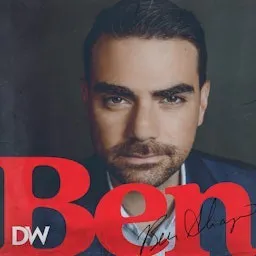
Episode Summary
Executive Summary: Ben Shapiro’s episode centers on Republican primary debate strategy, arguing Ted Cruz is better positioned than Marco Rubio, while Trump remains the dominant force. He also critiques Hillary Clinton’s vulnerability to Bernie Sanders, skews at Democratic messaging on Iran, and uses mailbag segments to discuss technology, socialism, transgender brain scans, and obesity, all through a sharply polemical lens.
Main Topics: Republican debate dynamics and candidate strategy: Shapiro previews the pre-Iowa GOP debate, arguing the pressure is less on Ted Cruz than on Marco Rubio. He predicts attacks on Cruz over birtherism and Goldman Sachs will fail, while Rubio, Christie, Jeb, and Kasich will be forced into intra-establishment combat. Ted Cruz’s rising position and media attacks: He argues that Cruz is being targeted because he is gaining momentum and looks like the strongest anti-Trump conservative. He dismisses the Canada-born eligibility attack and the Goldman Sachs loan controversy as weak lines of attack unlikely to damage him in a debate setting. Marco Rubio’s perceived insecurity and stagnation: Shapiro says Rubio’s careful, calculated style signals insecurity rather than confidence, and that his polling has plateaued. He frames Rubio as the establishment’s biggest disappointment because he should already be consolidating support. Hillary Clinton, Bernie Sanders, and Democratic narrative control: The episode argues that Hillary is under real pressure from Bernie Sanders, who is surprisingly competitive in Iowa, New Hampshire, and fundraising. Shapiro claims Democrats and the media maintain an alternative reality that masks Obama-era weakness and Clinton vulnerability. Obama administration and the Iran boat incident: Shapiro attacks John Kerry and DNC chair Debbie Wasserman Schultz for praising Iran after American sailors were detained, describing the administration’s response as evidence of a false foreign-policy narrative and media complicity. Mailbag: technology, socialism, transgender politics, and obesity: He answers listener questions by defending technological change as historically job-creating, rejecting socialism as nonfunctional, challenging the scientific basis for transgender claims, and arguing obesity is under-discussed because the left avoids emphasizing self-control. Entertainment criticism: Oscars and 'Making a Murderer': Shapiro criticizes the Oscars for ignoring popular films in favor of politically aligned prestige movies, and argues 'Making a Murderer' romanticizes a likely guilty man by obscuring evidence and overemphasizing backstory.
Key Arguments: Cruz is the real beneficiary of the GOP realignment because attacks on him are unlikely to stick on a debate stage, and other candidates will avoid isolating themselves by endorsing his ineligibility. The Goldman Sachs loan controversy is overstated; a loan is still self-funding if it must be repaid, and Cruz had disclosed the loan earlier than critics suggest. Rubio’s biggest weakness is not ideology but personality: he appears overly cautious, which reads as insecurity and prevents him from breaking out of the pack. The establishment Republican candidates are trapped in a 'crab pot,' undercutting one another instead of uniting against Trump. Hillary Clinton is vulnerable because Bernie Sanders’ insurgent campaign is gaining legitimacy, money, and momentum, exposing Democratic fragility. The Obama administration and its allies rely on media narratives to conceal foreign-policy humiliation, as shown by the Iran detention episode. Technological progress historically changes the labor market but does not eliminate jobs overall; it shifts work into new sectors. Socialism fails because it is economically unsustainable and has not succeeded in Europe; the U.S. would not be an exception. Current transgender brain-scan studies are too limited to justify broad claims about identity, and medical transition does not appear to reduce suicide rates. The left’s emphasis on backstory and victim narratives weakens film storytelling and distorts discussions of crime, obesity, and personal responsibility.
Data Points: Republican debate timing: Second-to-last debate before Iowa - The episode opens by framing the upcoming GOP debate as a crucial pre-Iowa moment. Ben Shapiro age: 32 - He jokes about turning 33 the next day. Cruz campaign loan: About $1 million - Shapiro describes Cruz’s 2012 Senate campaign receiving a Goldman Sachs loan. Individual contributions to Bernie Sanders: More than 2.5 million - Sanders cites small-donor support as evidence of momentum. Average donation to Bernie Sanders: $27 - Sanders highlights the average contribution size to contrast with big-donor politics. Transgender suicide rate: 40% - Shapiro cites this as evidence that transition does not solve underlying issues. Oscar Best Picture nominees: 8 - He lists the expanded slate of nominees for that year. Box office for The Martian: $356 million domestic - Used to argue that popular films were being ignored by the Academy. Box office for Big Short: $33 million - He contrasts this with the film’s strong nomination profile. Age of cited violin performance: 12 years old - He mentions a childhood performance clip from 20 years earlier. Backstory documentary length: 10 hours - He criticizes 'Making a Murderer' as a ten-part documentary consuming ten hours.
Pivotal Quotes: "I think that suggests maybe something has changed in the race." — Ted Cruz: Cruz explains why attacks on him have intensified and links it to his rise in the primary. "The reason they're all coming after me is because they know that I can beat Hillary Clinton and they know that I'm doing well in the primary fight." — Ted Cruz: Shapiro uses this as the core of Cruz’s response to the growing attacks. "I also want to thank the Iranian authorities for their cooperation and quick response." — John Kerry: Shapiro cites this as evidence of the administration’s perceived deference to Iran after American sailors were detained.
Implications: Listeners are left with a portrait of 2016 politics as a fight between insurgents and collapsing establishments, with media narratives shaping perception more than facts. The episode also signals Shapiro’s broader argument: culture, policy, and identity debates are being distorted by elite institutions.
About The Ben Shapiro Show
Tired of the lies? Tired of the spin? Are you ready to hear the hard-hitting truth in comprehensive, conservative, principled fashion? The Ben Shapiro Show brings you all the news you need to know in the most fast moving daily program in America. Ben brutally breaks down the culture and never gives an inch! Monday thru Friday.