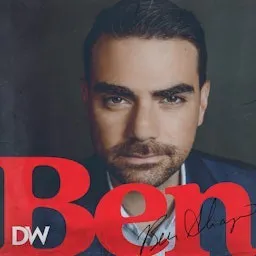
Episode Summary
Executive Summary: The episode argues that Democrats and allied media normalize mob-like intimidation while falsely labeling conservative protest as violence. It highlights a Google internal report suggesting tech firms are moving from open platforms toward censorship for “civility,” then turns to the alleged Saudi murder of Jamal Khashoggi and the geopolitical dilemma it poses for the U.S. The show closes by stressing broad public resistance to political correctness and offering personal and pop-culture commentary.
Main Topics: Democrats, incivility, and mob politics: Shapiro contends Democratic leaders and activists increasingly use aggressive, threatening rhetoric and tactics, then claim their behavior is merely protest while branding conservatives as mobs. Media double standards on protest and violence: He argues CNN and other outlets selectively redefine 'mob' and 'violence' to protect left-wing activism while exaggerating conservative speech and gatherings. Political correctness and the 'exhausted majority': A major segment discusses polling and a Harvard/Atlantic analysis showing most Americans, across races and ages, dislike PC culture and feel constrained by it. Google and the shift toward censorship: The show examines a leaked Google briefing, 'The Good Censor,' which allegedly concedes that major platforms are moving toward a European-style model prioritizing civility and safety over free speech. Saudi Arabia, Jamal Khashoggi, and U.S. foreign policy: Shapiro reviews allegations that Saudi agents murdered columnist Jamal Khashoggi and weighs the strategic tension between punishing Saudi Arabia and countering Iran. Selective racism accusations and conservative backlash: He critiques media panels and commentators who use racially charged language against conservatives and argues that identity-based attacks fuel backlash rather than persuasion. Pop-culture and personal asides: The episode includes ads, a Memphis tour, a police-escort anecdote, and a defense of James Bond remaining male, used to reinforce broader points about civility, gender, and common sense.
Key Arguments: Democrats have normalized aggressive, mob-style politics and then attempted to rebrand it as righteous activism. Mainstream media apply different standards: left-wing intimidation becomes 'speech,' while right-wing gatherings are called mobs. Political correctness is widely disliked across demographics, not just by white conservatives; the 'woke' are a narrow, affluent minority. Google’s internal documents suggest big tech is drifting from neutral platform behavior toward editorial censorship in the name of civility. The alleged Saudi killing of Jamal Khashoggi would require a serious U.S. response, but any response must also account for the strategic threat posed by Iran. Identity-based politics and accusations of systemic guilt create backlash, especially when due process and individual rights are denied. Conservatives should be factual, civil, and politically incorrect—not deliberately cruel—to reach the broad middle of the country.
Data Points: Crowd size at University of Memphis speech: 1,000 people - Shapiro says a thousand attended his Memphis event, plus overflow seating. Timepoint of Holder quote reversal: "when they go low, we kick them" - Eric Holder’s statement used to illustrate aggressive Democratic rhetoric. Study sample size: 8,000 respondents - More in Common / Hidden Tribes polling referenced via The Atlantic. Americans who see political correctness as a problem: 80% - General population in the Hidden Tribes report. Ages 24–29 who dislike political correctness: 74% - Age breakdown in the Hidden Tribes findings. Under-24 respondents who dislike political correctness: 79% - Youngest age group in the Hidden Tribes findings. Asians who think political correctness is a problem: 82% - Race breakdown cited from the report. Hispanics who think political correctness is a problem: 87% - Race breakdown cited from the report. American Indians who think political correctness is a problem: 88% - Race breakdown cited from the report. Conservatives who see PC as a problem: 97% - Political ideology breakdown in the report. Traditional liberals who see PC as a problem: 61% - Political ideology breakdown in the report. Progressive activists who see PC as a problem: 30% - Indicates strongest support for PC is confined to a small subgroup. Progressive activists earning over $100k: Nearly twice as likely as average - Describes socioeconomic profile of the woke/progressive activist group. Progressive activists with post-grad degrees: Nearly three times as likely as average - Shows elite educational concentration among progressive activists. Black share of overall sample: 12% - Compared with the activist subset in the Hidden Tribes report. Black share of progressive activists: 3% - Shows progressive activists are disproportionately white. Black Americans identifying as liberal: 26% - Pew statistic used to argue against simplistic demographic assumptions. U.S. trade-off timeline for Khashoggi response: 3 months - Shapiro predicts possible temporary punishment followed by diplomatic repair. Sex proposition study result for men: 75% said yes - Clark and Hatfield bar study cited to argue men and women are not sexually interchangeable. Sex proposition study result for women: 0% said yes - Same study used to argue female James Bond would not work.
Pivotal Quotes: "“When they go low, we kick them.”" — Eric Holder: Used as the episode’s emblem of Democratic escalation and harsh rhetoric. "“We in all our diversity and rage are the future.”" — Nina Khanna: Quoted from her Huffington Post piece describing confrontational activism against senators. "“My administration is the only thing between you and the pitchforks.”" — Barack Obama: Cited as evidence that Democrats have long used mob pressure as leverage over elites.
Implications: The episode warns that censorship, identity politics, and double standards are pushing mainstream Americans away from both media and tech elites. It argues the political center wants civility plus free speech, and will punish institutions that keep treating dissent as extremism.
About The Ben Shapiro Show
Tired of the lies? Tired of the spin? Are you ready to hear the hard-hitting truth in comprehensive, conservative, principled fashion? The Ben Shapiro Show brings you all the news you need to know in the most fast moving daily program in America. Ben brutally breaks down the culture and never gives an inch! Monday thru Friday.