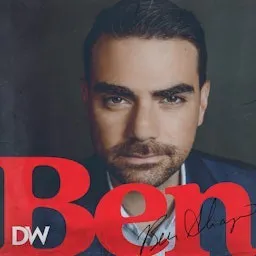
Episode Summary
Executive Summary: The episode focuses on the Democratic primary, arguing that Joe Biden remains the durable front-runner despite attacks on race and wealth, while Bernie Sanders responds to slipping momentum with a radical student-debt cancellation plan. Ben Shapiro also critiques media-driven identity politics, the targeting of Pete Buttigieg over race issues, and broader efforts to police speech and dissent via platforms and financial institutions.
Main Topics: Democratic primary polling and frontrunner dynamics (Priority: 5/5): Shapiro reviews polling showing Biden holding a strong lead while Sanders, Warren, Buttigieg, Harris, and others remain far behind. He argues Biden’s broad name recognition and incumbency-style durability make him hard to dislodge, though a consolidated anti-Biden lane could still challenge him. Elizabeth Warren vs. Bernie Sanders for progressive support (Priority: 5/5): The segment examines Warren’s rise among left-leaning voters, including a MoveOn straw poll in which she overtakes Sanders. Shapiro frames this as evidence that media attention and policy-wonk branding are shifting progressive energy away from Sanders. Bernie Sanders' student-debt cancellation proposal (Priority: 5/5): Sanders’ plan to cancel all student loan debt and make public college tuition-free is portrayed as a politically desperate, economically unsound attempt to regain momentum by promising ever more free benefits. Joe Biden's wealth and vulnerability to progressive attacks (Priority: 4/5): A Washington Post report on Biden’s post-vice-presidency income is discussed as the likely next attack line from progressives. Shapiro argues the criticism is hypocritical and unlikely to move voters, though it may be used to undermine Biden’s populist image. Identity politics and electability in the Democratic Party (Priority: 4/5): Using AP/NORC data, Shapiro contends that Democratic voters care more about experience than race, gender, age, or LGBTQ identity, contrary to media assumptions. He argues this explains Biden’s resilience and the relative weakness of identity-based candidacies. Pete Buttigieg and racial controversy in South Bend (Priority: 3/5): Shapiro describes Buttigieg’s difficulties after a police shooting involving a Black man in South Bend, arguing that unlike Biden, Buttigieg lacks a long-established political identity and is more vulnerable to racial criticism. Censorship and institutional power over speech (Priority: 3/5): The show closes with criticism of Google and MasterCard for allegedly enabling political censorship or refusing service based on ideology, warning that such practices could expand from extremists to ordinary political dissenters.
Key Arguments: Biden remains strong because most Democrats prioritize defeating Trump and value experience over identity markers like gender or race. Sanders’ student-loan proposal is economically regressive, rewards poor financial decisions, and incentivizes irresponsible borrowing. Warren’s rise among progressives reflects media amplification and the preferences of college-educated liberals more than the Democratic base as a whole. Biden’s post-office wealth is politically attackable, but the criticism is hypocritical and unlikely to change entrenched voter perceptions. Pete Buttigieg is more vulnerable than Biden because he is less established and lacks Biden’s long-standing public profile. Efforts to pressure companies like Google and MasterCard into policing speech or ideology threaten open discourse and could expand beyond their stated targets.
Data Points: Biden support in Morning Consult poll: 38% - Current Democratic primary standing; unchanged from earlier weeks. Sanders support in Morning Consult poll: 19% - Second place in the cited Morning Consult polling. Warren support in Morning Consult poll: 13% - Up a couple of points, but still behind Sanders. Buttigieg support in Morning Consult poll: 7% - Described as stuck and struggling to gain traction. Harris support in Morning Consult poll: 6% - Described as failing to launch. Beto O'Rourke support in Morning Consult poll: 4% - Noted as declining from national prominence. Cory Booker support in Morning Consult poll: 3% - Mentioned as negligible. Andrew Yang support in Morning Consult poll: 2% - Mentioned positively as a person, but politically marginal. Michael Bennett support in Morning Consult poll: 1% - Barely registering in the field. Warren support in MoveOn straw poll: 38% - Top choice among MoveOn members nationwide and in early voting states. Sanders support in MoveOn straw poll: 17% - Significant drop from prior progressive dominance. Biden support in MoveOn straw poll: 15% - Surprisingly close to Sanders among progressive activists. Democrats prioritizing experience in elected office: 73% - AP/NORC finding on what most excites Democratic voters. Democrats excited by a woman candidate: 40% - Far below experience as a priority. Democrats excited by military service: 38% - One of several secondary traits. Democrats excited by a younger candidate: 36% - Moderate enthusiasm compared with experience. Democrats excited by business experience: 26% - Among lower-priority traits. Democrats excited by a Black candidate: 26% - Same level as business experience. Democrats excited by a Latino candidate: 25% - Comparable to business experience. Democrats excited by an LGBT candidate: 20% - Lower than race or gender indicators. Democrats excited by sharing their religious beliefs: 20% - Equal to LGBT identity in the AP/NORC data. Democrats excited by a transgender candidate: 17% - The lowest explicitly cited identity marker. Biden speaking fees: Up to $200,000 per speech - From Washington Post reporting on his post-vice-presidency income. Biden residence purchase price: $4.25 million - McLean, Virginia home linked to Biden’s living arrangements. Biden vacation house: $2.7 million - Delaware water-side vacation property. Biden book deal: $8 million - 2017 agreement covering three books. Biden and wife charity donations: $369 average annually - Average charitable giving for the 10 years preceding 2008, per transcript. Student loan cancellation cost mentioned: $1.6 trillion - Bernie Sanders' proposal described as an immediate federal cost. Perceived potential cost if field aggregates: 45% vs 38% - Combined progressive lane versus Biden in Shapiro’s hypothetical aggregation. Black voter response to Biden: 30% still support; 27% don't care; 20% less likely - Used to argue the race-related criticism has limited effect. Joe Biden black vote share: About 40% - Shapiro cites Biden’s strong standing with Black Democratic voters.
Pivotal Quotes: "The beauty of being in the Democratic Party is if you're ever short of an idea, just promise to make more things free." — Ben Shapiro: Used to frame Sanders’ policy response as politically opportunistic and unserious. "This proposal will make it possible for every person in America to get all of the education they need, regardless of their financial status." — Bernie Sanders: Sanders introducing his free college and debt cancellation plan. "It was easier for me to become the youngest woman in American history elected to Congress than it is to pay off my student loan debt." — Alexandria Ocasio-Cortez: AOC’s personal argument for student-loan cancellation.
Implications: The segment suggests Biden’s lead is real but fragile if rivals consolidate, while Sanders must escalate populist promises to survive. It also warns that identity politics and corporate censorship battles could shape the 2020 race and broader political discourse.
About The Ben Shapiro Show
Tired of the lies? Tired of the spin? Are you ready to hear the hard-hitting truth in comprehensive, conservative, principled fashion? The Ben Shapiro Show brings you all the news you need to know in the most fast moving daily program in America. Ben brutally breaks down the culture and never gives an inch! Monday thru Friday.