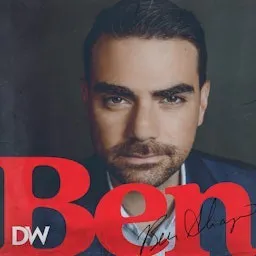
Episode Summary
Executive Summary: The episode argues that Bernie Sanders is on track to win the Democratic nomination and would be a uniquely weak general-election candidate, especially against Trump. Shapiro claims Sanders would underperform with suburban women, older voters, Jews in Florida, and swing states, while Bloomberg’s continued campaign and the prospect of an open convention reflect Democratic panic. He also warns Trump must avoid self-inflicted damage, especially on the economy and Russia-related messaging.
Main Topics: Bernie Sanders as a general-election liability (Priority: 5/5): Shapiro contends Sanders is a socialist whose policies and temperament could repel key voter blocs, making him more vulnerable than Democrats expect. 2016 electoral comparisons and turnout dynamics (Priority: 5/5): He argues Trump performed like a generic Republican in 2016, while Clinton underperformed as a generic Democrat, and suggests Sanders may similarly underperform Clinton in 2020. Suburban women, older voters, and Florida as decisive blocs (Priority: 5/5): A major theme is that Sanders could lose suburban women, seniors, Cuban-Americans, and older Jewish voters, weakening Democrats in critical battlegrounds such as Florida and the suburbs. Bloomberg, Biden, Warren, and the possibility of an open convention (Priority: 4/5): The transcript frames Bloomberg’s campaign and Warren’s attacks as efforts to stop Sanders and suggests Democratic leaders may deny Sanders the nomination if he lacks a majority. Trump’s path to reelection and campaign discipline (Priority: 5/5): Shapiro says Trump can beat Sanders but must avoid damaging mistakes, especially corruption optics, overreaction, and undisciplined comments that can feed anti-Trump narratives. Russia, intelligence briefings, and media narratives (Priority: 4/5): The show warns that reports about Russian interference and Trump’s response could be turned into a campaign attack, especially if Trump appears defensive or dismissive. Culture-war and entertainment commentary (Priority: 2/5): The episode ends with lighter segments on Trump’s movie review of Parasite, a TV recommendation, and criticism of media framing around Katie Hill’s resignation.
Key Arguments: Sanders is not a normal Democrat; his socialist and anti-American foreign-policy views make him unusually vulnerable in a general election. Trump in 2016 largely matched prior Republican vote performance, so a Sanders/Trump matchup should be judged by whether Sanders performs below a standard Democratic baseline. Suburban women are a key swing constituency and may fear Sanders’ economic agenda more than they dislike Trump’s personality. Older voters, especially those with memories of the Soviet Union, are unlikely to embrace Sanders. Florida is especially hostile territory for Sanders because of Cuban exiles, older Jewish voters, and his past praise for aspects of the Cuban Revolution. Bloomberg remains in the race to block Sanders and potentially use his money to influence delegates and party leaders at a contested convention. If Democrats deny Sanders the nomination despite a plurality, Bernie supporters may revolt or walk out, creating an internal party crisis. Trump’s reelection hinges on two factors: the economy and Trump himself; if he loses to Sanders, it will largely be due to Trump’s own mistakes or a recession. Trump should plainly acknowledge Russian interference while committing law-enforcement resources to stop it, rather than becoming defensive and feeding the opposition narrative. The media are eager to portray Trump as compromised by Russia, and his comments on Roger Stone and intelligence briefings risk fueling that storyline.
Data Points: Trump 2016 performance vs. Romney: Within about 1–2 points in virtually every state - Used to argue Trump performed like a generic Republican rather than wildly outperforming prior GOP nominees. Wisconsin margin comparison: Trump won fewer absolute votes in Wisconsin than Mitt Romney - Illustrates the claim that Trump’s 2016 result was not uniquely strong in every respect. Bloomberg net worth: $65 billion - Shapiro uses this to explain Bloomberg’s ability to financially pressure the Democratic Party. Trump campaign spending in 2016: About $1 billion - Compared against Bloomberg’s potential self-funding capacity. Potential Bloomberg personal spending: Up to $5 billion - Used to suggest Bloomberg could effectively dominate Democratic politics with money. Five-candidate delegate threshold: 1,991 delegates needed for nomination - Referenced in discussion of whether any candidate secures a majority before the convention. 538 projection: No majority for any candidate is the top possibility at 2 to 1 odds - Supports the open-convention scenario discussed in the transcript. Bernie in 2016-style battlegrounds: Potential to flip 5–7 additional states for Trump - Shapiro argues Sanders could shift several states back toward Republicans. Wisconsin polling: Trump leading heavily - Presented as evidence that Trump may already have Wisconsin locked up. Treasury yield, 10-year: 1.495% - MarketWatch data cited as a sign of economic anxiety tied to coronavirus fears. Treasury yield, 2-year: 1.381% - Indicates broad bond-market demand and recession concerns. Treasury yield, 30-year: 1.930% - Falling below a previous all-time low of 1.95%. Helix Sleep trial: 100 nights risk-free - Sponsor offer described during ad read. Stamps.com discount: 5 cents off each first-class stamp and up to 40% off shipping - Sponsor offer described during ad read. Daily Wire membership discount: 10% off with promo code SHAPIRO - Membership promotion during ad read.
Pivotal Quotes: "If you lose to that, that's on you. That's on you." — Ben Shapiro: On Trump’s obligation to defeat Bernie Sanders if Sanders becomes the Democratic nominee. "The real winner in the debate last night was Donald Trump" — Michael Bloomberg (quoted by Shapiro): Bloomberg warns that nominating Sanders could hand Trump the election. "I'd love to see Roger exonerated" — Donald Trump: Trump comments on Roger Stone, which Shapiro says could become damaging campaign material.
Implications: The episode frames 2020 as a high-risk election for Democrats if Sanders wins the nomination, while also warning Trump that discipline matters more than ever. A recession, Russia controversy, or self-inflicted scandal could still change the race fast.
About The Ben Shapiro Show
Tired of the lies? Tired of the spin? Are you ready to hear the hard-hitting truth in comprehensive, conservative, principled fashion? The Ben Shapiro Show brings you all the news you need to know in the most fast moving daily program in America. Ben brutally breaks down the culture and never gives an inch! Monday thru Friday.