Episode Summary
Executive Summary: In this mailbag episode, Bethany McLean and Luigi Zingales define capitalism as a free-enterprise system that should broaden opportunity, but argue it often becomes distorted by cronyism, bad incentives, and unequal starting points. They debate social media regulation, personal responsibility, poverty traps, antitrust beyond consumer prices, UBI under AI, and macroeconomic uncertainty, while repeatedly stressing the tension between individual agency and structural failures.
Main Topics: Defining capitalism and its failures: The hosts frame capitalism as freedom to pursue economic goals within rules, but say it fails when rules are shaped by insiders and opportunity becomes narrow or unfair. Social media, age verification, and parental responsibility: They revisit concerns about kids and social media, weighing age verification, privacy, and broader policy solutions against the argument that parenting alone should solve the issue. Personal responsibility versus corporate/systemic incentives: They discuss the limits of blaming individuals for harmful financial or consumer choices when firms design products and incentives to exploit information asymmetries. Poverty traps, disability, and work disincentives: Listener questions prompt a discussion of welfare cliffs, disability insurance gaps, and how people can be trapped in circumstances where work is both necessary and insufficient. Antitrust and monopsony power: They explain that antitrust is not only about protecting consumers from monopoly pricing but also about preventing buyers from suppressing pay to suppliers like authors and nurses. UBI, AI, and the future of work: The hosts debate whether universal basic income would preserve dignity and incentives or simply mask deeper labor-market disruption from AI and technological change. Recession, Fed policy, and policy levers: They offer tentative recession views and close with policy wish lists, including banning lobbying and skepticism about what a president can realistically do.
Key Arguments: Capitalism should mean broad freedom and opportunity, but it becomes unjust when powerful actors design the rules to favor themselves. Personal responsibility matters, but it is incomplete when there are steep information asymmetries or when firms actively steer people into worse choices. Some harms commonly blamed on individuals, such as bad mortgages or expensive corporate products, are better understood as incentive failures and corporate responsibility issues. Work incentives matter: means-tested benefits can create cliffs that discourage employment, but the deeper problem is that some jobs still do not pay enough to live. Poverty is often structural rather than purely behavioral; disability, housing conditions, and benefit administration can create traps that people cannot escape on their own. Antitrust should address both monopoly and monopsony power, because concentrated buyers can underpay workers and suppliers even if consumer prices fall. UBI may not eliminate work, but it does not solve the non-monetary value of jobs such as status, pride, community, and identity. AI could require major economic adaptation because digital markets tend toward monopoly and labor displacement may create social unrest. Banning lobbying is seen as attractive in principle, but nearly impossible under the U.S. constitutional framework.
Data Points: Guest question count: Mailbag episode with multiple listener calls/emails across topics - The episode is structured around audience questions rather than a single guest interview. Social media age threshold: 18 years old - Luigi describes electronic ID verification as checking whether a user is above 18. Mortgage term: 30-year fixed-rate mortgage - Used in the discussion of predatory steering before the financial crisis. States referenced in workplace pay research: 9 or 10 states - Bethany cites GAO research showing some large companies paid wages insufficient for family support and health insurance in multiple states. Pay cut in merger hypothetical: 20% less to suppliers - An antitrust question asks whether a merger that reduces supplier pay by 20% but lowers consumer prices by 15% should be allowed. Consumer price reduction in merger hypothetical: 15% - Used in the same merger question to highlight tension between consumer and supplier welfare. Coffee injury lawsuit temperature example: Very high coffee temperature - Luigi references the McDonald's coffee case and explains the high temperature increased risk while extracting more coffee from beans. Live recording date: October 30, 11 a.m. Central - Promotion for an upcoming live conversation with Sir Neil Ferguson.
Pivotal Quotes: "We have socialism for the very rich, rugged individualism for the poor." — Luigi Zingales: Opening framing of the show's critique of capitalism and unequal treatment across income groups. "The rules now are designed by the capitalists themselves." — Luigi Zingales: His definition of the 'isn't' in capitalism: cronyism and rule-making by insiders. "I think that the solution to expand dramatically, the minimum, might have some other effects." — Luigi Zingales: On poverty and disability traps, he warns that expanding benefits has tradeoffs even when the need is real.
Implications: The episode argues that fixing capitalism requires more than blaming individuals or markets; it demands better rules, stronger safeguards, and attention to how power shapes incentives. For listeners, the message is that many policy problems are hybrid structural-and-human failures, not simple ideological choices.
About Capitalisnt
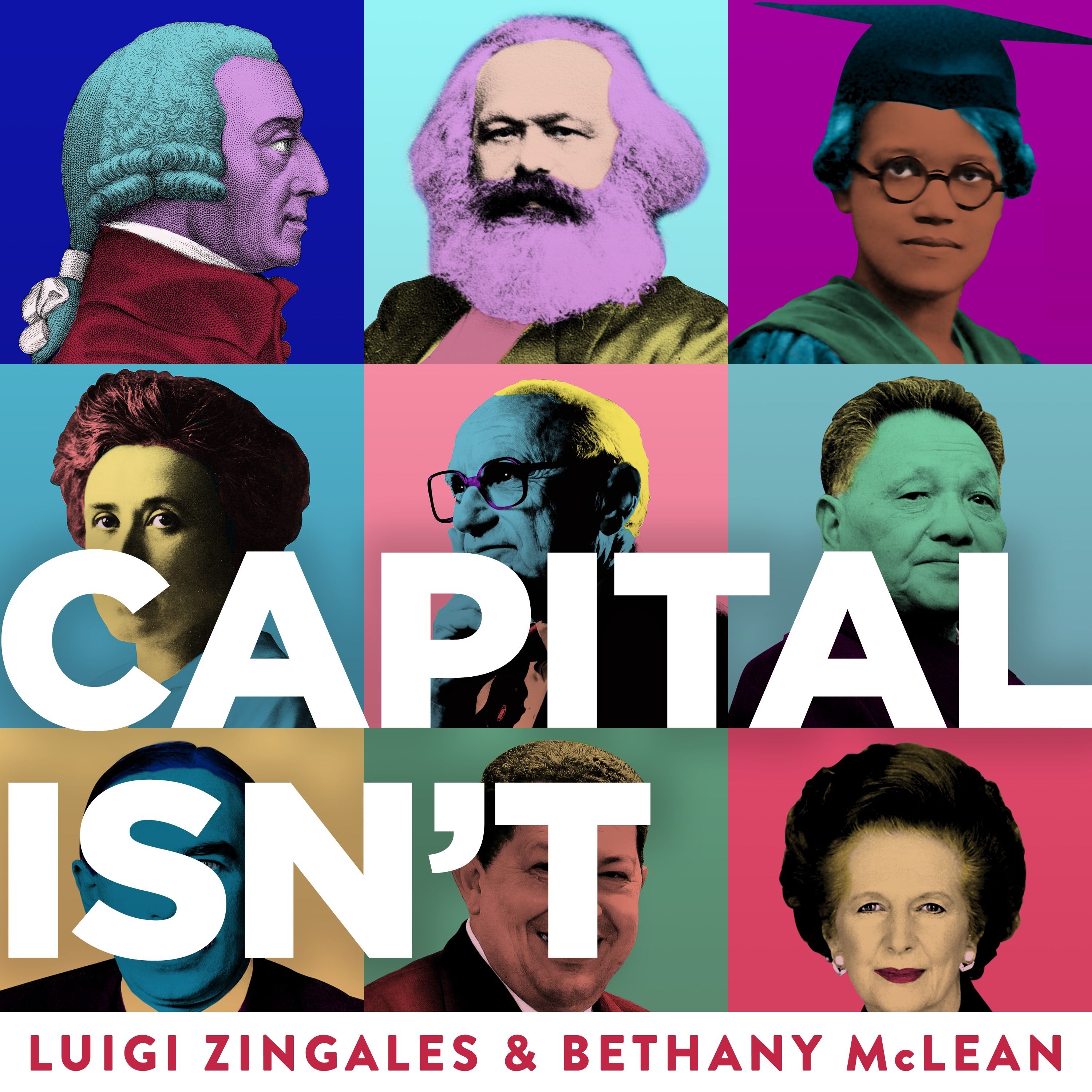
Is capitalism the engine of destruction or the engine of prosperity? On this podcast we talk about the ways capitalism is—or more often isn’t—working in our world today. Hosted by Vanity Fair contributing editor, Bethany McLean and world renowned economics professor Luigi Zingales, we explain how capitalism can go wrong, and what we can do to fix it. Cover photo attributions: https://www.chicagobooth.edu/research/stigler/about/capitalisnt. If you would like to send us feedback, suggestions fo...